


Most lists of difficult paint by numbers kits rank them by how busy the picture looks. That is not what makes a kit hard.
What makes a kit hard is one of three things: sections small enough that a size 0 brush still feels clumsy, adjacent colors so close in tone that you cannot see where one ends and the next begins, or a pale palette that refuses to cover the printed numbers underneath. A crowded painting with strong color separation can be easier than a quiet one painted almost entirely in three shades of gray.
what makes a kit soothing works through that inversion properly, because busy and difficult are not the same thing.
Below are ten of our own designs that experienced painters find genuinely demanding, with the specific reason each one is difficult. The judgments come from the artwork itself and from what customers say in their reviews. Difficulty is per-design and personal, and review counts per kit run from nine to twenty-three, so treat this as informed guidance rather than a precise ranking.
1. Seaside Paradise
The hard part: palm fronds and moving water in the same painting. The fronds are dozens of long thin sections that overlap each other, and each one needs a steady hand along its whole length. Below them the surf is a run of blues and whites that shade into one another with no hard edge to work to.
This is the design our reviewers most often describe as not being a first kit, and we would agree. Seaside Paradise.
2. Mountain Village
The hard part: architecture. Buildings punish imprecision in a way that trees do not. A window frame that wanders by a millimeter reads as wrong, where a branch that wanders reads as a branch. This design has rooflines, a stone bridge, window after window, and reflections of all of it in the water below.
Take the buildings slowly and the rest of the painting is forgiving. Mountain Village.
3. Golden Hour
The hard part: everything is nearly the same color. This is the difficulty most lists miss entirely. A dawn sky and wet sand are made of a dozen tones that sit within a few shades of each other, so the printed sections are hard to tell apart and a mistake is hard to spot until the area is finished.
Work under a good lamp, and keep the reference print beside you rather than trusting the canvas alone. Golden Hour.
4. Orchard Puzzle
The hard part: a dozen birds, each needing its own plumage. Cardinal, blue jay, oriole, goldfinch, chickadees, all on blossom branches, and every one carries fine markings in small sections. There is no filler in this painting. Every part of it is detail.
It is also one of our best sellers, which tells you people finish it and are pleased with it. Allow more evenings than you think. Orchard Puzzle.
5. Bamboo Tiger
The hard part: the eyes, and the leaves crossing the face. The whole painting depends on two small areas. Get the eyes right and it is striking; get them slightly wrong and the animal looks lifeless. On top of that, bamboo leaves cross in front of the face, so you are working around interruptions rather than painting a continuous shape. Stripes are the clearest example, which is why a tiger is harder than it looks.
Do the eyes when you are fresh, not at the end of a long evening. Bamboo Tiger.
6. Moonrise Song
The hard part: fur against snow, under an aurora. Three problems at once. Wolf fur is directional and made of small strokes. Snow is white on white with only faint blue shadows to separate the forms. The aurora above is a soft gradient with no edges at all.
Each of those alone is manageable. Together they make this one of the more demanding things we sell. Moonrise Song.
7. Morning Ride
The hard part: the palette is so light it fights the numbers. This is the most under-appreciated difficulty in paint by numbers. Pale colors are thin, and a single coat of a very light tone will let the printed number show through. You end up going back over sections with a second coat once the first is dry.
Beautiful when finished, and slower than its simple composition suggests. Morning Ride.
8. Mountain Paradise
The hard part: density. Cabin, waterfall, lake, geese, forest and mountain, all in one frame, and all of it rendered. There is no simple sky to rest in and no plain foreground. The section count is high and stays high from the first evening to the last.
The kind of kit to keep going on a table rather than pack away between sittings. Mountain Paradise.
9. Enchanted Woods
The hard part: snow on bare branches. Snow resting along a twig is a chain of tiny irregular shapes, and there are hundreds of them across the top half of this painting. The chickadees are small and need their markings to read. The lit cabin gives you one warm area of relief and that is about it.
10. Sweet Petunias
The hard part: hundreds of small petals, in a soft style. The original is painted loosely, which means the sections are small, numerous and irregularly shaped rather than clean geometric blocks. Massed flowers are among the most repetitive things to paint, and it is easy to lose your place.
Put on something to listen to and work one pot at a time. Sweet Petunias.
Two honest warnings before you order a difficult kit
The numbers are small, and on these designs they are smaller
The single most common complaint we get, across every design, is that the printed numbers are hard to read. On a demanding kit with a high section count, they are smaller still. Several customers use a magnifying glass and say so plainly in their reviews.
Every kit includes a full-size reference print at eleven by seventeen inches, which helps considerably, and a good lamp helps more than anything else. We would rather say this here than have you discover it on a kit that takes forty hours.
You may run out of a color
On a painting dominated by one family of tones, a snow scene or a pale sunrise, a single heavily used pot can run low before the canvas is finished. It is the most common reason people contact us mid-project. We sell a matched extra paint set for every design for exactly this reason, and it is worth adding at the start rather than pausing halfway.
What is in the box
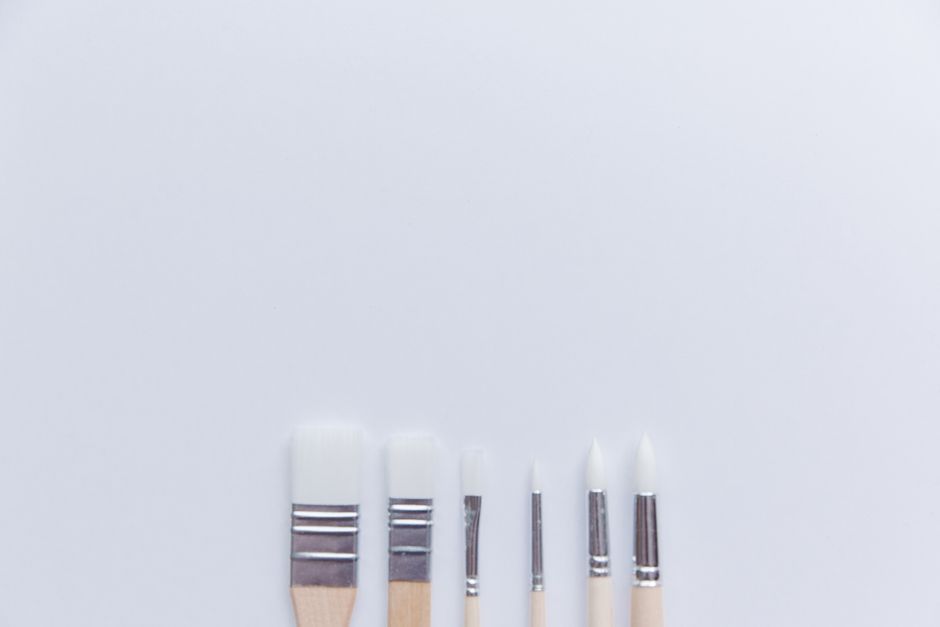
Every kit ships with a pre-printed cotton canvas, vacuum-sealed paint pots, brushes in a range of sizes and the eleven by seventeen reference print. The canvas arrives rolled in a tube rather than folded, which is the thing our customers mention most often in reviews, because a crease through the middle of a forty-hour painting is not something you can undo.
Stock designs come as twelve by sixteen framed, sixteen by twenty framed, or sixteen by twenty unframed. The framed versions include an easel.
If none of these is hard enough
The most difficult thing you can paint is a photograph you chose yourself, because you know exactly what it is supposed to look like. Our custom paint by numbers service turns your own photo into a numbered canvas, printed in the USA. A portrait with several faces, or a pet with detailed fur, will test you harder than anything on this list.
You can see how other people's have turned out in the customer gallery.
And if you have landed here by mistake
If you are choosing a first kit and this article has put you off, it should not. Plenty of our designs are genuinely good starting points, with larger sections and clearer color separation, and we go through what to look for in our guide for beginners. You can also browse the full range and judge the section sizes from the images, which is the most reliable test there is.


