

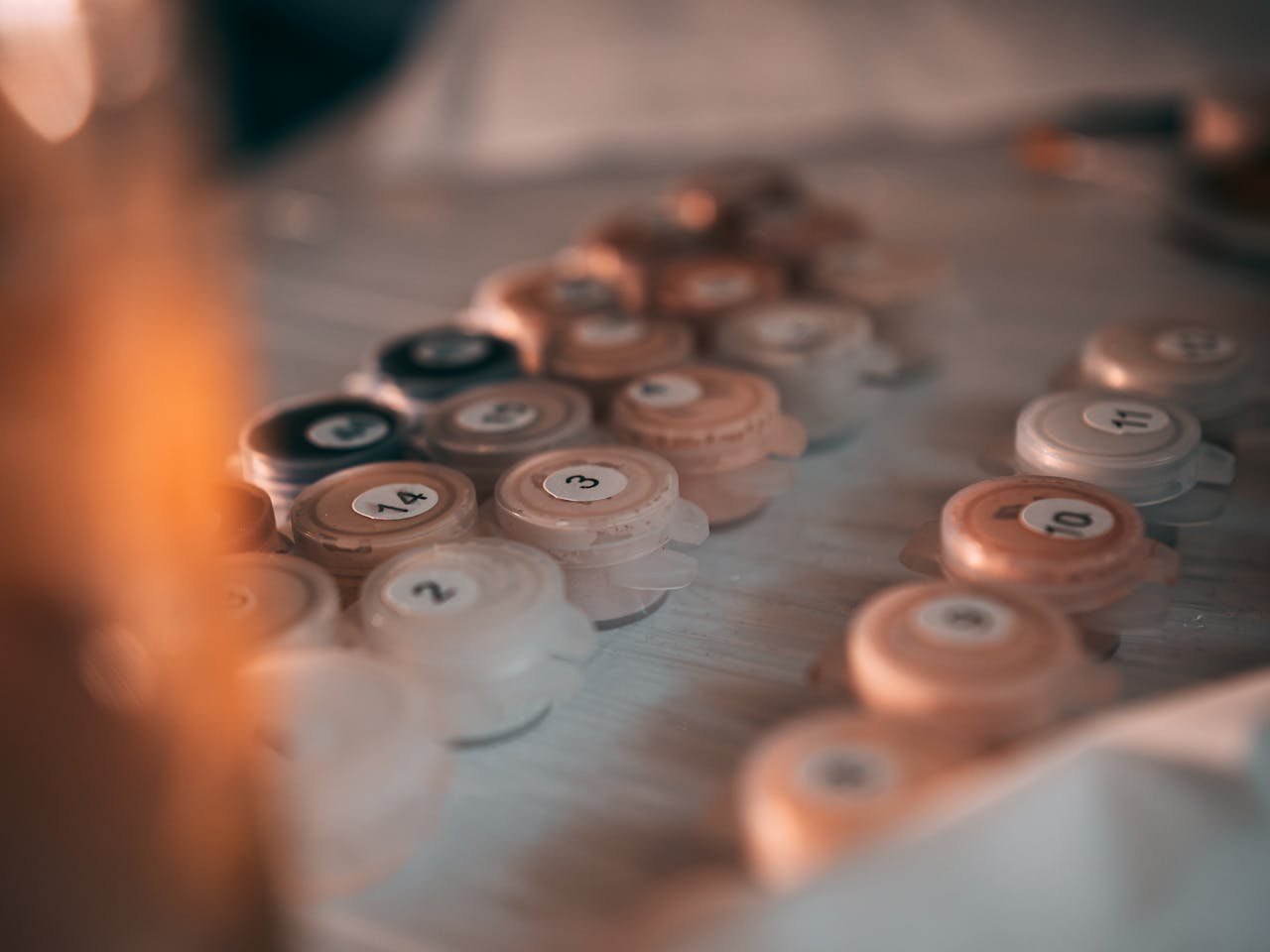
Water, one drop at a time. That is the only thing you should put into a stiffening pot of acrylic paint.
We are opening with that because the advice you will find elsewhere, including in an earlier version of this page, is to reach for paint thinner when water is not enough. Do not. Paint by numbers paints are acrylic, which is water-based. Mineral spirits, turpentine and products sold as paint thinner are for oil paint, and adding them to acrylic curdles it into something that will not brush out and will not stick to the canvas. You cannot undo it.

Work out which problem you actually have
Three different things get called dried-out paint, and only one of them is a real problem.
Separated, with clear liquid on top
This is normal and it is not drying out. Acrylic is pigment suspended in a polymer emulsion, and if a pot has sat still for months the two settle. Stir it thoroughly with a toothpick until the liquid is fully worked back in, and it is as good as new. Nothing else is needed.
Thick, but still moving
The pot has lost some water to evaporation. Add a single drop of clean water, stir, and test it on the back of your hand or a scrap of paper. Repeat if it is still stiff.
The mistake here is impatience. Two or three drops at once takes the paint past workable and into transparent, and transparent paint will not cover the printed number underneath, however many coats you apply. If you overshoot, leave the lid off for twenty minutes and let some of it evaporate back.
Skinned over, with soft paint underneath
A rubbery film on the surface with usable paint below. Lift the skin off in one piece with a toothpick and discard it. Do not stir it back in, or you will be picking lumps out of your brushwork for the rest of the canvas.
Solid all the way through
This one is genuinely finished. Once acrylic has cured it is a plastic, and no amount of water will return it to paint. Anything that does soften it will also destroy it. Skip to the replacement section below.
Keeping it from happening
- Close the lid every single time. Not at the end of the session, but every time you set the pot down. This is the whole game. Acrylic skins over faster in an open pot than most people expect.
- Do not decant more than you need. Paint spooned onto a palette dries in minutes. Work from the pot, or transfer a small amount at a time.
- Store somewhere cool, dark and stable. A cupboard indoors is ideal. A loft, a garage or a conservatory is not: heat accelerates evaporation, and freezing can break the emulsion permanently, which is a change no amount of stirring reverses.
- Store the pots upright. On their side, paint sits against the lid seal and dries there, and the seal stops working.
- Finish one color at a time. Beyond being the sensible way to paint, it means only one pot is ever open.
When the paint is beyond saving
You have three options, in descending order of how well they work.
A matching replacement set
The cleanest answer, if the maker offers one. Every one of our thirty-nine designs has a matching full replacement paint set containing the same colors mixed to the same formula, so the section you repaint matches the ones beside it exactly.
This is worth checking before you buy any kit, from anyone. A great many sellers have no way to send you more of color 12, which means one hardened pot ends the project. On a custom canvas you can add one or two spare sets at checkout, which is cheaper than ordering them later.
Mixing a match yourself
Possible, and harder than it sounds. Numbered paints are custom mixes, not standard colors, so the number on the pot corresponds to nothing a craft store stocks. You will be matching by eye.
If you try it: mix in daylight rather than under a lamp, mix considerably more than you think you need in one batch, because you will not reproduce it a second time, and test it on a scrap of paper next to the dried original rather than judging it wet. Acrylic dries a shade darker than it looks in the pot.
Repainting a whole element
The option nobody mentions and often the best one. If color 9 is gone and it appears only in the sky, mix a new color you like and repaint every section of 9 in it. The canvas stays coherent because the change is complete, and nobody looking at the finished picture will know. A patch that almost matches is far more visible than a deliberate change.
Common questions
Can I use rubbing alcohol to soften hardened acrylic?
It will soften it, and it is genuinely useful for cleaning dried acrylic off a brush. It is not useful for reviving paint you intend to use, because what it is doing is breaking down the polymer that makes the paint stick. Do not put it in the pot.
What about a flow improver or acrylic medium?
These are fine, and better than water if you have them, because they thin the paint without diluting the binder. A flow improver keeps the color strength that water dilutes away. Water is perfectly adequate for a numbered canvas though.
My paint has gone lumpy rather than hard. What happened?
Usually bits of dried skin stirred back in. Strain it through a piece of muslin if there is enough left to be worth saving, or pick the lumps out with a toothpick. Painting with lumps leaves ridges that stay visible after drying.
How long do these paints keep?
An unopened pot with an intact seal keeps for years. Ours are vacuum-sealed for exactly that reason, so a kit that has been sitting in a cupboard since last Christmas opens fresh. Once opened, life depends almost entirely on how consistently the lid goes back on.
Is it worth buying a whole new kit?
Rarely. If the canvas is untouched and only one or two colors have failed, a replacement paint set costs a fraction of a kit. If half the pots are solid and the canvas is barely started, that is a different calculation, and you can browse the full range if you would rather begin again with something else.
Keep reading
Thickened paint is one chapter of a much longer story. Our complete guide walks through the whole canvas from first section to final varnish. The Ultimate Guide to Paint by Numbers.


