


Glass looks like the hardest thing on the table and it is really the easiest, once you understand the trick: you do not paint the glass. You paint what is behind it, what is reflected in it, and the few small distortions where the two meet. The glass appears on its own.
Beginners fail at this by trying to paint an object. There is no object to paint.
What Color Is Glass?
Clear glass has no color of its own. What you see is a mixture of four things, and each one is something you can paint:
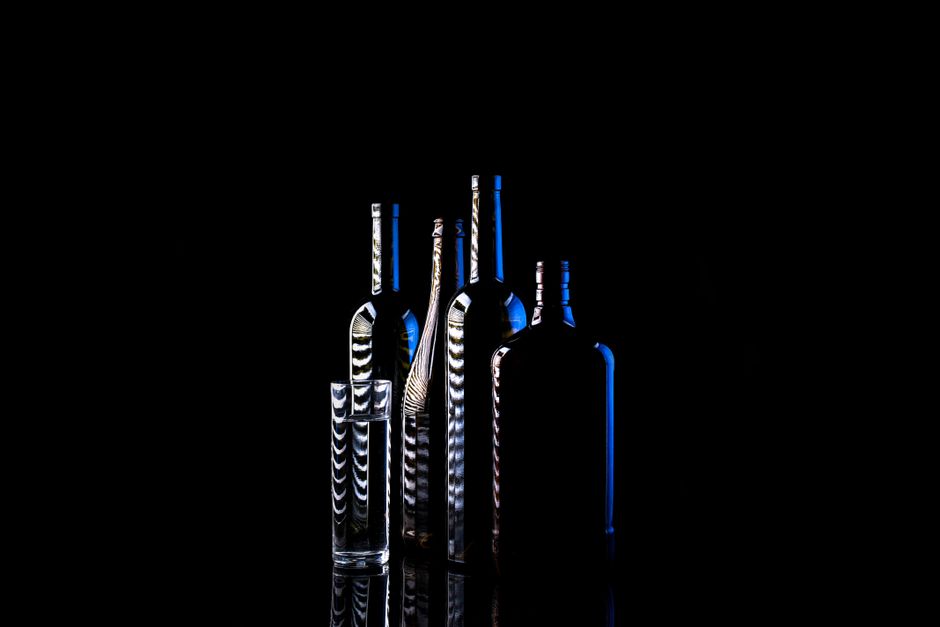
- What is behind it, showing through, slightly darkened and slightly shifted.
- What is reflected in it — the window, the room, the light source, sometimes you.
- What is refracted — the bending and displacement of whatever sits behind the glass.
- The edges, where the glass is thickest and reads as a distinct dark or light line.
Glass in a scene picks up the colors around it. A tumbler on a red cloth has red in it. A bottle against a window has the window in it. Paint those, not "glass color".
The Four Things to Get Right
Reflection
Highlights are the most recognisable part of glass. They are small, hard-edged and much lighter than everything around them — usually near-white.
Two rules. Keep them few: two or three per object, not a dozen. And keep them crisp: a soft-edged highlight reads as satin or plastic. A hard-edged one reads as glass.
Refraction
Light bends passing through glass, so anything behind it appears displaced. A straw in a tumbler looks broken at the waterline. A table edge behind a bottle jumps sideways and continues at a different height.
This single effect does more to convince a viewer than anything else in the painting. Look at your subject and find where a background line breaks or shifts, then paint the break exactly where you see it, even though it looks wrong.
Shadow
A glass shadow is not a solid gray shape. Light passes through and concentrates, so the shadow is patchy — dark at the rim, then a bright caustic where the glass focuses the light, sometimes brighter than the surface around it.
Painting that bright spot inside the shadow is one of those details that makes people look twice.
The edges and the base
Glass is thickest at its rim and its base, so those read darkest and most defined. The sides are nearly invisible. If in doubt, paint the rim and the foot and leave the middle almost alone.
Which Paint
Acrylic is the practical choice for this. It dries in minutes, and glass is built from many thin layers over a dry background.
Oil blends better and stays workable for days, which suits soft transitions — at the cost of waiting between layers.
Watercolor is arguably the natural medium for glass, because its transparency does half the work. It is also the least forgiving, since you cannot recover a lost highlight.
One thing worth separating: this article is about depicting glass on canvas. "Glass paint", acrylic enamel and the like are products for painting onto glass — a different craft entirely, and not what you want here.
The Method, Step by Step
- Paint the background first, all the way through. Straight across where the glass will be, as if it were not there. This feels wrong and is the single most important step.
- Let it dry completely.
- Sketch the outline of the glass lightly over the top.
- Darken slightly inside the shape. Whatever is behind the glass reads a little darker and a little less contrasted through it. A thin glaze of the background color, slightly deepened.
- Break the lines. Find where background edges shift as they pass behind the glass, and repaint those short segments in their displaced positions.
- Add the darks. Rim, base, and the vertical accents where the glass is thickest.
- Highlights last, and few. Near-white, hard-edged, small. Stop after three.
- The shadow. Patchy, with a bright caustic inside it.
If you paint the outline of a glass first and try to fill it in, you will get a gray vase-shaped object. Backwards is the only way that works.
Glazing
A glaze is a thin, transparent layer of color laid over a dry layer beneath. The lower layer shows through and the two mix optically rather than physically, which gives a depth that mixing on the palette cannot.
It is the natural technique for glass, because that is literally what glass does to what is behind it. Thin your color with a glazing medium rather than water — too much water breaks down the acrylic binder — and let each glaze dry before the next.
A glaze is not a varnish, and it is not a coat over the whole canvas.
Keep the Color Count Down
The commonest mistake after outlining is using too many colors. Glass is mostly the colors already in the painting, slightly modified. Three or four values of one or two colors, plus white for the highlights, will do a convincing tumbler.
Busy and cluttered reads as cut crystal at best and as confusion at worst.
How Long It Takes
A single glass on a small canvas is an afternoon, most of which is waiting for layers to dry. Start with one object on a plain background before attempting a table of them.
A useful exercise: paint the same tumbler three times, on a white background, a red one and a patterned one. Nothing teaches faster that the glass changes entirely while the object does not.
Where Else This Applies
Everything above works for water, ice, chrome, polished metal and still lakes. They are all the same problem: reflection, distortion, and a small number of very light and very dark accents.
Stained glass is the exception — it is flat, colored and outlined, so it is closer to painting a pattern than painting glass.
If you would like to practise on a canvas where the values are already worked out, our still life guide covers the setup, and the catalog includes several designs with water and reflections in them. Custom Paint by Numbers makes a canvas from a photograph of your own.


