


Every paint by numbers kit worth buying uses acrylic, and the reason is drying time. Understanding what that means in practice explains most of what goes right and wrong on a numbered canvas.
Here is what the three common painting media do, why kits use the one they use, and what it means for you at the table.
The three media, briefly
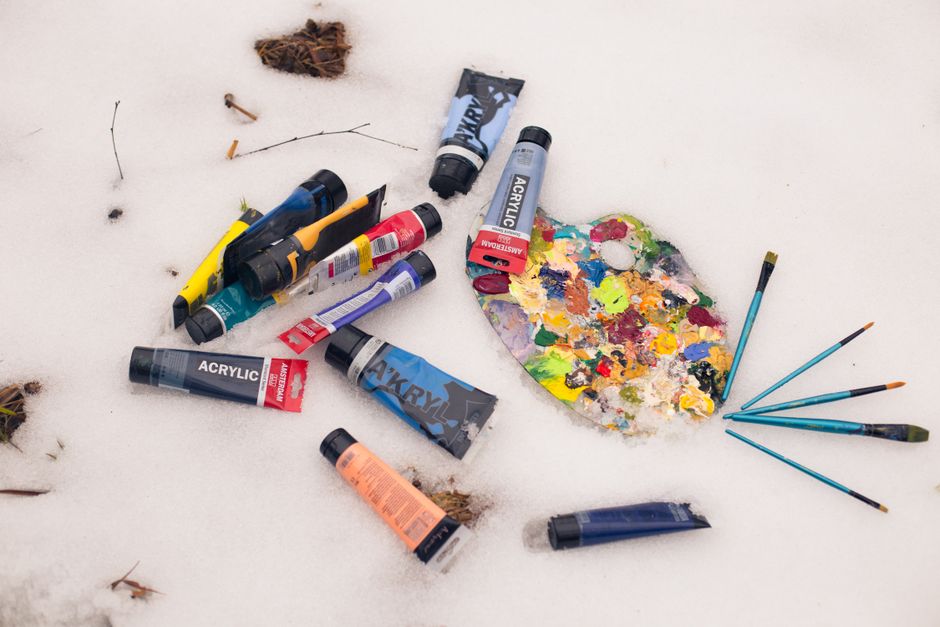
Oil stays workable for days. Colors blend into each other on the canvas, which is why oil painting handles soft transitions so beautifully. It needs solvents to thin and clean, smells accordingly, and a painting can take months to dry fully.
Watercolor is transparent and works by letting the white paper show through. It is unforgiving — you cannot cover a mistake, only work around it — and it needs paper rather than canvas.
Acrylic is a pigment suspended in a plastic polymer. It thins with water, cleans with water, dries in minutes, and once dry it is waterproof and can be painted straight over.
Why kits use acrylic
A numbered canvas is built on painting one flat region at a time, next to another flat region. That requires paint which does not blend into its neighbor.
Oil would run the sections together. Watercolor would show the printed numbers through every color. Acrylic dries fast enough that you can paint an adjacent section within minutes, and it is opaque enough to cover a printed line.
It also survives shipping and storage in a way oil does not, and it cleans up with tap water — which is why a kit does not arrive with solvents.
What fast drying costs you
The same property that makes acrylic right for kits is behind nearly every problem people have with one:
- Paint skins over in the pot within minutes of opening. This is why you should open one pot at a time and close it as you finish. It is the single most useful habit in the process.
- Thickened paint takes one drop of water. One. Stirred with a toothpick. More than that and you lose the opacity that lets it cover a printed number.
- Cured paint cannot be rescued. Skinned-over paint can be stirred back; fully cured acrylic has chemically set and no amount of water will return it.
- You cannot blend two colors on the canvas the way an oil painter would. By the time you go back, the first is dry. This is a limitation of the medium, not a failing of yours.
The two things about acrylic that help you
It is opaque and it covers itself. Wrong color in a section? Let it dry, paint the right one straight over. Number showing through a pale yellow? Second coat once the first is dry. Almost every mistake on a numbered canvas is fixable for this reason, and that is worth knowing before you panic about one.
Touch-dry is not cured. Acrylic is dry to the touch in minutes and takes days to cure fully. That is why varnish should wait several days, and why a finished canvas should not be stacked against another one overnight.
Handling it well
- Two water pots. One to rinse the worst off, one to finish. A single jar turns grey within the hour and puts that grey into every subsequent color.
- Dry the brush on paper towel after rinsing. A wet brush thins the next color without you noticing, and pale sections go patchy.
- Never let acrylic dry in the ferrule — the metal collar where the hair meets the handle. That is what actually ruins a brush, and it happens out of sight.
- Wash with lukewarm water and mild soap, reshape the bristles, lay flat to dry.
Ledgebay paints arrive vacuum-sealed, which matters more than it sounds: unsealed acrylic dries in the pot on a warehouse shelf, and that is the most common complaint in this whole product category.
Common questions
What kind of paint comes in a paint by numbers kit?
Acrylic, premixed to the design and numbered to match. It thins and cleans with water and needs no solvents.
Can I use oil paints on a numbered canvas?
Technically yes, practically no. Oil stays wet for days and the sections would blend into each other, which defeats the way the design works.
My paint has gone thick. Can I save it?
If it has skinned over, one drop of water and a stir will bring it back. If it has fully cured it cannot be recovered.
How long before I can varnish?
Several days. Acrylic is touch-dry in minutes but takes considerably longer to cure, and varnishing early traps a soft surface underneath.


