


Country scenes are the most painted subject in this hobby, and it is not really about the scenery. It is about a particular kind of memory — a cabin, a lake at dusk, a truck outside a farmhouse — and the hour spent with it.
These are five from our own catalog, with an honest note on what each one asks of you. We license the original artwork rather than reproducing stock images, so the artists are named.
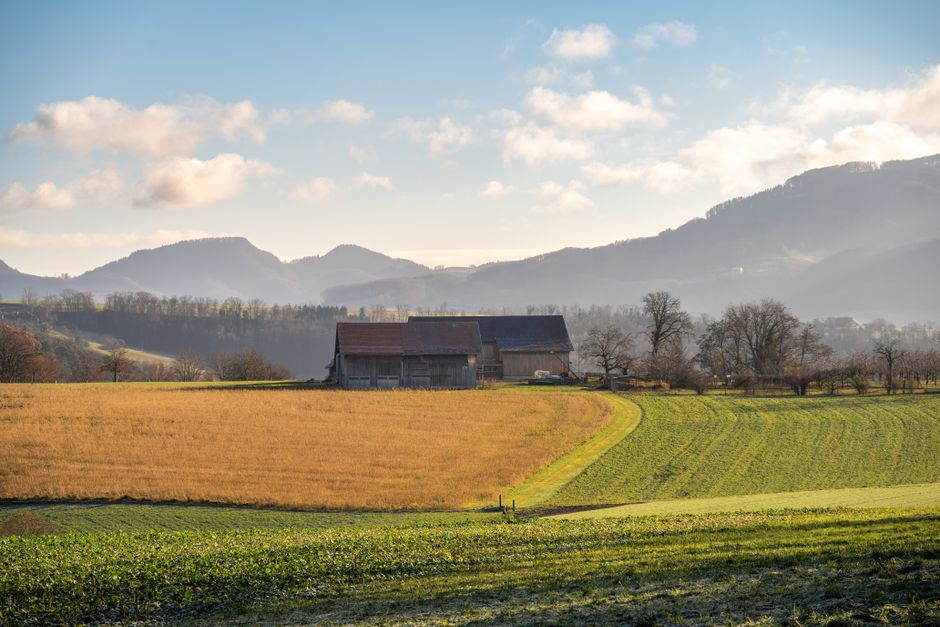
1. Northwoods Retreat
A cabin among tall pines, warm light in the windows, water in front. The most straightforwardly nostalgic design we sell and the one our own reviewers most often name as a good first kit.
It is forgiving because the masses are large — the trees are blocks of dark green rather than individual branches — so most of the canvas moves quickly. The lit windows are the only fiddly part, and they are worth slowing down for: that small patch of warm yellow against everything cool is what makes the whole picture work.
2. Cabin Fever
A log cabin in snow. Snow scenes look easy and are not — snow is almost never white. It is a dozen close blues, violets and warm grays, and this canvas has a lot of small sections in that narrow range.
Worth the effort for exactly that reason: it teaches you more about value than any other design in the catalog. Work it under good light, and keep the printed reference beside you.
3. The Road Home
A track running back through open country toward a farmhouse. The road is a leading line, which is why the picture pulls you into it, and it is a useful thing to notice if you ever compose your own landscape.
Middling difficulty and consistently one of our best sellers. The sky is large and simple, the foreground carries the detail, and the whole thing is a few relaxed evenings.
4. Away From it All
Hayden Lambson's, and another our reviewers put in the beginner-friendly column. Quiet water, trees, a sense of somewhere with nobody else in it.
Reflections are the interesting part. A reflection is always slightly darker and less contrasted than the thing it reflects — the kit's colors already account for that, which is one of the quiet advantages of a numbered canvas over freehand.
5. Moonlight Bay
A boat and a shoreline under moonlight. Night scenes have a small palette and large dark areas, so the canvas fills faster than the color count suggests, and the few light notes carry enormous weight.
Good for anyone who wants something atmospheric without the small-section grind of a snow scene.
Also Worth a Look
For autumn, October and Apple Harvest, the latter by Judy Buswell. For birds, Rural Route Bluebirds by James Hautman, which is also on the easier end. Morning Ride is the demanding one — our reviewers say so plainly, and it is not the kit to start with.
The full catalog is here. If the country scene you have in mind is a specific place — the farm you grew up on, a cabin your family used to rent — Custom Paint by Numbers turns a photograph into a numbered canvas, printed in the United States. That is what most people send us photographs of, and finished ones are in the customer gallery.
Getting a Clean Result
- Largest sections first. Your hand steadies as you go, so leave the small work until later.
- One color at a time. Finish every section numbered 4 before opening pot 5. Less rinsing, less waste, and only one pot open at a time.
- Dark to light. A light color covers a slight dark overrun. The reverse needs two coats and often still shows.
- Take the color over the printed line. A hairline of bare canvas between sections is what makes a finished kit look like a coloring book.
- Second coat on the pale colors. Let the first dry properly rather than loading the brush. A thin coat of white underneath a pale color makes the number disappear in two passes instead of four.
- Let it dry between sessions. Stopping at a color change is the natural break, and the work looks better after a night away from it.
Looking After the Brushes
- Rinse before every color change, then dry on a cloth. A wet brush thins the next color without you noticing.
- Never let acrylic dry in the bristles. Once it does, the brush is finished. This is the single rule that matters.
- Keep a cheap brush for scooping and mixing and save your good ones for painting. Dragging a fine brush around the bottom of a pot ruins the point.
- Do not leave brushes standing in water. It bends the bristles permanently and loosens the ferrule. Lay them flat.
- Warm water, not hot, and a little mild soap at the end of a session. Reshape the tip with your fingers and let them dry flat.
- Close each pot the moment you finish with it. If paint has gone thick, one drop of water stirred with a toothpick will bring it back.
If you do run out of a color — usually a sky or a background green — there is a matched Extra Paint set for every design, mixed from the same formulas, so you are not trying to eye-match a replacement. More on that in our guide to replacement paint.
New to this? Our beginner's guide covers the whole method from unpacking to framing.


