

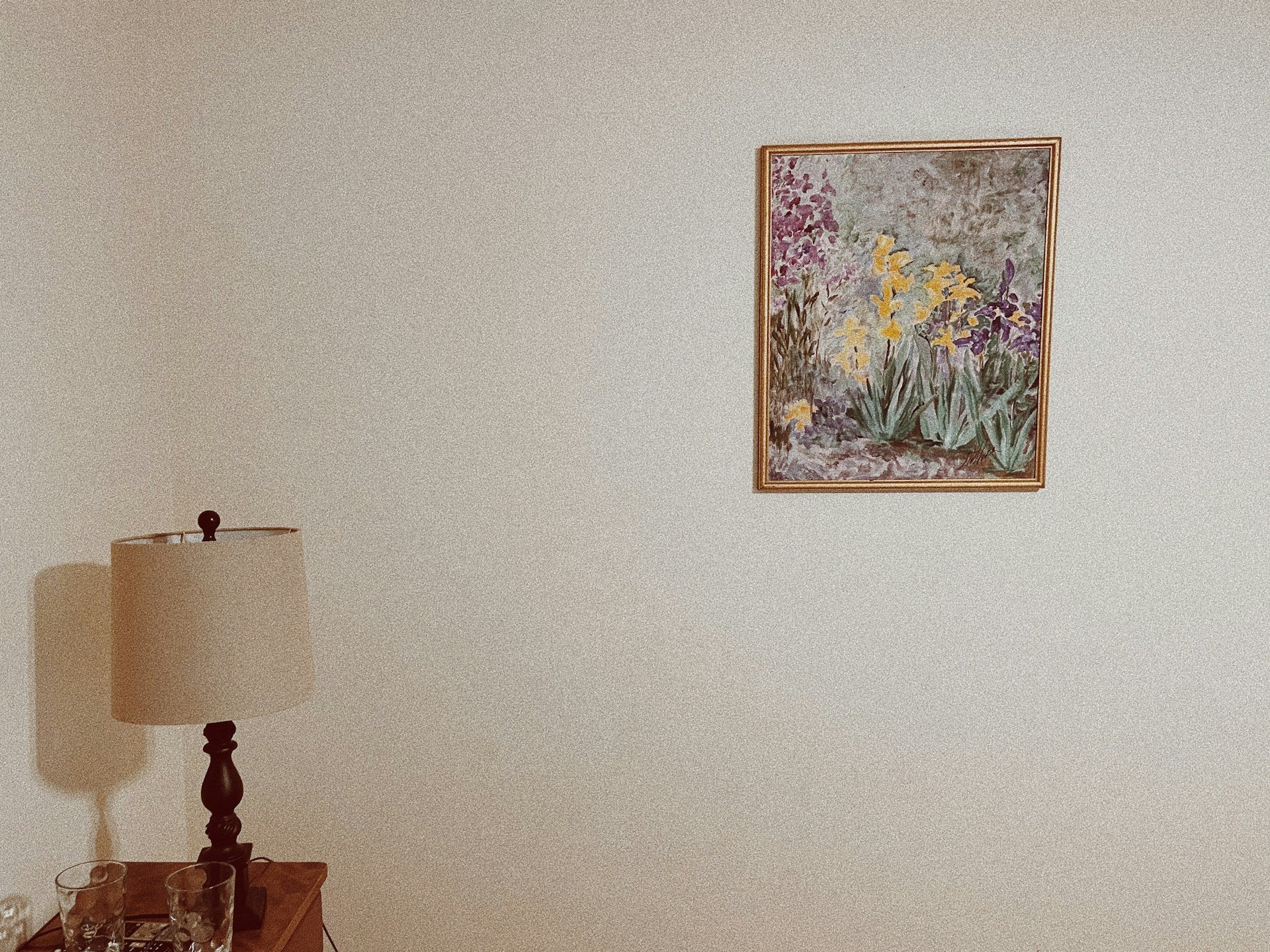
A finished canvas deserves better than a nail in the middle of a blank wall. Where you hang it, how it is lit and what surrounds it change how the piece reads more than most people expect — and none of it costs anything to get right.
A note on scale first, since this is about large pieces. Our biggest canvas is 18x24, on the custom line; the stock designs top out at 16x20. Those are substantial pieces for a room but they are not gallery-scale, and that matters when you are choosing a wall. A 16x20 on a wide empty wall looks stranded. The same canvas above a console table or as part of a group looks deliberate.
Where it should go
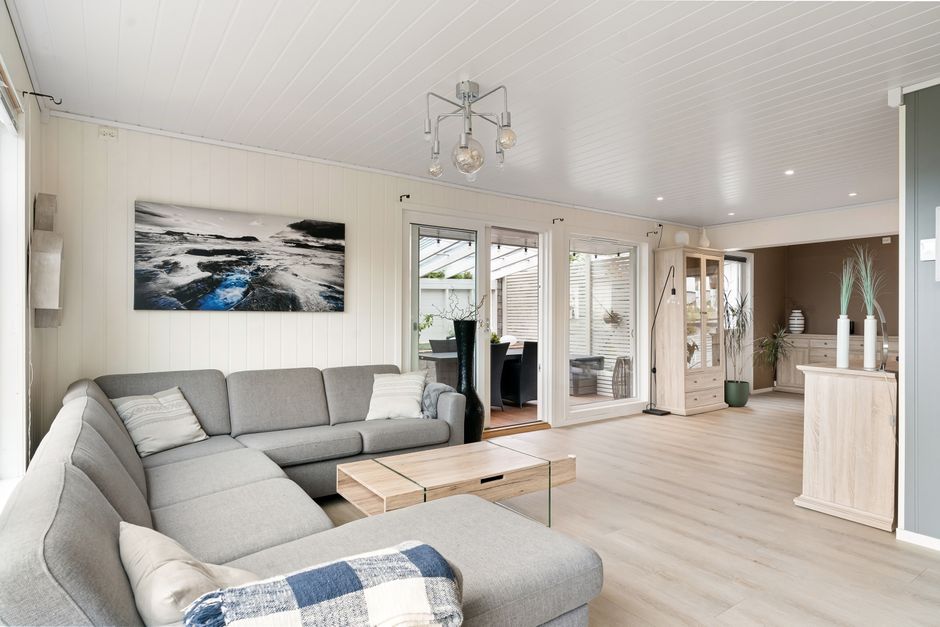
- Above a piece of furniture, not floating in space. A sofa, a console, a sideboard, a bed. Furniture gives the painting a base and makes it look sized for the wall. As a rough guide, the piece should span somewhere around two thirds of the width of whatever is beneath it.
- At eye level. The usual gallery convention is to put the center of the painting around 57 to 60 inches from the floor. Almost everyone hangs art too high on the first attempt. If it is going above furniture, leave roughly six to eight inches between the top of the furniture and the bottom of the frame.
- Where you will actually see it. The hallway you walk down twice a day beats the formal room nobody sits in. A landscape at the end of a corridor is one of the best uses of a long, narrow space there is.
- Not opposite a bright window. Direct sun across a painting washes it out during the day and fades it over years.
Worth thinking about: match the subject to the room. A lakeside cabin or a lighthouse suits a den or a study. Florals suit a bedroom or a hallway. A busy, colorful scene works better where people move through than where they sit still.
Making a modest size look intentional
If the wall is bigger than the painting, the answer is usually not a bigger painting.
- Group it. Two or three canvases hung together read as one large piece. If you have painted more than one design, this is the easiest win available — keep the gaps even and small, around two to three inches, and align either the tops or the centers.
- Give it a wider frame or a mat. A mat adds visual size without changing the canvas, and it reads as considered rather than as filling space.
- Anchor it with something below. A lamp, a plant, a stack of books on a console. The painting stops being the only thing on the wall and becomes part of an arrangement.
- Lean it rather than hang it. On a mantel or a shelf, a leaning canvas looks relaxed and can be moved without fresh holes.
Lighting
This is the part most people skip and it makes the largest difference.
- Aim light at about 30 degrees. Steeper and you get glare off the paint surface; shallower and the canvas texture throws long shadows across itself. Thirty degrees from vertical is the standard picture-lighting angle for good reason.
- Warm white, not cool. Something around 2700K to 3000K. Cool daylight bulbs make warm paintings — which is most of ours — look flat and slightly gray.
- Look for a high color rendering index. A bulb rated CRI 90 or above shows the colors you actually painted. Cheap LEDs with a low rating crush reds in particular.
- Picture lights, track heads or a well-placed lamp all work. A dedicated picture light mounted above the frame is the tidiest, and battery versions exist if you would rather not run a cable.
- Skip glass if you are lighting it directly. Glazing and a spotlight together produce reflections you cannot position your way out of. An unglazed acrylic painting handles direct light far better.
Hanging it safely
A framed 16x20 is not heavy, but it is heavy enough to come off a wall badly if it is on the wrong fixing.
- Two hooks, not one. Spread about a third of the width in from each side. The painting hangs level and stays level, and the weight is shared.
- Find a stud where you can. Where you cannot, a proper drywall anchor rated well above the actual weight is the answer — not a bare nail.
- Plaster and masonry want the right fixing. Old plaster crumbles around a nail. Drill and plug rather than hammer.
- Use a level and mark with a pencil. Measure to the hook position, not to the top of the frame, or the painting will end up lower than you planned.
- Rail systems are worth considering if you expect to rearrange, or if you are renting. One fixing at the top of the wall and the pictures hang from adjustable cords, so changing the layout costs no new holes.
Keeping it looking right
Acrylic keeps curing for weeks after it feels dry, so give a finished canvas a couple of weeks before varnishing it. Once it is varnished, dust it occasionally with a dry, soft brush — not a damp cloth, which drags dust across the surface and can lift paint that has not fully cured. Keep it off a wall shared with a bathroom or directly above a radiator, and out of direct sun.
If you have not settled how the piece is framed or mounted, choosing a frame for a paint by numbers canvas covers the options, and how to frame a paint by number canvas covers the mechanics of doing it.
To see how other people have hung and grouped theirs, the customer gallery is genuinely useful — more so than any staged product photo. And if you are ready for the next canvas, the full range is there to browse.


