

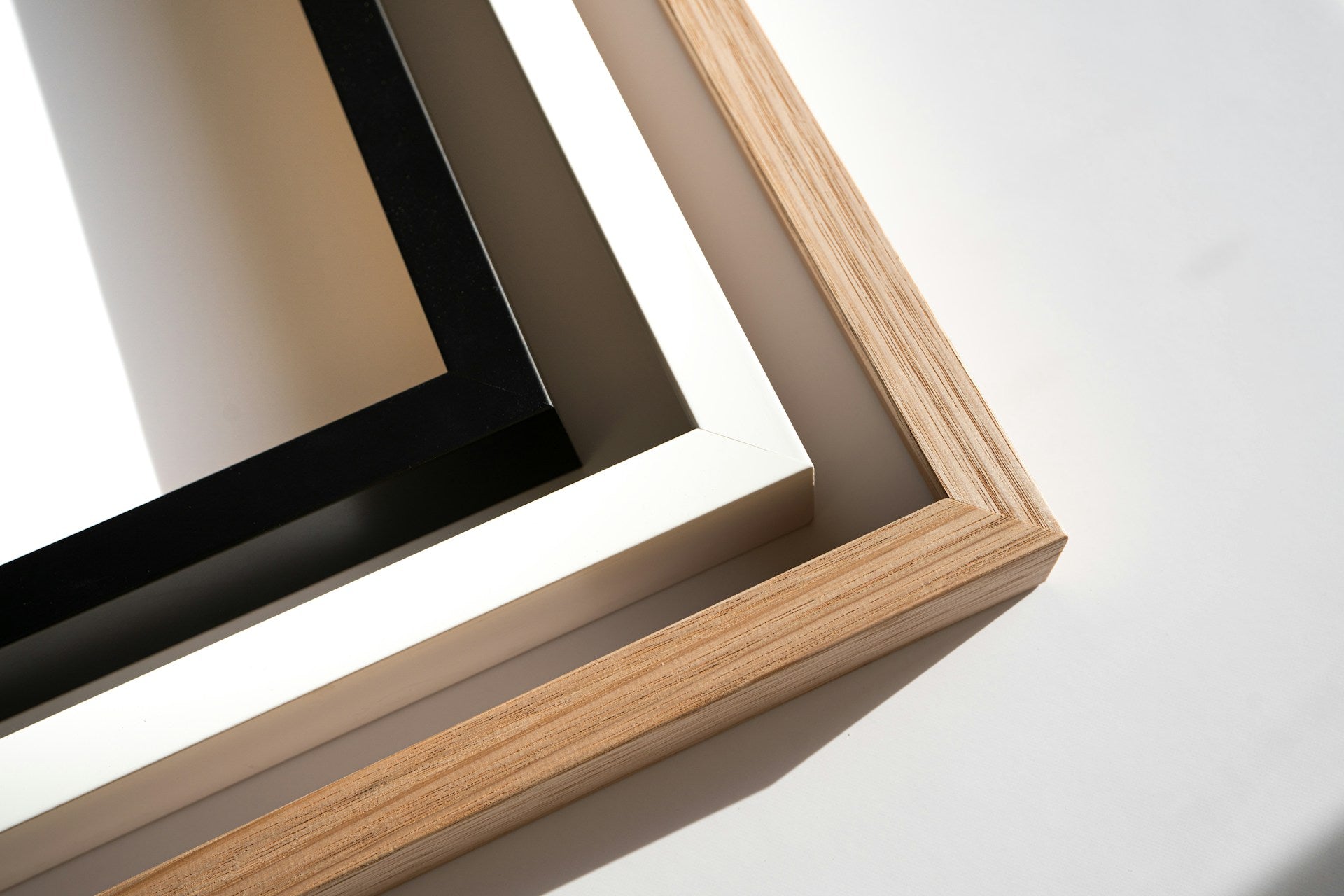
Start with what you actually have, because it narrows the choice more than taste does. A framed kit is already finished and needs nothing. A rolled unframed canvas has to be mounted before any frame goes near it, and it usually cannot be stretched over bars. Everything below assumes the second case.
First: measure, and measure the print
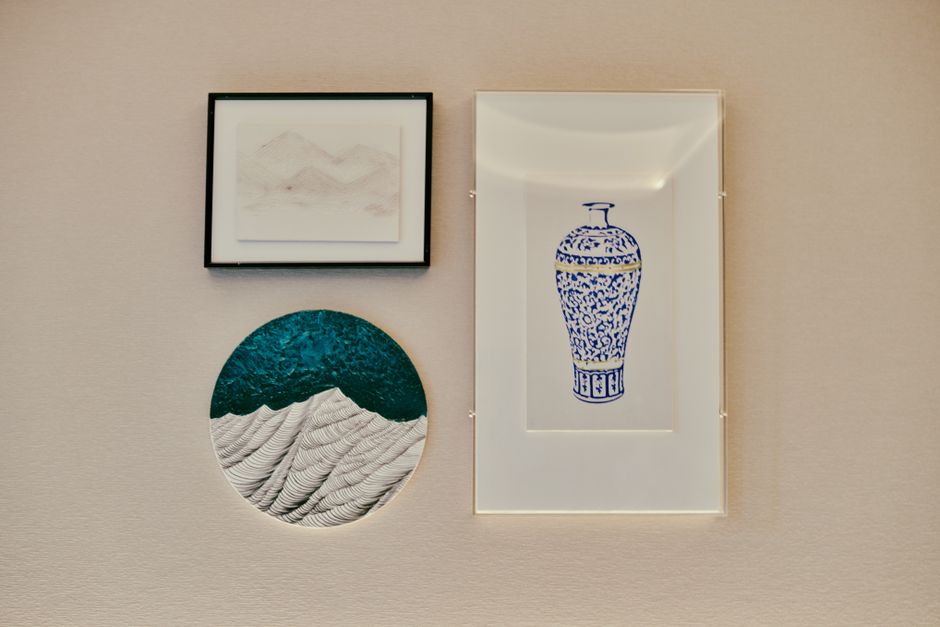
A paint by number canvas is not always exactly the size on the box. What matters is the printed image area, not the fabric.
Measure the printed picture edge to edge, then measure the blank margin around it. Write both numbers down. If the margin is under an inch, stretching over wooden bars is off the table, because stretching needs several inches to wrap and staple. That is the normal case with these canvases, and it is the piece of information most framing advice leaves out.
What you can do with a narrow margin: mount the canvas flat to a rigid board and frame the board, or frame it flat behind a mat that covers the trimmed edge. Both are straightforward, and the mechanics are in the framing walkthrough.
Frame materials, honestly compared
Wood
The default, and the right default for almost everything in this catalog. Warm, heavy enough to feel solid, and available in every finish from raw oak to dark walnut.
It suits landscapes, cabins, wildlife and florals, which is to say nearly every paint by number design people actually hang. A mid-tone wood is the safest single choice in the whole article: it disappears against most walls and competes with nothing.
Metal
Thin, light and clean-edged. Genuinely good in a room with modern furniture, and the only sensible option if the frame has to be very slim.
The honest drawback is that a narrow metal edge around a warm-toned landscape can read as mismatched. Metal works best when the painting itself has strong graphic shapes or a cool palette. A snow scene or a night sky takes a slim black or silver frame well; a golden barn at sunset generally does not.
Molded and plastic
Cheap, light and fine for a first attempt or for something you may re-frame later. They photograph better than they look in person, and the finish tends to chip at the corners over a few years.
There is no shame in one. If the alternative is a finished canvas rolled in a cupboard for two years, the inexpensive frame wins.
Size and proportion
Two rules cover most of it.
The frame should overlap the printed image as little as possible. A quarter-inch of overlap all round is normal and holds the canvas in place. More than that and you start losing the picture, which matters more on a paint by number than on a photograph because the composition runs right to the edge.
Frame width should scale with the canvas. A wide, heavy molding overwhelms a 12x16. On a 16x20 or 18x24 it looks deliberate. If you are unsure, narrower is the safer error.
Mats
A mat is a card border between the picture and the frame. It does three useful things: it gives the painting breathing room, it holds the frame away from the surface, and it hides a trimmed or uneven canvas edge.
That last point makes a mat unusually useful for paint by numbers specifically. If your canvas edge is ragged from the scissors, a mat solves it in one step.
On color: off-white or a light neutral, almost always. A mat picked to match a color in the painting sounds clever and generally looks fussy. Two to three inches is a comfortable width.
Glass, acrylic, or neither
Paintings are traditionally framed without glazing, and a varnished acrylic surface genuinely does not need it. Leaving it open also lets you see the brushwork, which is the part you did.
Reasons to glaze anyway:
- Sunlight. If the only wall available gets direct sun, UV-filtering glass or acrylic is the difference between a painting that holds its color and one that goes pale in a few years. Reds fade first.
- Kitchens and busy hallways. Cooking grease and passing shoulders are both real.
- You used a mat. A mat generally wants glazing to sit behind.
Between the two, acrylic glazing is lighter and will not shatter; glass is more scratch-resistant and clearer. For anything above 16x20, acrylic.
Matching the room, briefly
Pick up something already in the room rather than something in the painting. If the furniture is oak, an oak-toned frame ties it together. If the woodwork is painted white, a white or pale frame is a safe answer for any subject.
If you are hanging several finished canvases together, keep the frames identical and let the paintings differ. A wall of mixed frames reads as clutter; a wall of matching frames reads as a collection, even when the paintings have nothing in common.
Ready-made or custom
Standard sizes exist for a reason. 12x16 and 16x20 are both common off-the-shelf frame sizes, so a ready-made frame will usually fit a paint by number without any custom work. That is worth checking before spending on custom framing.
Custom framing earns its cost when the canvas has been trimmed to a non-standard size, when you want a specific mat and glazing combination, or when the piece matters enough to want it done once and done properly. Take the canvas to the shop rather than measurements alone. Any competent framer will tell you in half a minute whether stretching is possible, which saves an argument with the internet.
The option that skips all of this
Framed kits arrive pre-stretched on a wooden frame and include a small wooden easel. You put the brush down and hang it. If framing is the part you would rather not deal with, that is what the framed 16x20 range is for, and the same applies to a custom canvas, which can be ordered framed.
Common questions
How long should I wait before framing?
Several days after the last brushstroke, and longer where the paint went on thick. Acrylic is touch-dry in minutes and cured much later, and a frame pressed against soft paint leaves a mark.
Do I need to varnish before framing?
No, but it helps if the piece will hang unglazed, because varnish is what lets you dust it. There is more in the canvas care guide.
Can I use the frame the kit came in for a different painting?
Only if the canvas sizes match exactly, and only if the first canvas can be removed without tearing. Usually not worth the risk to the first painting.
The canvas has a crease. Should I frame it flat?
Mounting it flat to a board under gentle even pressure is the best chance of pulling a crease out. It is also the reason kits that ship rolled in a tube rather than folded are worth paying for in the first place.


