


You need two water pots and a roll of paper towel. That is the entire list of things not already in the box.
Everything else marketed for this hobby is optional, and a fair amount of it is actively unhelpful. Here is the honest breakdown.
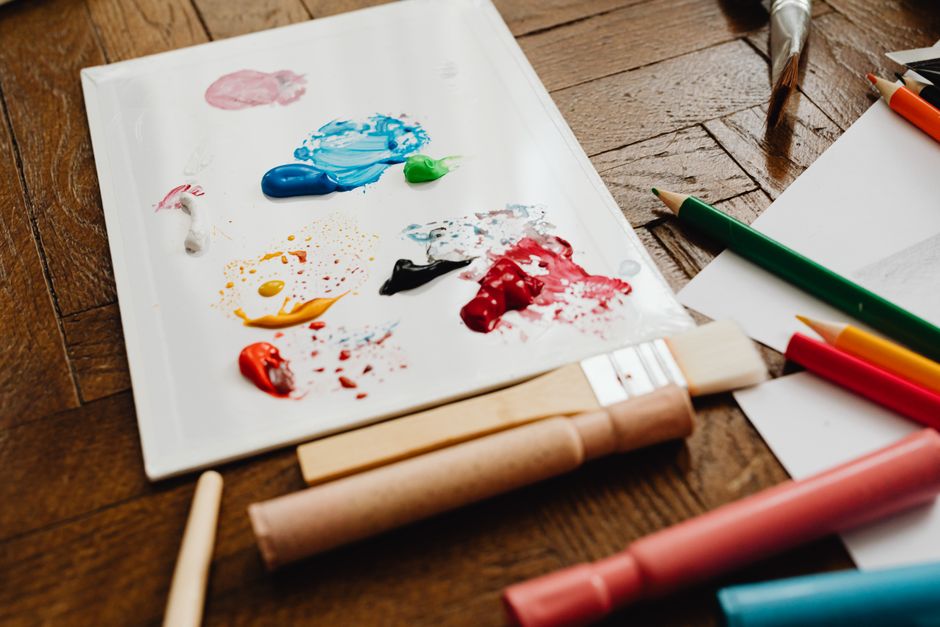
What comes in the kit
- Pre-primed canvas, printed with the design and numbers. Framed kits arrive stretched over wooden bars.
- Vacuum-sealed premixed acrylics, numbered to the canvas. The sealing matters — unsealed acrylic dries in the pot on a warehouse shelf, which is the most common complaint in this product category.
- Four brushes in different sizes with stock kits, three with custom photo kits.
- An 11 by 17 reference print, so you are matching against something you can see.
- A wooden tabletop easel with framed kits.
We do not sell brushes separately, because the ones included do the whole job.
The two things you actually need to add
Two water pots. One to rinse the worst off, one to finish. This is not fussiness — a single jar becomes grey soup within the hour and puts that grey into every color painted afterwards. Two jam jars are fine.
Paper towel. To dry the brush after every rinse. A wet brush thins the next color without you noticing, and that is the cause of most patchy, thin-looking sections.
Worth having, not required
- A good lamp, neutral 4000–5000K, positioned so your painting hand does not shadow the work. If you buy one thing, buy this. Unreadable numbers is the leading cause of abandoned kits.
- A magnifier, if the fine sections are a strain. A larger canvas next time is the better long-term answer.
- Toothpicks, for stirring a drop of water into thickened paint. A drop, not more.
- An old towel under the canvas. Wet acrylic wipes off most hard surfaces; dry acrylic does not come out of fabric at all.
- Satin acrylic varnish, if you intend to hang it. It evens out the patchy sheen from thick and thin passages. Wait several days for the paint to cure, and test on a corner.
Commonly recommended, generally not worth it
Extra brushes. The included four cover every section size in the design. A more expensive brush does not make a numbered canvas better.
A palette. The paint is premixed in its own pots. There is nothing to lay out.
Acrylic retarder or flow improver. Sold to slow drying and improve flow. On a numbered canvas the fast drying is the feature — it is what lets you paint an adjacent section within minutes.
Texture paste or modelling medium. Applied before painting it buries the numbers; applied afterwards it sits on top as a coating.
A large studio easel. Nice if you already want one. The tabletop easel in a framed kit does everything required.
If you are running out of paint
Most common on large canvases with a lot of sky or one dominant color. Extra paint sets exist for most designs and are the reliable answer — matching a premixed color by hand is much harder than it sounds and rarely exact.
Common questions
What do I need to buy besides the kit?
Two water pots and paper towel. Everything else is included.
Do I need better brushes?
No. The four in the kit cover every section size in the design. Brush quality is not what limits results on a numbered canvas.
Is varnish necessary?
Optional. It evens out the uneven sheen you get from mixing thick and thin passages, which is worth doing on a canvas you intend to hang.
What if I run out of a color?
Extra paint sets are available for most designs. Mixing a match by hand from the remaining pots is possible but hard to get right.


