


Painting the same landscape four times, once per season, teaches you more about color than any amount of reading will. Not because the subjects are difficult, but because you spend twenty hours discovering that snow is blue, and then another twenty discovering that autumn shadow is violet.
It is also the most practical reason to own more than one canvas: art you rotate stays looked at. A painting hung for three years stops being visible.
What each season actually asks of a painter
Spring is the hardest and looks the easiest. The palette is a dozen close greens and pale pinks, and close colors are slow work — you spend a lot of time checking which pot is which. Sections tend to be small because blossom and new foliage break the canvas into fragments.
Summer has the strongest contrast and the largest areas. Deep shadows, bright sky, a lot of open space. It is the most forgiving season to paint and the one to start with.
Autumn is the most satisfying. Warm colors sit next to their complements — orange against the blue of the sky, red against remaining green — and complementary neighbors sharpen each other. This is why autumn scenes look vivid on a wall without any extra effort from the painter.
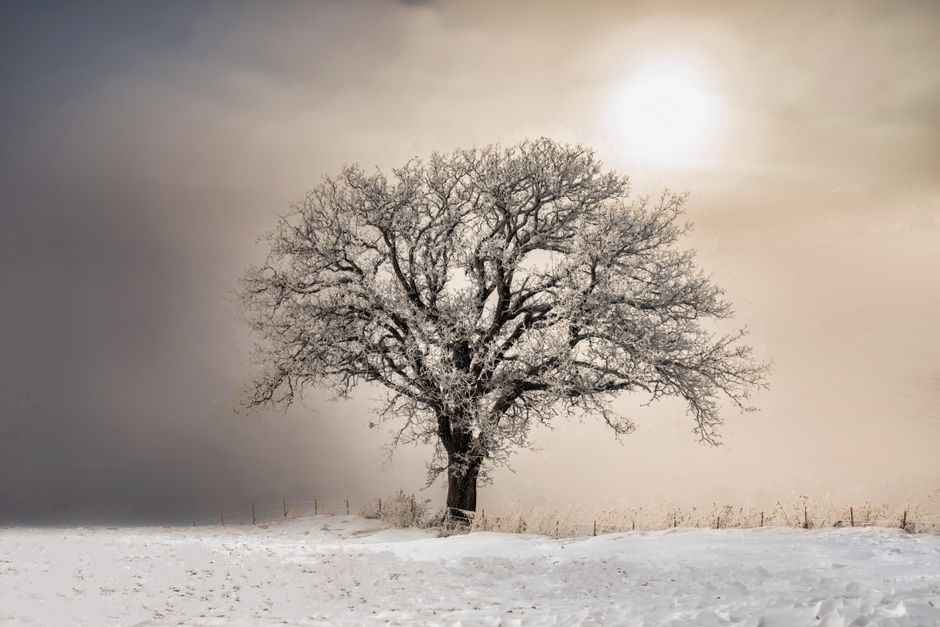
Winter is the surprise. Snow is not white. In a well-observed winter design the snow is painted in blues, greys and pale violets, with white reserved for the few places the sun hits directly. Working through one teaches you to see shadow color better than anything else in the catalog.
Painting a set
If you intend to hang four together, three things matter:
- Same size and orientation. A four-piece group holds together on structure. Mixed sizes need a much larger arrangement to work.
- Paint them in sequence, not in parallel. Your technique improves noticeably across a canvas. Painted one at a time, the difference reads as progression; painted simultaneously, the first one just looks weaker.
- Same artist if you can. A shared palette and a consistent way of handling light run through everything one painter does, and that is what makes four canvases read as a set rather than four pictures.
Hung as a group: two to three inches between frames for a grid, and center the whole arrangement at 57 to 60 inches from the floor — not each individual piece.
Rotating instead of grouping
The alternative, and the one we would actually recommend for most homes: hang one at a time and change it with the season.
One nail, four canvases, and the wall is different four times a year. The three not in use store flat against the back of a wardrobe. It costs nothing, keeps the art visible, and gives you a small reason to look forward to changing it.
It also solves the problem with seasonal work — a snow scene in July looks out of place in a way an evergreen landscape does not.
Choosing one season rather than four
If a set is more than you want, pick by the room rather than by preference:
- A cool room — greys, blues, north-facing — is warmed by an autumn or firelit scene.
- A warm room — wood, cream, terracotta — gains depth from a winter or water scene.
- A dim room or hallway needs strong contrast. Summer and winter both have it; spring generally does not and will look flat under one overhead bulb.
Common questions
Which season is easiest to paint first?
Summer. Large areas, strong contrast, and colors that are easy to tell apart in the pot.
Why is snow painted in blue and grey?
Because that is what it is. Snow reflects the sky, so its shadows read blue or violet. White is reserved for direct sunlight, and a design that used white everywhere would look flat.
How do I hang four canvases as a set?
Same size, two to three inch gaps, in a two-by-two grid or a horizontal row, with the center of the whole group at 57 to 60 inches from the floor.
Should I paint all four at once?
No. Paint them in sequence. Your work improves across a canvas, and painting in parallel makes that read as inconsistency instead of progress.


