


We do not make an angel design, and we would rather tell you that in the first line than sell you something else on the way down the page. Our thirty-nine designs are licensed landscapes, wildlife, cabins and florals. There is no angel among them.
What follows is honest guidance for anyone shopping for one: why this subject is searched for so often, what separates a good kit from a poor one, and the one thing we do offer that genuinely fits the reason people usually want it.
Why people paint angels
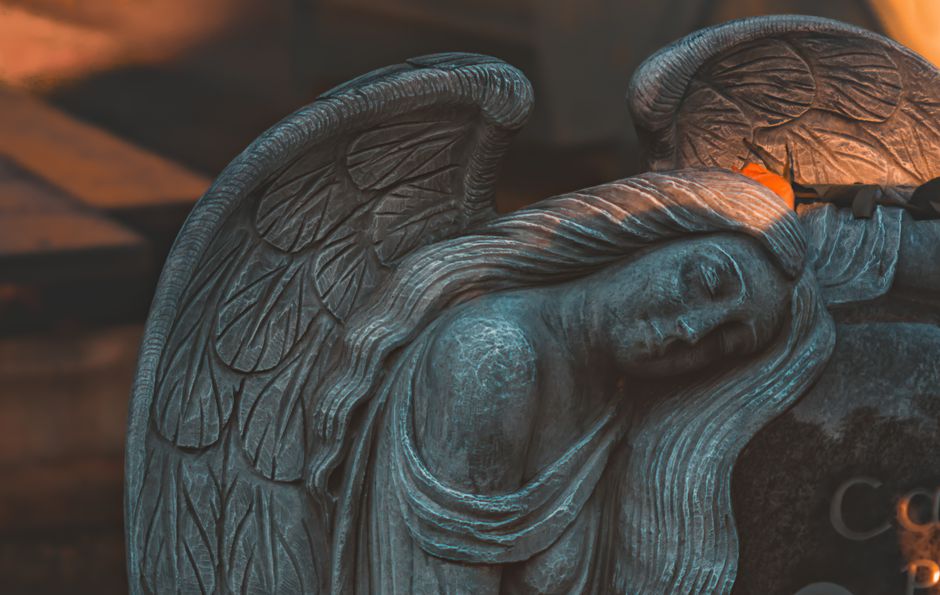
Two reasons account for most of it, and they are not the same.
The first is faith. An angel canvas is a devotional object, often intended for a particular room or given at a confirmation, a christening or Christmas. What matters here is the specific image, and generic wings will not do.
The second is memorial. A great many people search for this after losing somebody, and they are looking for a way to spend a few quiet hours doing something connected to that person. If that is why you are here, our page on painting through grief is written for exactly that, and it is honest about what painting can and cannot do.
What to check before you buy one
Angel designs are produced by dozens of sellers at very different quality. Five things separate them, and none show in a listing photograph.
- Rolled in a tube, not folded. A folded canvas arrives with creases through the picture and they never come out. This is the most common complaint in the whole category and the easiest to avoid.
- Legible numbering. Drapery and feathers produce a great many small sections, so this subject punishes faint printing more than most. A larger canvas has larger sections.
- A full-size reference print. Not a thumbnail on the box. You will be checking it constantly, because an angel design is usually built from many near-identical pale tones.
- Replacement paint available. Ask before ordering. Many sellers have no way to send you more of one color, which means a single empty pot ends the project.
- Framed or unframed, decided up front. Unframed canvases are usually trimmed too close at the edge to stretch over bars yourself.
Why this subject is harder than it looks
Angel designs tend to be pale, and pale is difficult. A canvas made mostly of creams, whites and light grays gives you very little contrast to judge by, and two adjacent sections can look identical in the pot and only separate once they are dry and side by side.
Three things help. Work in good light, from the side. Test an unfamiliar color on scrap paper before committing it, because acrylic dries a shade darker than it looks wet. And expect white and cream sections to need two thin coats rather than one thick one, since light paint covers the printed numbers poorly.
Feathers are the other difficulty. They convert into a great many long, narrow sections. Cut the edge in first with the tip of the brush and fill the middle afterward, rather than trying to do both in one stroke.
What we can offer instead
The honest answer for most people arriving here is a custom canvas made from your own photograph. If the reason for wanting an angel is memorial, a photograph of the person, their house, or a place that meant something to them is a more personal object than a stock angel, and it is the most common thing our custom customers actually send us.
It is printed in the USA on pre-primed cotton canvas at 12 x 16, 16 x 20 or 18 x 24, framed or unframed, with the option of one or two spare paint sets at checkout. Being straight about the result: it will look like a painting of your photograph rather than a copy of it, and faces soften. That is the point for most people, and it is worth knowing before you order.
A photograph of a memorial statue or a headstone angel also converts well, as it happens, because stone is exactly the kind of subject this process handles best: strong shapes, clear light and shadow, no fine texture to lose.
If you would rather browse what we do stock, the full range is here.
What is actually in one of our kits
Since kit contents get invented online, ours plainly: pre-primed cotton canvas, shipped rolled in a tube. Acrylic paints, vacuum-sealed so they have not dried on a shelf. Brushes in a range of sizes. An 11 x 17 reference print. The framed sizes come with a small easel. Every design has a matching replacement paint set.
We ship within the United States only.
Common questions
Does painting really help with stress?
Modestly, and it is worth being careful here. Reviews of controlled trials have found real reductions in anxiety from art therapy delivered by a trained therapist. A paint by numbers kit at your kitchen table is a hobby rather than a therapy, and nobody has shown it treats anything. What is fair to say is that a structured task which occupies the hands and eyes gives many people a few hours of relief from turning something over, which is not nothing.
Is an angel design suitable for a child?
It depends entirely on section size rather than subject. Fine drapery and feathers are the wrong kind of detail for a young painter. We do not make a children's range, and we would not recommend handing over an adult kit with a lot of small sections.
How long does one take?
Ten to twenty hours for a standard canvas, spread over as many weeks as you like. A pale, detailed subject like this tends to sit at the longer end, because there are more sections and each needs more care.
Should I varnish it?
Optional. A matte or satin acrylic varnish protects the surface and evens out the patchy sheen where some colors dry glossier than others. Let the paint cure for several days first. Matte usually suits a pale subject better than gloss, which throws reflections.
What if I make a mistake?
Let it dry completely, then paint the correct color over the top. Expect two or three coats if you are covering something darker with something lighter. Do not try to wipe wet acrylic off the canvas, which smears it into neighboring sections and can lift the printing.


