


To answer the obvious question first: there is no parrot design in the Ledgebay catalog. There are several bird designs, they are among the best kits in the range, and if it is specifically a parrot you want there is a way to get one. Here is the honest version rather than a page that dances around it.
Why birds suit this format so well
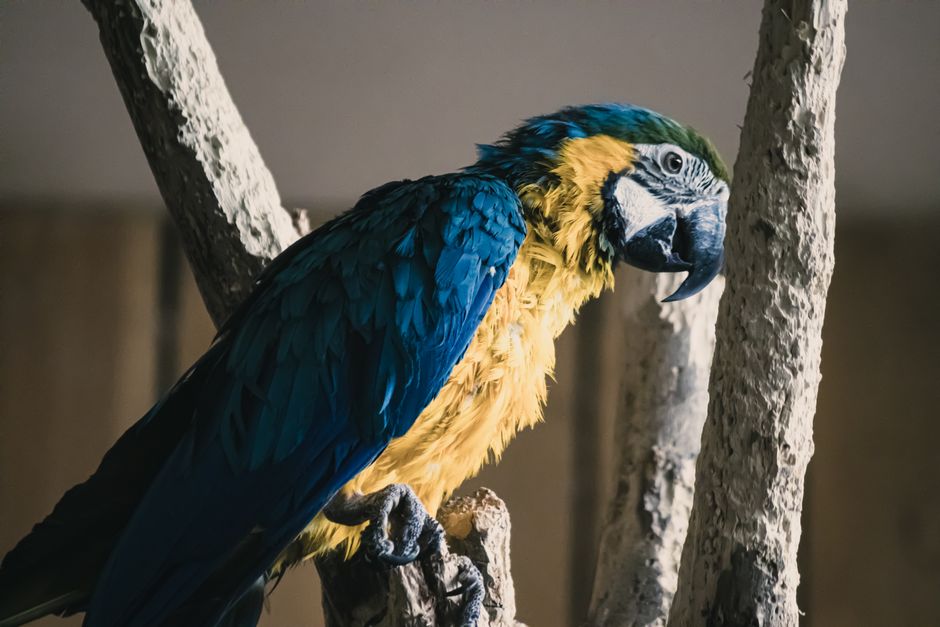
Better than almost any subject except architecture, and for a specific reason.
Plumage is built from bands and patches of distinct color rather than from gradual shading. That is exactly what a numbered canvas does: it separates a picture into flat shapes. A wing with three distinct blues in it converts perfectly, because the blues really are three distinct blues rather than a smooth transition somebody has to fake.
Which is also why parrots would work extremely well, and why the demand for them is not surprising.
The bird designs that do exist
Hummingbird
James Hautman's ruby-throated hummingbird hanging beside a weathered fence post, wings blurred, throat catching the light, with morning glory vines running over the post and rail. The background is left as a soft green wash so nothing competes with the bird.
One of the best-rated and most straightforward kits in the range, and a good first canvas. The green background is one large simple area, the leaves are generous shapes, and the flowers are bold rather than fussy. Only the bird asks for care, and it is small.
The blurred wings are already handled for you as two or three numbered grays laid over the background tone. Put them in flat, let them dry, and the wing reads as moving from a step back.
Rural Route Bluebirds
Hautman again: two eastern bluebirds settled on the lid of a dented galvanized mailbox, with an apple branch in white blossom coming in from the corner and a tall summer cloud over an open field behind.
Also a good first canvas, and several reviewers say it was theirs. The sky, the field and the body of the mailbox are large and calm, which concentrates all the detail into two small places: the birds and the blossom.
The blues in the wing are meant to look banded rather than blended. Lay each one in cleanly and leave it alone. The bird resolves the moment you step back.
Enchanted Woods
Derk Hansen's four black-capped chickadees working through bare brush outside a snowbound cabin, one of them upside down on a twig the way they actually feed.
Considerably harder than the other two. The bare foreground branches mean a great many small sections. Worth it if close work is what you enjoy; not a first canvas.
And two where a bird is part of the scene
Guiding Light has a bald eagle turning on the air off a cliff-top lighthouse, small but simply built from a handful of shapes. Sunset Swans is what the name suggests. Neither is a bird portrait, but both put one at the center of the picture.
How to get a parrot
A custom canvas made from your own photograph. If you keep a parrot, this is a genuinely good use of it, and parrots convert unusually well: strong shape, hard-edged blocks of color, and a face defined by pattern rather than by subtle tone.
What to send:
- Side or three-quarter view rather than head-on, so the shape of the beak and the line of the wing read clearly.
- Bright indirect light. Direct sun blows out the highlights on glossy plumage and flat light loses the structure entirely. Near a window, out of the beam, is close to ideal.
- Fill the frame with the bird. A parrot across the room becomes a small subject made of very few sections.
- A background with some tone. A brightly colored bird against a plain white wall separates poorly.
- A photograph you took, or one you have permission to use. Wildlife images found online belong to the photographers who took them.
Custom canvases come in 12x16, 16x20 and 18x24, framed or unframed, printed in the USA. There is more detail in the guide to choosing a paintable picture.
Painting birds well
- Background first, and let it dry. Sky, foliage and anything behind the bird goes in before the bird does. A pale feather edge painted onto still-soft background drags immediately and the clean edge is gone.
- Follow the direction of each section. The shapes already run the way the feathers lie. A stroke that goes with them reads as plumage; a dabbing motion turns the same shapes into patches.
- Leave the eye until last. Small, quick, and the thing that makes the whole painting land. Do it when everything around it is dry and your hand is warmed up.
- Do not try to blend the color bands. They are meant to sit as distinct steps. Blending them is the most common way people make a bird look worse than the design intended.
Common questions
Which bird design is easiest?
Hummingbird, narrowly, because of the plain background. Rural Route Bluebirds is close behind and both are reasonable first canvases.
Are the birds anatomically accurate?
In the Hautman designs, yes. James Hautman is one of the most decorated wildlife painters in the country and the birds are exact rather than stylized, which is part of why they convert so cleanly.
the bird designs and how to paint feathers covers the rest of them, and the one technique they all need.
Can two birds go on one custom canvas?
Yes, if they are in the same photograph. Choose 16x20 or larger so each bird still gets enough sections to look like itself.
What if I run out of a color?
Each stock design has a matching set in the extra paint collection. On a custom canvas the paints are mixed for your image, so the spare sets are added at checkout instead.
Where can I see the rest of the range?
The catalog lists all 39 designs and the customer gallery shows finished ones. If this would be your first kit, the beginner guide covers what makes a design easy or hard.


