


Paint by numbers is not a treatment for Alzheimer's disease. Nothing you buy in a craft aisle slows the illness or restores what it takes. It is worth saying plainly at the top, because a lot of what is written on this subject implies otherwise.
What art activity can offer is something smaller and still worth having: a calm, structured hour, a task with a visible result, and a way to sit alongside someone without needing conversation to carry the visit. There is real research behind parts of that, and it is more modest than the internet suggests. Here is what it actually says, and how to choose a canvas that works.
What the research actually found
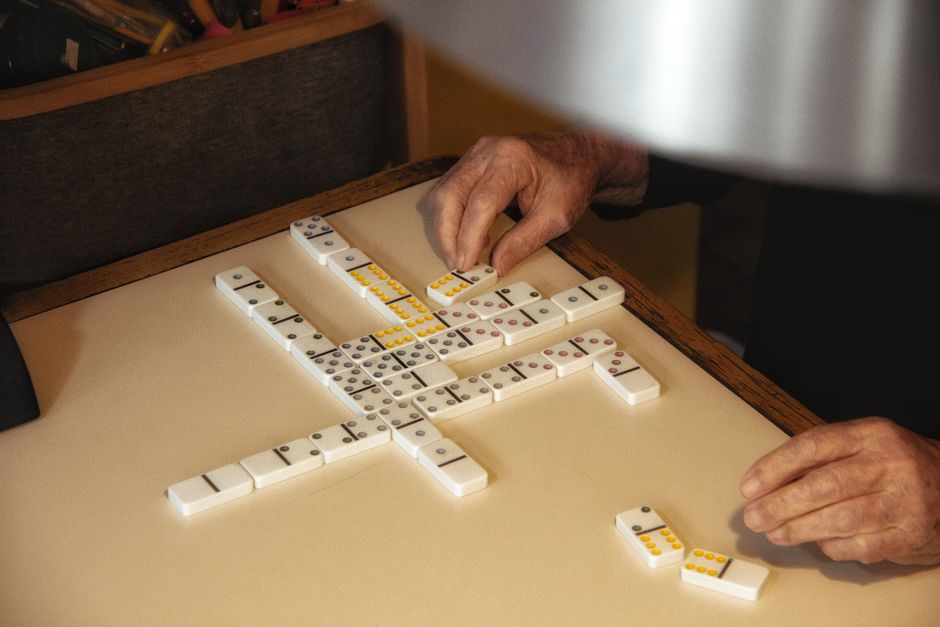
Art activity is linked to a lower risk of mild cognitive impairment — in people who do not yet have it. The study most often quoted here was published in Neurology in April 2015 by Rosebud Roberts, Yonas Geda and colleagues at Mayo Clinic. It followed 1,929 cognitively normal older adults in Olmsted County, Minnesota for an average of four years, during which 121 developed mild cognitive impairment. People who had engaged in artistic activities in both middle and later life were 73 percent less likely to develop it.
Two things about that finding get lost when it is repeated. It concerns mild cognitive impairment rather than Alzheimer's disease, and it is an observed association in people who were still cognitively healthy — not evidence that taking up painting after a diagnosis changes the course of anything. It is a prevention finding, and even then it cannot rule out that the sort of person who paints is different in other ways too.
Structured art groups helped people who already had dementia — with engagement, not memory. Jennifer Rusted, Linda Sheppard and Diane Waller ran a multi-center randomized trial published in Group Analysis in 2006, comparing art therapy groups against recreational activity groups. Forty-five people took part. The art therapy group showed lasting improvement in mental alertness, sociability, and physical and social engagement. Those are real outcomes and they matter to families. They are not memory outcomes.
Making art lowers cortisol in adults generally. A 2016 study by Girija Kaimal, Kendra Ray and Juan Muniz at Drexel University measured saliva cortisol in 39 adults before and after 45 minutes of open-ended art making. Around three quarters finished with lower cortisol than they started with, and prior art experience made no difference to the result. The participants were aged 18 to 59, so this is evidence about art and stress in adults, not about dementia.
Producing art changes brain connectivity in healthy older adults. Anne Bolwerk and colleagues published an fMRI study in PLOS ONE in 2014 comparing 28 recently retired adults across ten weeks: half produced art in a class, half studied art at a museum. The group that produced art showed greater improvement in functional connectivity, and that change was related to psychological resilience. It is a small, non-clinical study and it did not measure memory.
Taken together, that is a reasonable case for art as a worthwhile activity and a poor case for it as a therapy. Treat anyone who tells you otherwise with suspicion.
Why the numbered format helps in particular
Freehand painting asks a lot of questions: what to draw, where to start, which colors to mix, whether it is any good. For someone whose planning and sequencing are affected, those questions are the barrier, and they arrive before the first brushstroke.
A numbered canvas removes all of them. The drawing is done, the colors are chosen, and each section carries the number of the pot that fills it. What is left is a single, repeatable, low-stakes task with an immediately visible result — and the visible result is most of the point. A section filled in is a small, unambiguous success at a time when those are in short supply.
Choosing a canvas that will actually work
This is where most advice goes wrong, because it recommends whatever is cheapest rather than what is manageable. What matters:
- Large sections, few of them. A simple design on the largest canvas available is the right combination. Detail is the enemy here, and a busy design printed small is the hardest thing you can put in front of someone.
- Strong contrast between neighboring colors. If two adjacent numbers are near-identical shades, telling them apart becomes the task instead of painting.
- Familiar, unthreatening subject matter. Flowers, birds, a cabin, a landscape. Familiar imagery is used deliberately in dementia care, and a scene someone recognizes will hold attention far longer than an abstract pattern.
- Pre-stretched and ready to go. Anything that has to be flattened, taped down or assembled is a barrier before the painting starts. A framed canvas that arrives on a wooden frame with a small easel can simply be set on the table.
- A printed reference to look at. Leaning over a canvas to find a number is uncomfortable and disorienting. A large printed copy of the design beside the canvas is easier on the eyes and on the neck.
Among our own designs, the ones that suit this best are the simplest: Be Still, Summer's Song, Hummingbird, Guiding Light, Rural Route Bluebirds and Away From It All. They have broad areas of a single color, clear boundaries and gentle subjects. The framed 16 x 20 is the version to choose: the largest sections, the least setup, and an easel included. You can see them all in the kit collection.
Avoid our more demanding canvases — Orchard Puzzle, Seaside Paradise, Mountain Village, Enchanted Woods — however attractive the picture is. They have many small sections and close tones, and they will frustrate rather than occupy.
A photo from their own life
Familiar images do more work than pretty ones. A childhood house, a wedding photograph, a farm, a dog that was part of the family for years — these hold attention in a way that a generic landscape does not, and they give a visitor something to talk about that does not depend on recent memory.
A canvas made from your own photograph is one way to do that. Choose a photograph with a simple, clear subject and good contrast rather than a crowded group shot, and choose the largest size so the sections stay generous. Even if the canvas is never finished, the photograph itself is worth having on the table.
Sitting with someone while they paint
A few things families tend to learn the hard way:
There is no finishing. The canvas does not have to be completed, and treating it as a project with an end turns a pleasant hour into a source of failure. Paint for as long as it is enjoyable and stop there.
Do not correct. A section filled with the wrong number does not matter. Correcting it introduces the idea of getting it wrong, which is the one thing worth keeping out of the room.
Paint alongside rather than supervising. Two canvases on the table changes the dynamic entirely. It becomes something you are doing together rather than something being administered.
Set it up before you start. Pots open, water out, brushes laid out, good light from the side rather than overhead. Fumbling with packaging is where sessions fall apart.
Stop if it stops working. Agitation and frustration are signals, not obstacles to push through. On a difficult day, put it away and try another time. Some days it will not be the right activity, and that is not a failure of the activity or of the person.
The honest summary
If you are looking for something that will slow Alzheimer's disease, this is not it, and you should be wary of anyone selling you a craft kit on that basis. If you are looking for a calm, structured activity that someone can succeed at, that fills an afternoon without depending on conversation or recall, and that leaves something on the wall afterwards, a simple numbered canvas does that job well.
Discuss any activity plan with the clinician who knows the person, particularly if there are vision, tremor or attention difficulties that would make a fine-detail task a source of frustration rather than a break from one.


