


A numbered canvas will hold your attention for two hours. It will not train your brain. Those are different claims, and this page used to make the second one. It should not have.
There is no evidence that paint by numbers improves concentration in any lasting, transferable way. Nobody has studied it. What the activity reliably does is give attention somewhere easy to sit, which is a genuinely useful thing and worth understanding properly.
Why it holds attention so well
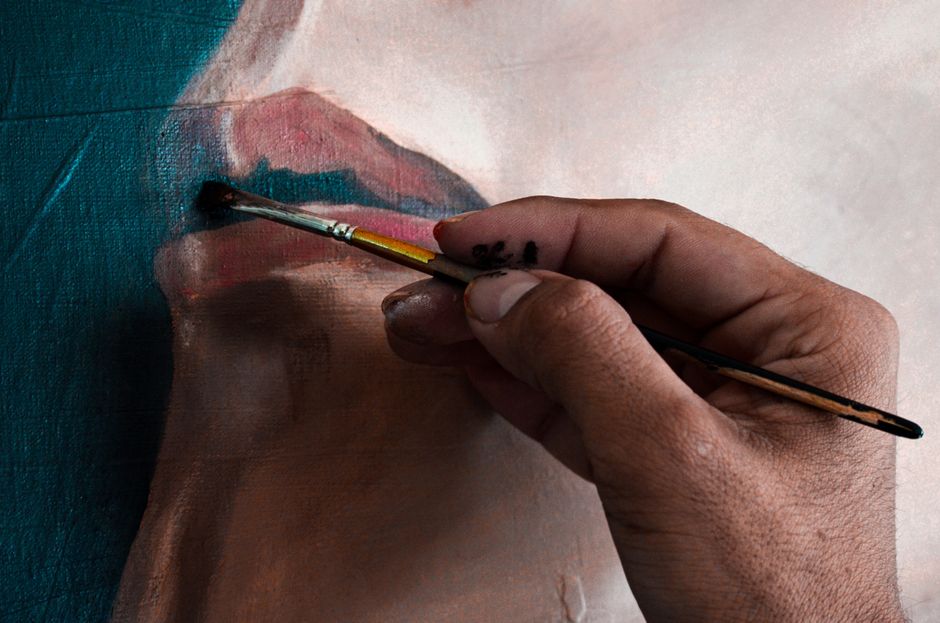
Concentration usually breaks at decision points. You look up, weigh an option, and the thread goes. Freehand painting is full of them: what to draw, where, which colors to mix, whether it is working.
A numbered canvas removes every one of those. The drawing is printed. The palette is premixed and numbered. The only question in front of you is which section is a five, and the canvas has already answered it.
What is left is a loop short enough to stay inside: find the number, fill the section, find the next one. People lose an hour to it without noticing. That is not improved concentration — it is a task engineered so concentration is not required.
The difference that matters
It is worth being precise, because the distinction changes what you should expect:
- Attention while painting: reliably high. This is the real effect and it is why people describe it as absorbing.
- Attention afterwards, at work or reading: no evidence of any carry-over. Claims of "brain training" from craft kits are marketing.
- Attention as a skill you are building: no. If anything the kit is doing the work for you, which is precisely why it is restful.
On the general question of creative activity and wellbeing, there is real research — a 2010 review in the American Journal of Public Health found evidence that creative engagement lowers anxiety and mood disturbance, while noting that most studies were small and uncontrolled. That is about mood, not cognition, and it is a modest finding rather than a strong one.
How to get the absorbed version rather than the frustrated one
The same activity can be either, and the difference is mostly setup.
- Fix the light before anything else. Straining to read a number is the fastest way out of a state of concentration. Daylight first, a good lamp second, positioned so your hand does not shadow the work.
- Work one number at a time across the whole canvas. Hunting for the next section of a color you have already opened is the main thing that breaks the loop.
- Lay the pots out in number order. Small thing, noticeable difference.
- Go up a canvas size if the sections feel tight. Bigger sections hold attention; tiny ones test patience instead.
- Two water pots, one to rinse the worst off and one to finish, so you are not stopping to change grey water.
- Stop at a color change, not mid-shape. Resuming is then a two-second decision rather than a puzzle.
If focus is the actual problem
If concentration has become difficult in a way that affects work or daily life, a craft kit is the wrong tool and we would rather say so. That is a conversation for a doctor. Painting is a good evening, not an intervention.
What a kit does offer is an hour that is not a screen, with something to show at the end of it. On its own terms that is worth having.
Common questions
Does paint by numbers improve concentration?
It holds concentration while you are painting. There is no evidence it improves concentration generally or that any benefit carries over to other tasks.
Is it good for people who find it hard to sit still?
Often yes, because progress is visible every few minutes and you can stop whenever you like without losing your place. But it depends on the person, and free painting suits some people better.
Why do I lose interest two thirds of the way through?
Usually because the remaining sections are the small ones. Working one number at a time across the whole canvas spreads the tedious parts out instead of saving them all for the end.
Does a bigger canvas make it easier?
Yes, noticeably. A 16 by 20 gives every section about two thirds more area than a 12 by 16 of the same artwork, and it is the single most effective change if the fine work is a strain.


