


Water is the reason a great many people take up painting at all, and on a numbered canvas it is unusually rewarding. The effects that look most impressive when they are finished are, on a numbered canvas, some of the easiest things on it.
Here is why, and how to get them right.
Why water suits a numbered canvas so well
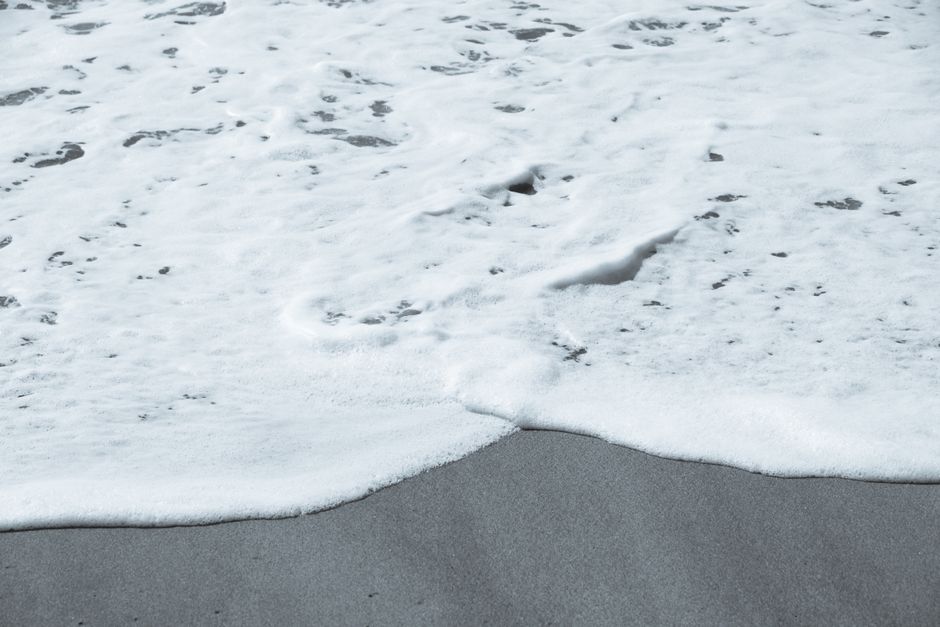
Painting water freehand is difficult because it is all about edges: where an edge is soft, where it is hard, where a reflection breaks up. Those judgments take years.
A numbered canvas has already made every one of them for you. The reflection has been broken into bands, the wave has been separated into its greens and whites, and all you are doing is laying them down in order. The shimmer that appears when the last band goes in feels like something you did, and in a real sense it is, because sequence and patience are what produced it.
The four things worth knowing before you start
Let each band dry before you lay the next one beside it
This is the single rule that separates clean water from muddy water. In surf, the greens and the whites sit directly against one another with no color between them. Wet acrylic dragged into wet acrylic is the only way to lose that edge, and once it has gone the wave stops reading as translucent.
Work every region of one number across the whole area, then come back for the next number. By the time you return, the first has set.
Reflections are darker and lighter than you expect
A bright object reflects darker than it is, and a dark object reflects lighter than it is. Water pulls everything toward the middle. The kit already accounts for this, so the useful thing is simply not to override it when a reflection looks wrong to you. It is not wrong.
Horizontal, always
Wherever there is a choice about which way to move the brush, move it horizontally across a water region rather than up and down. Water lies flat, and the direction of the stroke carries that even under a coat of paint.
A moon track or a sun path is the easy part
It looks like the hardest thing on the canvas and it is the simplest. The track is a ladder of numbered bands that narrow as they go back toward the horizon. Lay them one after another from the bottom up, and the shimmer builds itself.
Our water designs, honestly ranked
We should say plainly that most of our water is northern lake rather than open ocean. If the sea specifically is what you want, two of the four below are the ones to look at.
Be Still — the gentlest
Be Still is an empty white chair at the top of a beach at sunset, with a burst of gold across the water and a single breaking wave. Most of the canvas is sky and sea in wide bands, and the wave is the only place asking for a careful hand.
The sunset looks like it needs blending and does not. It is separated into numbered bands of gold, rose and violet sitting side by side; fill them all and stand back, and it reads as a gradient. Some reviewers found a few faintly printed sections, so paint this one under a good lamp.
Seaside Escape — the demanding one
Seaside Escape is deck chairs on wet sand, a timber fishing pier running out to the left, gulls, a sailboat, and waves coming in green and translucent with the sun behind them.
Our reviewers call it advanced, and the water is the reason. Breaking surf is built from a great many narrow numbered shapes and it occupies the middle of the canvas. Budget nearer twenty-five hours than fifteen. If you want a beach scene that is easier going, Be Still has one wave instead of five.
Moonlight Bay — the most forgiving
Moonlight Bay is a full moon low over a northern lake, a silver track across water that has not moved all evening, a campfire on the point and a canoe half out of the shallows. It is our most-reviewed design and reviewers describe it as easy and forgiving for a first canvas.
Sky, water and moon track are all wide unbroken areas. The fire is the only genuinely small work on it.
Still Waters — the reflection study
Still Waters is a cabin at dusk on a glass-calm lake, lamplight in the windows, a loon crossing water that mirrors the whole treeline. The large flower masses and broad water make it approachable, and the mirrored reflection gives a more practiced painter something to work at.
If the ocean you want is a particular one
The stretch of coast that matters to a person is usually a specific one rather than a generic one. If that is the case, a photograph of it can be turned into a numbered canvas directly: our custom kits are made from your own photo in 12x16, 16x20 or 18x24, framed or unframed.
One honest note about water photographs specifically. A picture taken into the sun, with the light coming through the wave, translates far better than a flat overcast shot of gray sea, because a numbered canvas needs contrast between regions to have anything to work with.
The rest of the designs are in the full collection.


