


Drawing is the cheapest skill in art to start and the slowest to fake. A pencil, paper and an eraser is the whole kit, and nearly everything worth learning is available free. What follows is what to learn first, whether you can teach yourself, and the courses, books and sites that are actually worth your evenings. Making your own numbered canvas is the other route, and it needs less drawing than you would think.
The Five Skills Drawing Actually Rests On
Realistic drawing is usually broken into five perceptual skills, a framework that comes from Betty Edwards and has held up well:
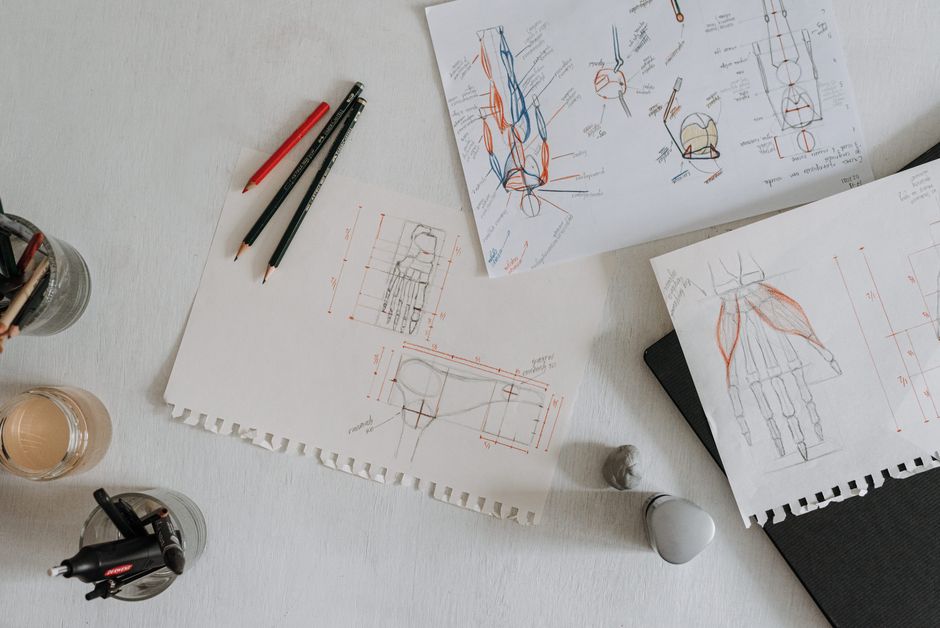
- Edges. Seeing and following the contour of a thing rather than the symbol you have in your head for it.
- Spaces. Drawing the shape of the gaps around and between objects, which is often easier than drawing the objects.
- Relationships. Angles and proportions judged against each other, the skill behind holding a pencil up at arm's length.
- Light and shadow. Shading, and what turns a flat outline into a solid form.
- The whole. The point where the other four stop being separate problems and the drawing comes together.
Almost every beginner's difficulty is one of these five, not a lack of talent. Working out which one is failing is most of the fix.
Can You Teach Yourself to Draw?
Yes, and most people who draw well did exactly that. The material is not hard to find and the sequence is not a secret. What it takes is regular practice at a size you can sustain, which for most adults means twenty minutes rather than a whole Sunday.
The comparison worth making is with writing. Nobody expects a first draft to be good, and nobody expects to improve without producing a quantity of mediocre pages first. Drawing works the same way, and the sketchbooks nobody sees are where the progress happens.
What to Learn First
Get a sketchbook, an HB and a 2B pencil, and a kneaded eraser. That is enough for the first year.
Then, roughly in order: line control, so a stroke goes where you intend it to; basic shapes and how they sit in space; shading a sphere, a cube and a cylinder until the light reads correctly; and simple perspective. Objects on your own table are the best subjects, because you can check your drawing against the thing itself.
Copy other people's drawings early on. It is how the skill has been taught for centuries, and it teaches your hand things that description cannot.
Where to Learn for Free
Three routes, and they suit different people.
Online Courses
Structured courses give you a sequence, which matters more than any individual lesson. Several of the large platforms offer financial aid or free audit options if the fee is a barrier.
The Art & Science of Drawing by Brent Eviston is the one most worth knowing about. It starts at genuine basics and builds slowly, and its companion module on form, space and perspective covers drawing cubes and cylinders convincingly, which is the wall most self-taught beginners hit.
Books
Books are still the most efficient way to learn this, and the good ones are inexpensive.
- Light, Shade and Shadow (Dover Art Instruction). Short, old-fashioned, and the clearest explanation of how shadows behave that you will find at the price.
- Perspective Made Easy, Ernest Norling (Dover Art Instruction). Perspective explained without mathematics, using drawings rather than diagrams.
- Drawing for the Absolute Beginner, Mark and Mary Willenbrink. Starts at how to hold the pencil and does not assume you know anything, which is rarer than it should be.
Blogs and Tutorials
- How to Learn to Draw: Stage One, Manual Skills — exercises for getting your hand to do what you tell it, which is where to begin.
- How to Draw a Marble — Thaneeya McArdle's walkthrough. A glass marble is a small, contained lesson in reflection and highlight.
- How to Draw a Rose — overlapping petals, which is really a lesson in reading edges.
- How to Draw a Mandala — construction and symmetry, and the most meditative of the four.
- Beginner pencil shading techniques — hatching, blending and how much pressure to use.
There is also a great deal of good instruction on YouTube, and a great deal of filler. The test is whether the video shows the drawing being made in real time, mistakes included.
Wrap Up
Mix the three: a course for the sequence, a book for the parts you need to reread, and tutorials for a specific problem in front of you. Then draw more than you read about drawing. A single subject is the easiest way to start, and a cow is more forgiving than it sounds. Will Kemp is one of the teachers worth the evenings, if you want somewhere to start.
Progress is gradual and mostly invisible from the inside. Date your sketchbook pages, because comparing this month with six months ago is the only reliable way to see it happening.
If you would rather spend the evening painting than learning to draw first, a paint by numbers kit hands you the drawing already done and lets you work on color and brush control instead. Our full catalog is here, Custom Paint by Numbers makes a canvas from your own photograph, and there is more on the subject in painting still life in acrylics.


