


Pastel is not one material. It is three, and they do not mix well. Soft pastel, hard pastel and oil pastel look similar in a box and behave nothing alike, and most early frustration comes from buying one and expecting the other.
Soft pastel
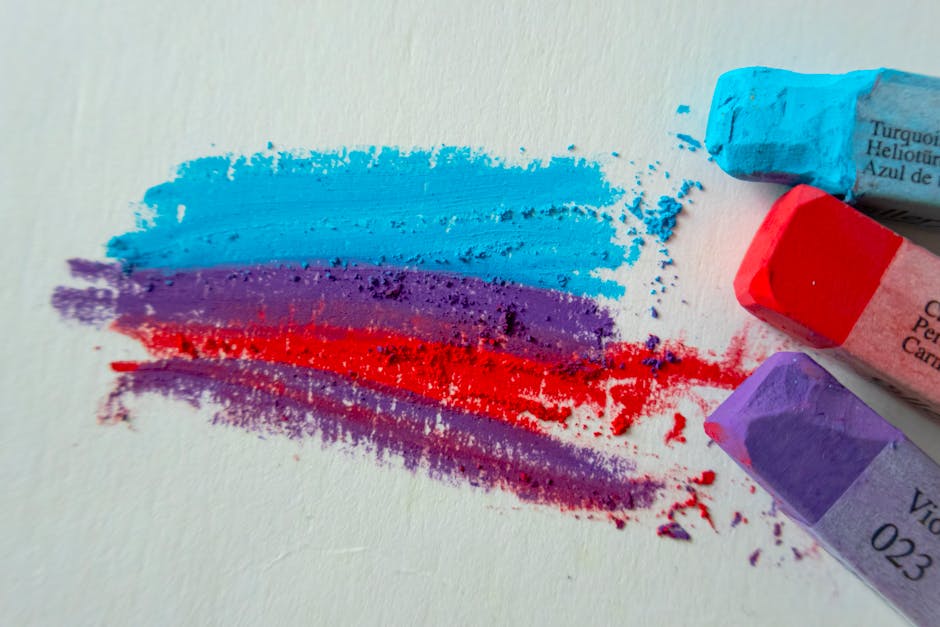
Nearly pure pigment with just enough binder to hold a stick together. That is why the color is more intense than almost any paint — there is very little between the pigment and the paper.
It is also why it is fragile and dusty. Soft pastel sits on the surface rather than bonding to it, so it smudges with a sleeve and needs protecting. It blends beautifully with a fingertip or a paper stump, which is its great advantage.
It needs paper with tooth. Smooth paper has nothing for the pigment to catch on and fills up after one layer. Pastel paper has a raised texture; sanded pastel paper has an abrasive surface and holds far more layers before it clogs.
Hard pastel
More binder, less pigment. It holds a sharp edge, can be sharpened to a point, and does not crumble the way a soft stick does.
Use it for the underdrawing and for detail on top of soft pastel work. The usual sequence is hard pastel first to establish the drawing and the darks, soft pastel over it for the color and the light passages. Doing it the other way round does not work, because a hard stick will not mark cleanly over a thick soft layer.
Pastel pencils are hard pastel in a wooden casing. They are the answer for fine detail, and the only practical way to do eyes, whiskers and fine branches in this medium.
Oil pastel
A different material altogether: pigment bound in non-drying oil and wax. It is buttery, it goes onto almost any surface including primed board and canvas, and the color stays vivid.
The critical fact: oil pastel never fully dries. Finished work stays slightly tacky indefinitely. It cannot be stacked, it cannot be rolled, and conventional pastel fixative does not set it. Framed work needs glass with a spacer or a mount so nothing touches the surface.
It blends with a fingertip, a stump, or a cotton bud dipped in a little solvent, which softens the wax and lets you push color like paint. It also layers in the opposite direction to soft pastel: light over dark works well because it is opaque.
How to actually work
Build in light layers. Pressing hard on the first pass fills the tooth of the paper immediately and nothing else will stick. Lay color lightly, build up, and save the heavy pressure for the final highlights.
Do not over-blend. This is the most common mistake in soft pastel. Blending everything into a smooth surface removes the broken color that gives pastel its particular glow, and you end up with something that looks like a smudged photograph. Blend the transitions and leave the rest as marks.
Work dark to light in soft pastel. The lightest colors are the most opaque and sit well on top. The reverse buries them.
Have a plan for the darks before you start. Pastel has no equivalent of a glaze, so a dark you fail to establish early is difficult to introduce later.
Which colors sit well next to which is the usual bottleneck once technique is in hand, and the color wheel is the shortest route into it.
Surfaces
Soft and hard pastel need textured pastel paper or sanded board. Oil pastel is happy on heavy paper, primed board or canvas, and priming with gesso gives you a surface with more grip than bare board.
Toned paper is worth trying early. Working on a mid-gray or mid-brown means you are placing both lights and darks against an established middle, which is easier to judge than working from white.
Fixative, and the honest problem with it
Fixative reduces smudging on soft pastel work. It also darkens the colors slightly and flattens the surface, and heavy application can dull a painting noticeably.
Light coats between layers, sprayed from a distance, is the usual compromise. Many pastel artists skip fixing the final layer entirely and rely on framing under glass with a spacer instead. There is no fixative that works properly on oil pastel.
Dust, briefly
Soft pastel produces fine airborne dust. Work somewhere ventilated, do not blow dust off the paper, and tap it into a tray instead. Wipe the surrounding surfaces with a damp cloth rather than sweeping, which puts it back into the air.
If the drawing is the obstacle
Pastel is drawing as much as painting, and the same barrier applies as with paint: a blank sheet with no idea where anything goes. If that is where you get stuck, a numbered canvas hands you the drawing stage already done, in acrylic rather than pastel. Our beginner guide covers how a first one goes.


