

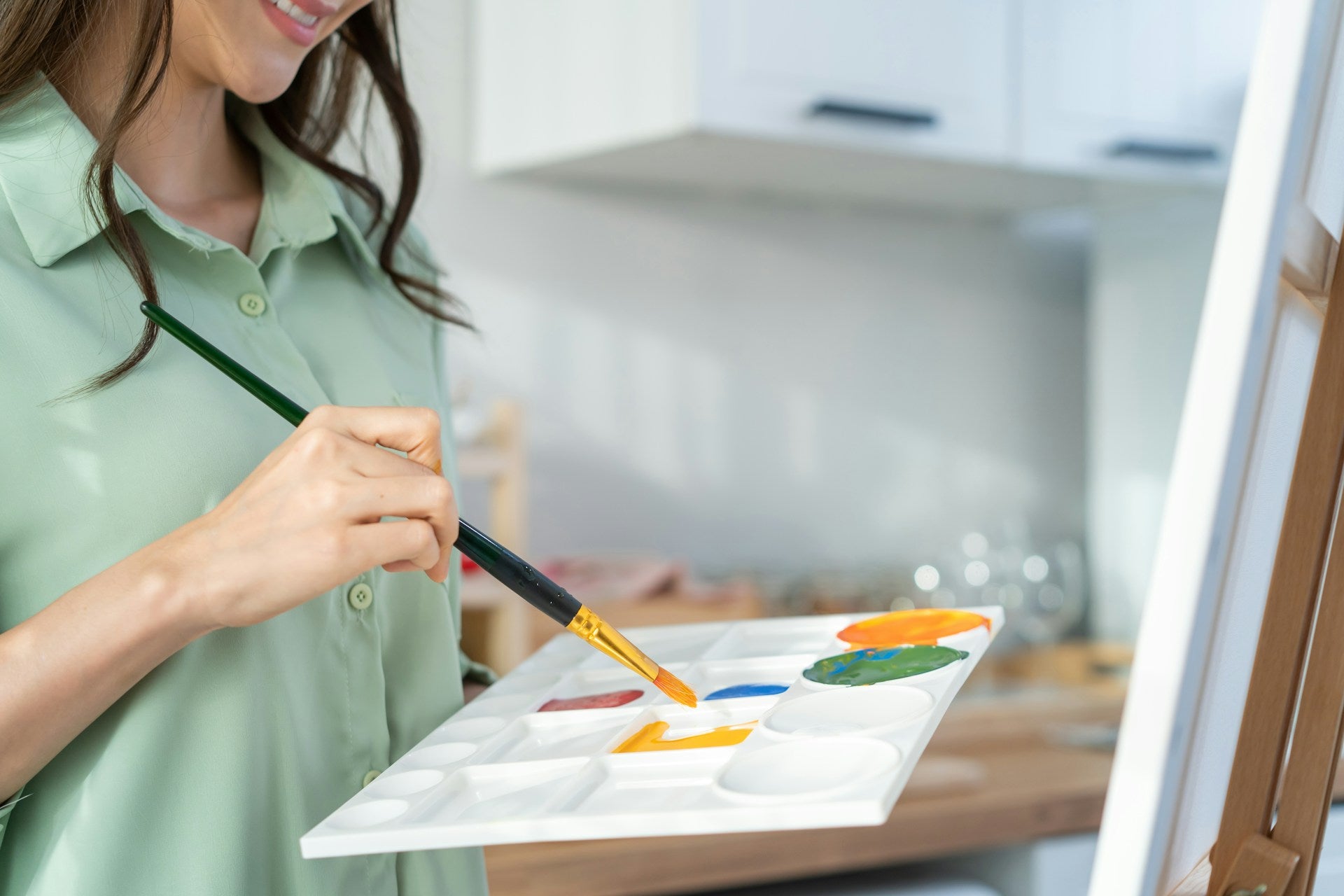
Plenty of hobbies are recommended for winding down and most of them fail for the same reason: they ask you to make decisions at the end of a day when you have run out. Paint by numbers works because it asks for almost none. The picture, the composition and every color were settled before the canvas was printed. What is left is a simple physical task with a clear rule, and that is a much easier thing to start at nine in the evening.
Whether it holds as a habit is a separate question, and mostly comes down to setup rather than willpower. Here is what actually makes it stick.
What it is, honestly
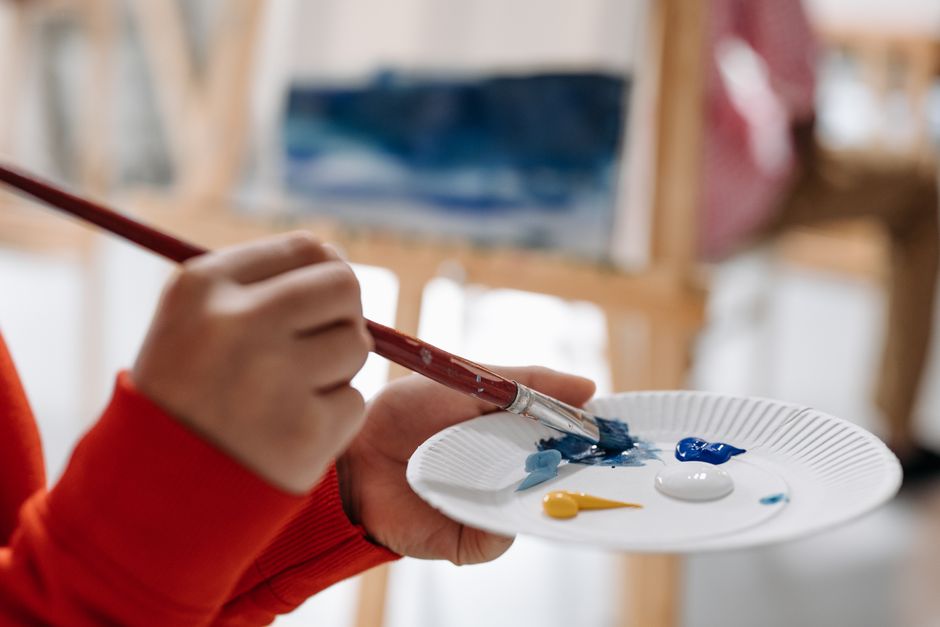
A hobby, not a treatment. People do find it calming and say so unprompted — across our own reviews, some version of "kept me busy and focused" or "better than scrolling on my phone all evening" comes up more than almost anything else. That is real and worth having.
It also survives interruption better than most hobbies, which is the argument for it if you have children at home.
What it is not is medicine. If you are dealing with anxiety, depression or grief, a hobby is a good thing to have alongside proper support, not instead of it. We would rather say that plainly than sell a canvas on a promise it cannot keep. Our piece on how painting relieves stress goes through what the research does and does not show.
Why this particular hobby is easy to keep up
- No decisions. Freehand painting carries a constant stream of choices — what to paint, how to compose it, which colors to mix. Those are where the effort and the self-consciousness live. A numbered canvas removes all of them.
- You can stop anywhere. Mid-section, mid-color, mid-evening. Nothing spoils. Compare that with a recipe or a woodworking project.
- Progress is visible. Every session leaves the canvas measurably further along, which is unusual — most evenings leave nothing behind at all.
- It occupies your hands and your eyes. Enough attention that there is not much left over for turning over the day.
- There is something at the end. A finished piece goes on a wall and stays there. For a lot of people that is the whole appeal, and it is the thing a screen cannot offer.
Making it a habit rather than a one-off
Most abandoned canvases were not abandoned out of boredom. They were abandoned because starting became inconvenient.
- Leave it set up. This is the single biggest factor. If painting requires unpacking a box, laying out pots and finding your reference sheet, a spare twenty minutes is not enough to bother. A tray or a board you can lift whole means it is.
- Pick a fixed slot. After dinner, before bed, Sunday afternoon. The specific time matters less than it being the same one.
- Twenty minutes counts. There is no minimum session. Two numbers is progress.
- Get the light right once. A lamp you can pull close, angled across the canvas rather than straight at it. Squinting is what turns a relaxing hour into a tense one, and it is entirely fixable.
- Finish a color, not an area. Do every section of one number before you stop. Coming back to a half-finished color means re-opening the pot and re-finding all the sections, which wastes most of a short session.
- Do not chase the finish line. A 16x20 takes ten to twenty hours. Treating that as a deadline turns the thing you did to relax into another item on a list.
Choosing a design that will not frustrate you
This matters more than people expect. Fighting a difficult canvas is not restful, and difficulty in this hobby comes almost entirely from the design rather than the size.
Look for large calm areas — a big sky, open water, a wide field — with the fine detail concentrated in one or two places rather than scattered across the whole canvas. And take the larger size if you are undecided: a 16x20 is the same design as a 12x16 with every section bigger, which makes it the easier one.
Our guide to the best kits for beginners names the designs that suit a first attempt and, more usefully, the ones worth leaving until later.
Pick a subject you actually want on your wall. Motivation comes from the picture, not the process. If nothing in a catalog appeals, a custom canvas from your own photograph — a house, a dog, a place you know — holds attention far longer than a landscape you have no connection to.
The small frictions worth removing
- Keep a jar with a lid for rinse water. Nothing ends a session faster than having to go and empty a mug.
- Press the pot lids down every time. Most paint that dies in storage died from a lid that was not quite closed.
- Never leave a brush standing in water. The bristles take a permanent bend and water works into the ferrule. Rinse, reshape, lay flat.
- Order replacement paint before you need it. One color always runs low first, usually a sky or a background. There is a matching replacement set for every design, and having it in the cupboard means a running-out never becomes a two-week pause.
- Keep the reference print flat and to hand. The 11x17 printout is what you should be reading, not the canvas.
What arrives
A pre-printed cotton canvas rolled in a tube rather than folded, so there is no crease to fight; acrylic paints vacuum-sealed so they arrive moist rather than dried out; brushes in a range of sizes; and an 11x17 printout of the design. Framed sizes arrive pre-stretched on a wooden frame with a tabletop easel, ready to hang the moment you finish.
You can browse the designs in the full catalog, and the customer gallery shows how they come out in other people's hands — usually more informative than a product photo. If this is your first, the beginner's guide covers setup and order of work.


