


Children do get something real out of a paint by number canvas, but not quite the thing the packaging usually promises. What it actually gives them is a long, quiet task with a visible finish line — one where the decisions have already been made, so the only job left is the painting. For a child who gets frustrated with a blank sheet of paper, that structure is the whole point.
It is worth being straight about one thing first. Ledgebay makes kits for adults. The designs are licensed artwork, the printed sections are fine, and the numbering is small enough that some adult painters use a lamp and a magnifier on the detailed areas. There is no children's range here, and a kit sized for an adult is not automatically right for a six-year-old. Most of what follows is about painting with a child rather than handing one a kit and walking away.
What a paint by number canvas actually asks of a child
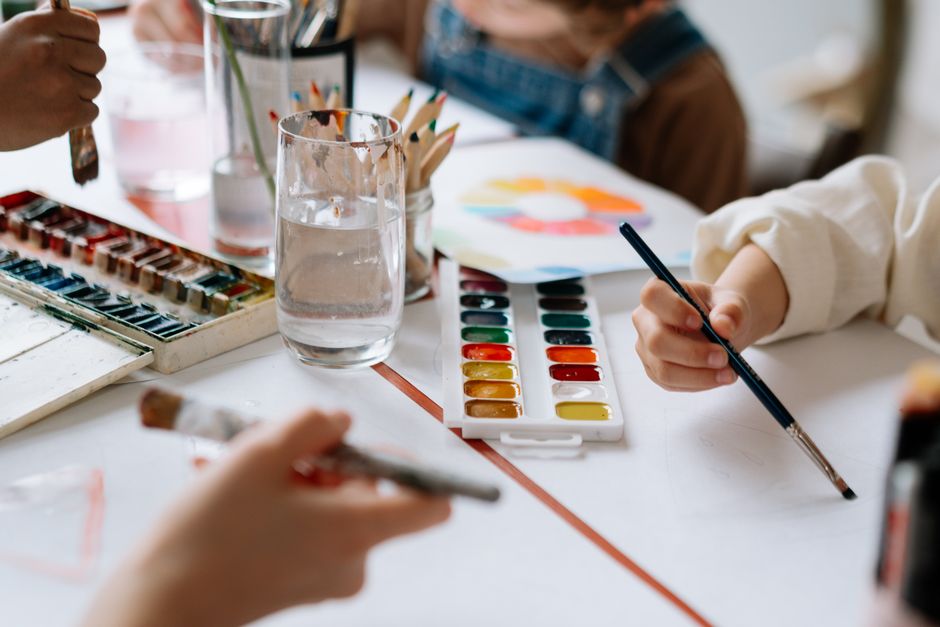
Three things, mostly: hold a small brush steadily, stay inside a printed line, and keep going after the interesting part is finished. The first two come with practice. The third is the one that matters and the one that takes longer.
A canvas is not a twenty-minute activity. A 12x16 design takes an adult somewhere between ten and twenty hours, spread over a few weeks. A child working on one alone will lose interest long before that, and there is nothing wrong with them for it. The usual pattern that works is a shared canvas: the child takes the large background areas, an adult takes the fiddly ones, and the painting sits somewhere it can be picked up again for ten minutes at a time.
The skills it genuinely builds
Steadiness and control
Painting inside a printed line asks for small, controlled movements from the hand and wrist. It is the same muscle work as handwriting, done for fun rather than for homework, and it improves with repetition the way handwriting does. A child who has trouble sitting still for letter formation will often sit longer for a painting, because the reward is visible on the canvas rather than at the end of a page.
Working in order
A numbered canvas teaches a sequence without lecturing about one. Paint the large areas first, let a section dry before painting next to it, put the lid back on the pot. Children pick this up quickly because the consequences are immediate and obvious: a wet section touched too soon smears, and the smear is right there in front of them.
Finishing something
This is the real one. Most of what a child makes is finished in an afternoon or abandoned. A canvas that takes weeks, and is still recognizably progressing each time they come back to it, is a different experience. The finished piece goes on a wall and stays there, which is a kind of proof that sustained effort produces something.
What it does not do is teach drawing. The composition, the drawing and the color choices were all made before the canvas was printed. That is a fair trade for the structure, but it is worth knowing so nobody expects the wrong thing from it.
What age it actually suits
Judging by the size of the printed sections on an adult kit, roughly ten and up for a child painting independently. Below that, the fine areas are genuinely hard to see and hard to fill, and the experience turns into frustration rather than absorption.
Younger children can still take part, but treat it as a shared project. Give them the sky, the water, the large blocks of a field — sections big enough that staying inside the line is achievable. Simple landscapes and open scenes work far better than anything with a busy foreground. A design crowded with small detail will defeat a young painter faster than anything else.
If you want a sense of which designs are open and which are dense, the customer gallery is more useful than the product photos, because it shows the paintings as they actually come out.
Painting alongside a child: what helps
- Work in short sessions. Twenty or thirty minutes is plenty. The canvas is not going anywhere.
- Set it up where it can stay. Packing everything away between sessions is what kills these projects. A tray or a board that can be lifted whole works well.
- Use a lamp. Good light on the canvas does more for a child's accuracy than any amount of instruction.
- Start with the biggest number areas. Early progress is visible progress, and visible progress is what keeps them coming back.
- Let them go off-script. If they want the barn red instead of brown, let them. Nothing about the numbering has to be obeyed.
- Keep a damp cloth handy. Acrylic wipes off easily while it is wet and not at all once it has dried.
If a pot is running low before the canvas is done — and one always runs low first, usually a background color — replacement sets are available for every design in the extra paint collection. That is worth knowing before you are two-thirds through a sky.
The version families actually order
The kit that gets bought for family painting more than any other is a custom canvas made from a photograph — the dog, the grandparents' house, a holiday picture everyone recognizes. A child will stay with a painting of their own dog far longer than with a landscape they have no connection to, and the finished result means something to hang up. It is printed in the USA and comes in 12x16, 16x20 and 18x24, framed or unframed.
For a first shared canvas, an open landscape or an animal design is the safer choice. The animal designs and the landscapes are the most forgiving of the stock artwork. Whatever you pick, the canvas ships rolled in a tube rather than folded, so it arrives without a crease running through the middle of it — which matters more than it sounds when the person painting is eight years old and already working hard to stay inside the lines.
If you are new to this yourself, our beginner's guide covers the basics of setup, order of work and cleanup, and applies just as well to painting with a child as to painting alone.


