


If you buy one brush to improve a paint by numbers kit, make it a small round brush in size 0 or 1, with synthetic bristles. That single brush does more for the finished canvas than a whole set, because the fine detail is where kit brushes most often fall short.
The rest of this guide covers what comes in a kit, what the different shapes actually do, and how to keep them alive.
What comes in the kit
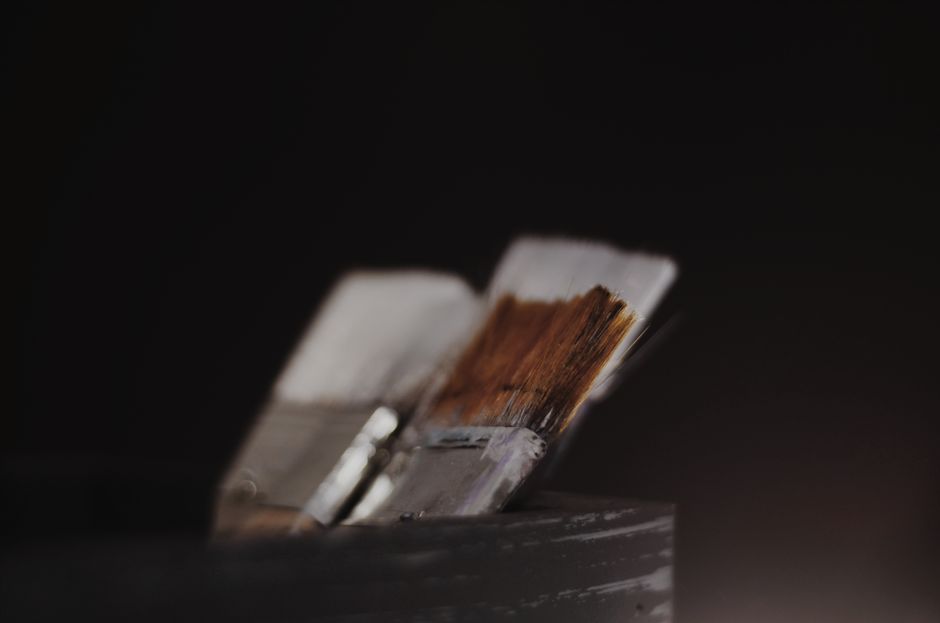
Most adult kits, including ours, come with three brushes: a broader one for filling large areas, a medium one for general work, and a fine one for detail. For most of a canvas that is genuinely enough.
Being straight about the limits: kit brushes are good for the large and medium sections and adequate for most detail. Where people run into trouble is the very smallest sections, where a brush that has splayed even slightly will not hold a point. Several of our own customers have said as much in their reviews, and it is a fair criticism rather than one worth arguing with.
That is the gap a single good detail brush fills, and it costs very little.
Synthetic or natural?
Synthetic, for acrylic. This is not a preference, it is how the materials behave.
Natural hair is absorbent. In water-based paint it swells, goes limp, loses its point, and dries out and splits over time. Synthetic filaments do not absorb water, so they hold their shape wet, snap back, and last far longer with acrylic.
Natural hair earns its place in watercolor and in oils. For a paint by numbers kit it is the wrong tool.
The shapes, and which you need
Round — the one that matters
A round brush tapers to a point. Pressed down it covers ground; used on the tip it draws a fine line. That range is why it is the most useful shape in paint by numbers, where sections vary from a broad sky to a sliver you can barely see.
Sizes run from about 000 (extremely fine) upward. A 0 or 1 handles almost all detail work on a standard canvas; a 4 or 6 is a good general-purpose size.
Flat
A square-ended brush that covers large areas quickly and evenly, and gives a clean straight edge when turned on its side. Good for skies, water, walls and backgrounds. Worth having if your kit has a lot of open space.
Filbert
A flat brush with a rounded end. It covers like a flat but without leaving hard corner marks, which makes it useful for soft organic shapes — clouds, foliage, hills. It is the shape most people are missing without realizing it.
Liner and fan brushes
These come up in most articles on this subject, so it is worth saying plainly that they are not standard in paint by numbers kits and most people never need them.
A liner has long bristles for continuous fine lines — rigging, branches, whiskers. A fan is for blending and for dry-brush texture like foliage and grass. Both are useful once you start adding detail beyond what the numbers give you, and neither is needed to complete a kit as printed.
What to look for in a brush
- A point that holds. Wet a round brush and flick it. The bristles should come back to a single point. If they splay, it will never do fine work.
- A tight ferrule. The metal band should be crimped firmly to the handle. A loose ferrule means shed bristles in your paint and, eventually, a brush head that comes off.
- No stray bristles. One bristle standing proud of the rest will drag a line through every section you paint.
- A handle that suits you. Short handles for close detail work at a table, long handles for working at arm's length at an easel. For paint by numbers, short.
Price past a modest point buys durability rather than performance. An inexpensive synthetic round, looked after, will outlast an expensive one that was left standing in water.
Looking after them
Acrylic is a plastic. Once it dries in a brush it is not coming out, and that — not wear — is what kills nearly every brush.
- Never let paint dry in the brush. Rinse as soon as you finish a color, not at the end of the session.
- Watch the ferrule. Paint creeps up into the metal band where you cannot see it, dries there, and splays the bristles permanently. Work the water right up into the base of the bristles when rinsing.
- Never stand a brush in water. A few hours resting on its tip bends the bristles for good. Lay it flat.
- Reshape the point while wet. Draw the bristles between your fingers back into shape before setting it down.
- Dry flat or head-down. Upright drying lets water run into the ferrule and loosens the glue.
- Do not scrub. Grinding a brush against the bottom of the pot to clean it is what splays the bristles in the first place.
A damp cloth beside you to wipe the brush between colors saves a great deal of rinsing and keeps water out of the paint. Our guide to cleaning fine-tip brushes covers rescuing one that has already gone stiff.
Common questions
Can I use the kit brushes for everything?
For most of a canvas, yes. The finest sections are where you will want something better.
How many brushes do I actually need?
Three covers it: something broad for backgrounds, something medium for general work, and a small round for detail. Anything beyond that is for effects rather than for finishing the kit.
Why do my brushes leave streaks?
Usually paint that is too thick or too dry rather than the brush. Two thin coats leave a flatter finish than one heavy one. If the paint itself has thickened, a drop of water usually brings it back.
My brush has splayed. Can I fix it?
Sometimes. Wash it thoroughly in warm soapy water, working the suds into the base of the bristles, reshape the point, and let it dry flat. If dried acrylic has set inside the ferrule, it is beyond saving.
In short
Kit brushes will get you through a canvas. One good small round brush will get you through the parts that would otherwise frustrate you, and looking after whatever you have matters more than what you paid for it.
You can see the Ledgebay designs in the shop, or look through the customer gallery to see finished canvases.


