


Acrylic paint sometimes goes lumpy, and a lumpy pot leaves a gritty, bumpy texture on the canvas that no amount of extra coats will smooth over. You do not need to start the canvas again. This article covers why it happens and three ways to fix it, depending on whether the lumps are still in the pot, wet on the canvas, or already dry.
Why acrylic paint gets lumpy
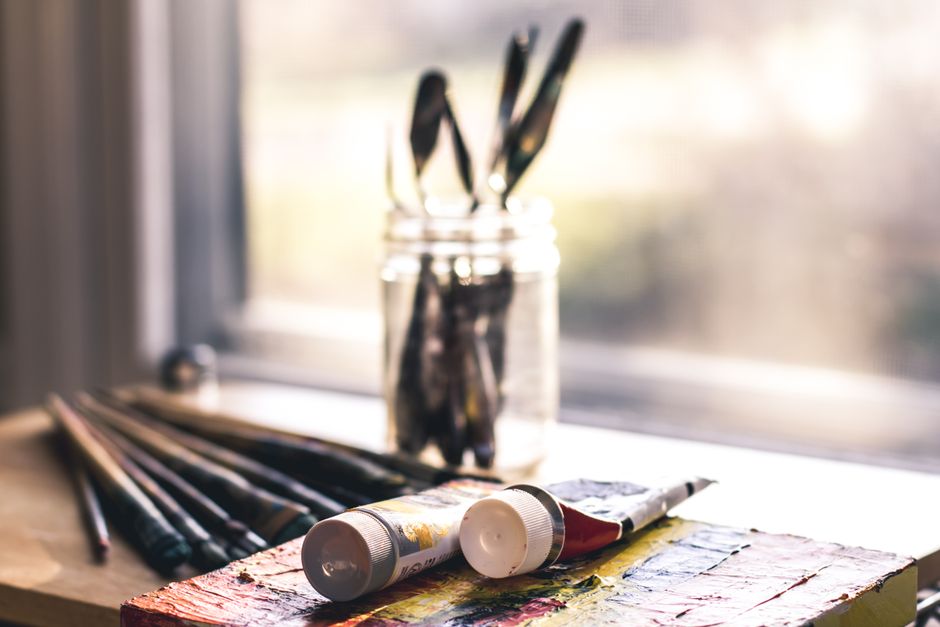
Acrylic is water-based. Everything that goes wrong with it comes back to water leaving the paint sooner than you wanted, and there are four common causes.
- The pot was left open. This is much the most common one. Acrylic starts skinning over within minutes of being exposed to air. Half an hour with the lid off is enough to change the texture of a small pot.
- Air moving across the work. A fan, an open window or a heating vent dries paint on the palette and on the canvas faster than you can spread it, and the half-dried paint drags into ridges.
- Layers going on too soon. Acrylic layers well, but only over a dry layer. Brushing a second coat onto a tacky first one lifts it and rolls it into lumps.
- Too much paint on the brush. A thick load does not level out; it sits proud and dries with a raised edge. A thin coat and a second pass covers better than one heavy one.
How to fix it: three methods
1. Lumpy paint still in the pot
If a pot has thickened but not fully hardened, the water has evaporated and the pigment has drawn together. The paint itself is fine.
For a paint by numbers pot, start with the simple fix: add one or two drops of water, stir it thoroughly with the end of a brush, and leave it a few minutes for the water to work through. Add water a drop at a time — too much and the paint goes transparent and will not cover the printed numbers underneath. There is more on rescuing a pot that has gone further than this in our guide to fixing dried paint in a paint by numbers kit.
For a larger quantity of paint with hard bits through it, straining works.
What you will need
- A fine mesh strainer
- A clean container
Steps
- Set the strainer over the clean container.
- Work the paint through the mesh with the back of a spoon. The hardened pieces stay behind.
- Wash the original pot in warm water and dry it with a soft cloth.
- Return the strained paint to the pot and seal it properly.
If it still feels too stiff, thin it with water or with an acrylic medium made for the purpose. Do not use paint thinner, mineral spirits or turpentine. Those are solvents for oil paint. On acrylic they break the binder down and the paint will never set properly.
If a pot has gone solid rather than thick, it is past rescuing. Every Ledgebay design has a matched replacement paint set with the same numbered colors as the kit, which is usually simpler than trying to mix a match by eye.
2. Lumps in wet paint on the canvas
Small bumps or specks in a freshly painted section usually mean a partly dried fleck of paint came off the brush or the palette. Caught while wet, they lift out cleanly.
What you will need
- A pair of fine-tipped tweezers
Steps
- Working while the section is still wet, pick each lump off with the tweezers.
- Lift straight up rather than dragging sideways, so you do not smear the surrounding paint.
- Brush lightly across the spot to close the gap the lump left behind.
Work quickly. Once the section has started to set, tweezers will pull up the paint around the lump along with it, and you are better off leaving it for the dry method below.
3. Lumps in paint that has already dried
Dried lumps can be sanded flat and painted over. This works, but it is the method that most needs a light hand — the printed numbers and outlines sit directly on the canvas, and sanding through the paint layer will take them with it.
What you will need
- 220-grit sandpaper
- A soft cloth
Steps
- Lay the painting flat on an even surface so the canvas is supported from underneath.
- Wipe the area with a soft cloth to clear any dust.
- Sand only the raised lump itself, with very light pressure and small circles. Stop as soon as it is level with the paint around it.
- Wipe the dust away and repaint the sanded patch with a thin coat of the correct color.
Almost every sanded spot needs repainting afterwards — sanding dulls the finish and usually takes some color with it. Keep the repaint thin, and give it a second thin coat rather than one thick one.
Wrap up
Lumpy acrylic is nearly always a moisture problem, and nearly always fixable. Thickened paint in the pot gets a drop of water or a pass through a strainer. Lumps in wet paint come out with tweezers if you catch them straight away. Dried lumps sand flat with 220-grit and a light touch, then take a thin repaint.
The prevention is simpler than any of the fixes: close the pots between sessions, keep the work out of moving air, and put the paint on in thin coats.
You can see the full range of Ledgebay kits in the shop, or look through the customer gallery to see how the designs turn out.


