


The brushes in a paint by numbers kit get less attention than the paints and cause more frustration. Almost all of it comes down to a few habits rather than the brushes themselves.
One thing to clear up first, because it comes up: we do not sell brushes on their own, and we do not make engraved or personalized brushes. Brushes come in the kits. If you want a personal mark on a painting, sign the front and date the back, which is a better keepsake than a name on a handle anyway.
What Comes in a Kit
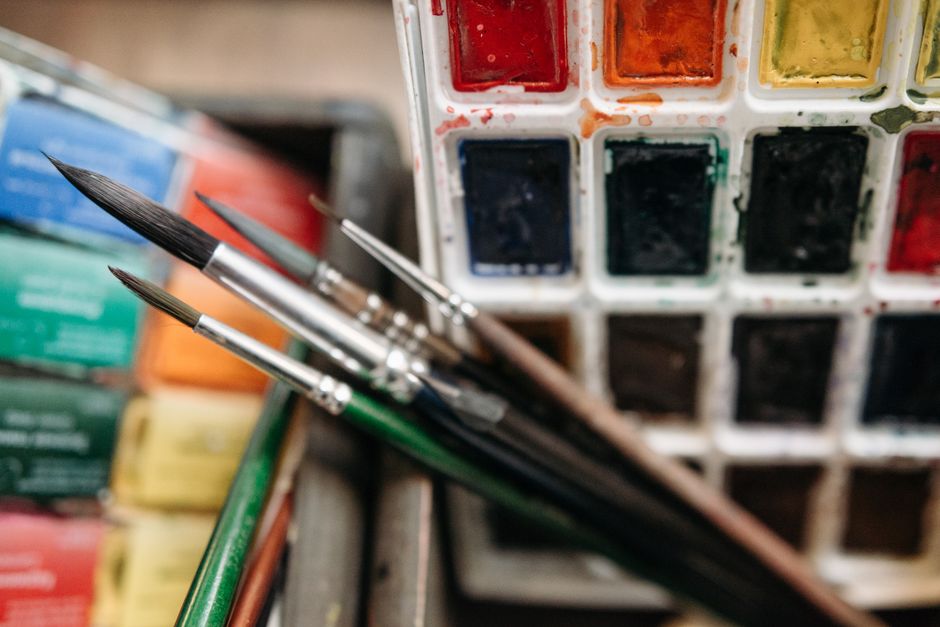
Ours include brushes in a range of sizes, with wooden handles and synthetic bristles. Synthetic is the right choice for acrylic: natural hair swells and goes limp in water, while synthetic holds its point and washes clean.
You will generally have a wider flat or round brush for the large areas and progressively finer ones for the detail. That is the whole toolkit and it covers most of a canvas.
Which Brush for Which Job
- The widest brush is for skies, water, fields and walls. Anything you can cover in a few strokes. Using it is what makes a large area go quickly rather than looking scrubbed.
- The middle sizes do most of the painting: buildings, foliage masses, the body of an animal.
- The finest brush is for the smallest sections and the last pass. Windows, fence rails, blades of grass, eyes.
The most common mistake is trying to do a two-millimeter section with a brush meant for a sky. Stray marks nearly all come from that. Swapping brushes takes three seconds and saves the fix.
The One Brush Worth Buying Yourself
Being straight about this: kit brushes are good for most of a canvas and some of our own reviewers find them a little coarse for the very finest work. That is fair, and it is easily solved.
A single fine round synthetic brush, a size 0 or 00, costs very little and transforms the last stage of a detailed design. If you are painting something with a lot of thin lines, grass, rigging, fence wire, hair, it is the best few dollars you can spend on this hobby. One brush, not a set.
Loading and Handling
Load the belly, not the tip. Dip to about a third of the bristle length. A brush charged only at the point runs dry after two strokes and then you are dragging, which is where scratchy edges come from.
Blot before you paint. After rinsing, press the brush on a folded paper towel. Water carried into a pot thins the paint over the course of an evening without you noticing.
Pull fine lines in one stroke. For grass, hair or rigging, thin the paint very slightly so it flows, then pull from the base outward in a single movement rather than filling the shape in. A confident line that is fractionally off beats a hesitant one gone over four times.
Wipe rather than rinse between similar colors. Going from one green to a near neighbor does not need a full wash.
Never Stand a Brush in Water
The single worst habit in painting, and the most common.
Resting a brush on its bristles in a jar bends them into a permanent hook that no amount of washing straightens. Worse, the water works up into the ferrule, the metal collar, and softens the glue holding the bristles in. That is what causes shedding, and it is why brushes seem to fall apart suddenly after weeks of being fine.
Lay brushes flat on the table between colors. If you want them in a jar, put them in handle down.
Cleaning Them Properly
Acrylic that dries in a brush is permanent, so this matters more than with any other paint.
- Do it at the end of every session, not at the end of the painting.
- Lukewarm water, never hot. Hot water softens the glue in the ferrule.
- Work soap into the base of the bristles, right up against the ferrule. That is where paint hides and where a brush is actually ruined. A drop of ordinary hand soap in your palm is enough.
- Rinse until the water runs clear, then squeeze gently from ferrule to tip.
- Reshape the point with your fingers and lay the brush flat to dry.
Done this way, kit brushes last through several canvases. Done any other way they last one.
When a Brush Is Finished
A fine brush that will no longer come to a point is done for detail work, but it is not rubbish. Splayed brushes are useful for dry brushing texture into foliage and water, which is a job a good brush does badly. Keep one or two.
A brush that sheds bristles into wet paint should be thrown away. Picking hairs out of a finished section is a miserable job.
About Personalized Brushes
Engraved and monogrammed brushes exist, sold mostly as gifts by promotional goods suppliers rather than by artists' suppliers. They are a pleasant object and they will not change how anything paints. What changes how a brush paints is bristle type, size and shape, and none of those are affected by a name on the handle.
If you are looking for a gift for someone who paints, one good fine brush or a matched extra paint set for a design they are already working on will get more use.
The Rest of the Kit
Our kits ship with a pre-printed cotton canvas rolled in a tube rather than folded, vacuum-sealed acrylic paints, brushes in a range of sizes and an 11 by 17 inch printed reference. The catalog is here, and our guide to cleaning fine tip brushes goes further on keeping them alive.


