


A paint by numbers kit is a small number of items in a box, and it is worth knowing what each one is for — partly so you can set up properly, and partly because the differences between a good kit and a poor one all live in these details.
What is in the box
- A pre-printed, pre-primed canvas
- Numbered pots of acrylic paint, matched to the design
- Brushes in a range of sizes
- An 11 by 17 reference print
- Instructions
- On framed kits: a wooden frame with the canvas already stretched on it, a small tabletop easel, and hanging hardware
That is the whole list. Everything below explains why each part is what it is.
The canvas
Cotton canvas, primed before printing. The priming is the thin white ground that stops acrylic soaking into the weave — on an unprimed surface a single coat goes dull and patchy and you end up painting everything twice.
The design is printed as outlined regions, each carrying a number. It looks like a tangle of lines when you first open it, and the picture does not emerge until a fair proportion of the canvas is filled. That is normal and it catches everyone out on their first kit.
Ours ship rolled in a tube rather than folded flat, and this is the thing our own reviewers mention unprompted more than anything else. A folded canvas arrives with hard creases along every fold line, sitting exactly where the paint has to go, and they do not press out. A rolled canvas arrives with a soft curl that relaxes overnight under a few books. It costs more to ship a tube, which is why cheaper kits fold. Our note on rolled versus folded canvas covers it properly.
The paints
Acrylic, pre-mixed and matched to the design, in numbered pots. No color mixing is required at your end — that is the point of the format.
The packaging matters more than the paint. Acrylic in a friction-lid pot dries out while a kit sits in a warehouse, and a meaningful share of the one-star reviews across this whole category are people opening a box to find half the pots skinned over. Ours are vacuum-sealed for that reason. If a listing does not say how the paint is sealed, it almost certainly is not.
The number of colors varies by design, because a design with a wide tonal range needs more of them than a simple one does. More is not automatically better; what matters is whether the range covers the picture.
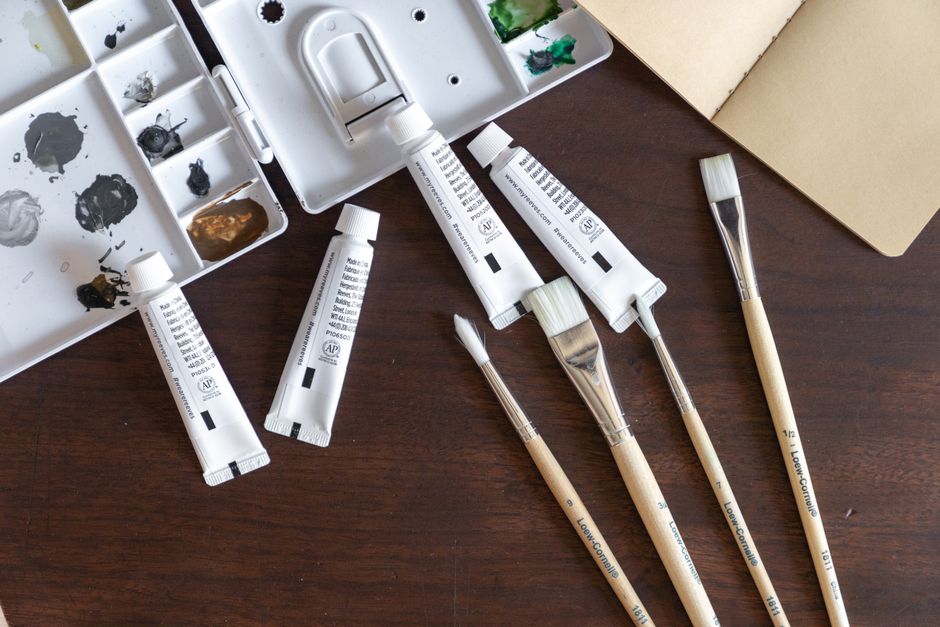
The brushes
Brushes in a range of sizes, and the range matters more than the count. Fine work and broad areas want genuinely different tips, and reaching for the smallest brush for everything is slow and gives a worse result.
To be straight about it: a kit brush is adequate rather than excellent. Several of our own reviewers say the brushes are a little coarse for the very finest detail on the busier designs, and they are right. If you paint regularly, one decent size 0 or 1 round from an art shop is the single best small purchase you can make for this hobby. We do not sell brushes separately, so that is a recommendation rather than a sales pitch.
The reference print
The part people overlook until they need it. Ours is 11 by 17 and shows both the finished painting in color and the numbered layout, so when a section is unreadable on the canvas you can find it on paper instead.
This matters because detailed designs have small printed numbers — that is geometry rather than a printing fault — and the difference between a good kit and a frustrating one is whether you have something full-size to check against or only a thumbnail on the box lid.
Framed and unframed
Framed kits arrive with the canvas already stretched over a wooden frame. It is rigid to paint on, it is ready to hang the moment you finish, and there is no mounting job at the end. These include the tabletop easel and the hanging hardware.
Unframed kits are a loose canvas. Cheaper, and they post flat. You can paint one laid on a table or taped to a piece of stiff board, and mount it afterwards if you want to hang it.
One thing to check before assuming you can stretch an unframed canvas later: the border. Some unframed canvases in this category are trimmed so close to the printed edge that there is not enough spare material to wrap around a frame and staple. If hanging it matters to you, buy framed. Our guide to framing a paint by number canvas covers the options either way.
What is not in the box
A few things you will want that no kit supplies: a jar of water, a cloth or paper towel for drying the brush between colors, and a lamp you can place to the side rather than overhead. That last one makes more difference to the experience than anything you could buy.
A magnifier is worth having if the design is a detailed one and your close vision is not what it was. Plenty of people use one and there is nothing lesser about it. Photographing the area with a phone and zooming in works just as well and costs nothing.
When a color runs low
It happens, and any claim to the contrary is one of the standard untruths in this category. On most designs one or two colors do the heavy lifting — a sky, a field, a stretch of water — and those pots run down near the end.
If a pot has stiffened rather than emptied, a drop or two of water stirred in with a cocktail stick usually recovers it. If it is genuinely empty, we keep a matched extra paint set for every design. That is why they exist, and it is worth checking whether whoever you buy from offers the same, because color-matching acrylic by eye at a craft store rarely ends well.
What our designs are, and what they are not
Worth correcting an earlier version of this page, which described our range as a collection of famous paintings. It is not. Our 39 designs are licensed original artwork — cabins, waterfowl, coastlines, farmsteads, florals — and we do not sell reproductions of famous paintings, abstract designs, portraits, or a children's range.
Difficulty is per design rather than uniform across the catalog. Some of ours are genuinely forgiving and some are demanding, and the descriptions in the full collection say which is which rather than calling everything suitable for all levels. If none of the designs suit you, a custom kit made from your own photograph uses the same canvas, paint and packaging.
How long one takes
A 16 by 20 design is commonly ten to thirty hours depending on how much detail it carries. That is several weeks of evenings rather than a weekend, and it is worth knowing before you start.
You can leave it at any point and come back, which is one of the genuine virtues of the format. The canvas is numbered, so there is nothing to remember and no thread to pick up. Our beginner's guide walks through a first kit from opening the box.


