


Owls are one of the most-requested painting subjects there is, and it is easy to see why. The face is almost symmetrical, the eyes are enormous, and the plumage is patterned rather than smooth. That combination is unusually kind to a painter, because most of what makes an owl recognizable is shape and contrast rather than subtle modeling.
One thing to say plainly at the top: there is no owl in our stock range at the moment. The catalog runs to 39 licensed designs and none of them is an owl. If you have landed here looking to buy one, the honest answer is that there are two routes, and only one of them goes through us.
Getting an owl canvas
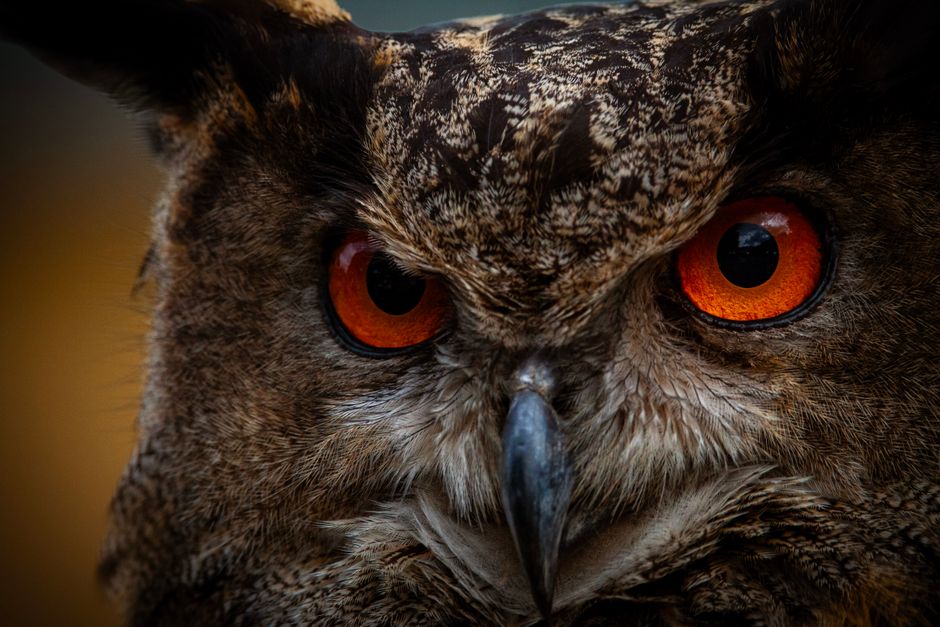
From your own photograph
A custom paint by numbers canvas is made from a picture you send, so an owl photograph becomes an owl canvas. This is the route people use for a barn owl they photographed, a great horned owl from a wildlife center, or a favorite image from a birding trip. It comes back as a pre-printed cotton canvas with paints matched to the numbers, vacuum-sealed, plus an 11x17 reference print, in 12x16, 16x20 or 18x24, framed or unframed. It is printed in the USA.
Owls convert unusually well, but the photograph matters. What works:
- A clean background. An owl against sky, a plain trunk or open blur converts far better than one buried in branches. Twigs crossing the face turn into unpaintable slivers.
- Front-on or three-quarter, with both eyes visible. The face is the whole picture. A profile loses most of what makes it read as an owl.
- Even light. Harsh sun through leaves throws dappled shadow across the plumage, and dappling becomes dozens of tiny numbered regions.
- Crop close. Fill the frame with the bird. A small owl in a large landscape gives you a beautiful landscape and a disappointing owl.
Snowy owls and barn owls are the hardest to convert, because a mostly-white bird needs several closely related pale tones to show any form at all. A barred or great horned owl, with strong markings, is much more forgiving.
Making your own
If you would rather generate the outline yourself, free tools will do it, and we have written up how to make your own paint by number free. It works, but be clear about what it gives you: an outline and a color key, not paint mixed to match them.
The bird designs we do make
No owls, but three of the licensed designs are birds, and two of them are by James Hautman, one of the most decorated wildlife painters in the country.
Hummingbird
Hummingbird is a ruby-throated hummingbird hanging in the air beside a weathered fence post, wings blurred, morning glory vines in deep violet-blue taking over the rail below. The background is left as a soft green wash so nothing competes with the bird.
It is among the best-rated and most straightforward kits we make and a genuinely good first canvas. The background is a large simple area, the leaves are generous shapes, and only the bird asks for care. The blurred wing is already solved for you as two or three numbered grays laid flat over the background tone — it reads as movement from a step back without any blending on your part.
Rural Route Bluebirds
Rural Route Bluebirds is two eastern bluebirds on the lid of a dented galvanized mailbox, with apple blossom coming in over the corner and a tall summer cloud behind. The mailbox is the most carefully painted thing in it, down to the rust and the faded red flag.
Also a good first canvas. The sky, the field and the mailbox body are large and calm, which concentrates all the detail into two small places. The blues in the wing are meant to look banded rather than blended — lay each one in cleanly and leave it alone.
Sunset Swans
Sunset Swans is four swans on a cottage pond at sunset, with a windmill turning beyond the trees and the sky gone orange and rose. Middling difficulty. White birds on bright water leave nowhere to hide a wobble, so this one wants a steadier hand than the other two.
All three come as a framed 12x16, a framed 16x20, or an unframed 16x20, and every canvas ships rolled in a tube rather than folded.
Painting an owl convincingly
Whether the canvas is numbered or not, the same handful of things decide whether an owl looks like an owl.
- The eyes go last, and they go on dry paint. Finish the whole face, let it dry properly, then put the iris and the pupil in. On wet paint the edge spreads and the eye goes soft, which drains the life out of the bird immediately.
- Leave the catchlight alone. That small bright dot in the eye is doing an enormous amount of work. If the design has one, do not paint over it, and do not tidy it up.
- Feathers are rows, not texture. Plumage on a numbered canvas is laid out as overlapping bands. Work them in order from the back of the bird forward, so each row overlaps the one behind it the way real feathers do.
- Resist blending the facial disc. The ring around an owl's face is what makes the head read as a dish rather than a ball. Those tonal steps are meant to be visible. Softening them flattens the face.
- Work the background first. Get the area behind the bird finished and dry, then bring the outer feathers over the top of it. Painting a background up to a ragged feather edge is far harder than the other way round.
If the colors are what drew you to owls in the first place — and "colorful owl" is usually about strong violets, ambers and teals rather than natural browns — the color wheel guide covers which combinations stay clean and which turn muddy when they meet.
A note on the photograph you send
If you are using a custom canvas, use a photograph you took. Owl images found online are almost always somebody's copyrighted wildlife photography, and a striking owl picture is exactly the kind of image a photographer licenses for a living. Your own photograph, a picture from a friend, or an image you have licensed is the safe ground.
You can see the full range of designs in the catalog, or look through the customer gallery to see how custom canvases come out — including a good many pets and birds sent in by customers.


