


We should say this plainly at the top: the baby elephant and baby giraffe design is not one we make. It is a popular pattern sold by a great many vendors, usually showing the two young animals leaning together, and if that is what you came for we cannot sell it to you.
What we can do is tell you what separates a good animal kit from a poor one, explain why animal subjects behave differently under a brush than landscapes do, and point you at what we do have. All of that is below, and none of it depends on buying anything from us.
What to check before you buy any animal kit
The elephant and giraffe pattern is produced by dozens of sellers at wildly different quality. Five things separate them, and none are obvious from the listing photograph.
- Rolled, not folded. A canvas folded flat into an envelope arrives with creases through the picture and they do not come out. Look for the word rolled or tube, and treat its absence as a warning. This is the most common complaint in the whole category.
- Legible numbering. The second most common complaint, and the reason canvases get abandoned half done. A larger canvas has larger sections, so size up rather than down.
- A full-size reference print. Not a thumbnail on the box. On an animal design you will be checking the reference constantly, because the difference between two adjacent browns matters more than it does on a sky.
- Replacement paint available. Ask before you buy, not after. Many sellers have no way to send you more of color 12, which means one empty pot ends the project.
- Framed decided up front. An unframed canvas is usually trimmed too close to the edge to stretch over bars yourself. If you want it framed, buy it framed.
Why animals paint differently from landscapes
People assume an animal is harder than a landscape. Sometimes it is, but not for the reason they expect, and it depends entirely on the animal.
A giraffe is one of the easier subjects there is. The markings are large, flat, clearly bounded patches of two or three colors. That is almost exactly what a numbered canvas is good at, and the result looks convincing with very little skill.
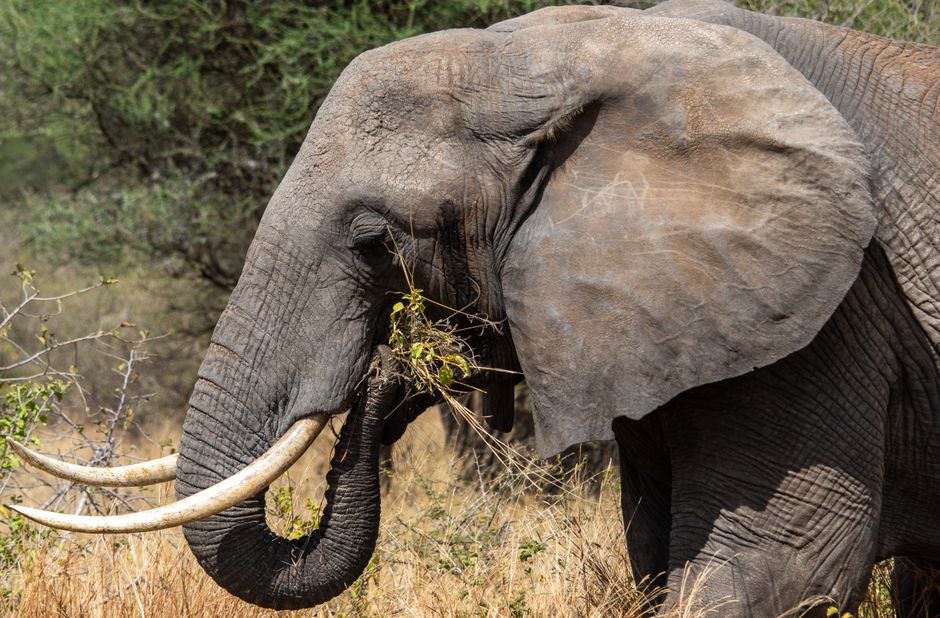
An elephant is harder. Elephant skin is a continuous gradient of gray with almost no hard edges, and the conversion into numbered regions produces bands that can read as stripes if you paint each section flatly and leave the boundaries crisp. This is the one place where softening the join between two adjacent grays with a barely damp brush, while both are still wet, makes a real difference.
The eye decides everything. On any animal, the eye is what the viewer looks at, and it is usually the smallest cluster of sections on the canvas. Paint it last, in good light, with the finest brush you have and barely any paint on it. If nothing else on the canvas is neat, make the eye neat.
Fur and long hair are the genuine difficulty. Anything whose form depends on texture rather than shape converts badly into numbered regions. Short-coated animals suit this treatment. Long-haired ones rarely do.
What we actually make
Thirty-nine designs, all licensed original artwork from working artists, and the wildlife runs to North American subjects rather than safari ones. Among the animals:
- Bamboo Tiger, the closest thing we have to a big exotic animal, and the most demanding of the group.
- Hummingbird, small, bright and genuinely beginner-friendly.
- Rural Route Bluebirds, forgiving of a wobbly edge and one of the ones people finish quickly.
- Sunset Swans and Nature's Blessings, both calm, both built from broad areas.
They are in the animals collection. If none of them is what you want, that is a reasonable conclusion, and we would rather you reached it here than after a delivery.
Or the animal you actually know
The alternative worth mentioning is a custom canvas from your own photograph. In practice a large share of these are pets, and they work well for the reason described above: a photograph of a short-coated animal, taken reasonably close, in decent light, converts cleanly. We print them in the USA at 12 x 16, 16 x 20 and 18 x 24, framed or unframed.
Two honest notes. The result will look like a painting of your photograph rather than a copy of it, which is the point but is worth knowing. And a very fluffy dog or cat is the hardest case, for the fur reason above. A photograph in strong side light, with the animal filling most of the frame, gives the best chance.
Shipping, plainly
We ship within the United States only. We do not offer free worldwide shipping and we do not ship to 26 countries, whatever an earlier version of this page may have said. If you are ordering from outside the US, we are not the right supplier and we would rather tell you now.
Common questions
Is the elephant and giraffe design suitable for children?
The subject appeals to them, certainly. Whether the kit suits them depends on section size rather than subject: a child needs large, clearly divided areas and legible numbers, which usually means a bigger canvas rather than a smaller one. We do not make a children's range, and we would not recommend handing an adult kit with fine detail to a young child.
What size should I get?
For a two-animal composition, larger. Two subjects in one frame means each is smaller than it would be alone, and shrinking the canvas shrinks the faces, which is where all the character lives.
How long will it take?
Ten to twenty hours for a standard canvas, spread over a few weeks. An animal design with a lot of pattern can run longer, because there are simply more sections.
Can I change the colors?
Yes, and people do. The numbering is a suggestion rather than a rule, and a stylized animal in colors you chose yourself is a perfectly good outcome. Just decide before you start rather than halfway through, so the palette stays coherent.
What if a color runs out?
Check whether the seller offers replacements before you order. Every one of our own designs has a matching full replacement paint set, and on a custom canvas you can add spare sets at checkout. If you are buying elsewhere, ask first.


