


Dogs are the most requested custom subject and one of the hardest to convert well. Not because of the shape — because of the fur, and specifically because of dark fur. Cats, horses and everything else run into the same problem, which painting a pet from your own photo covers in full.
Worth knowing before you send a photograph, since the difference between a canvas you hang and one you are disappointed by is decided entirely at that point.
Why fur is difficult
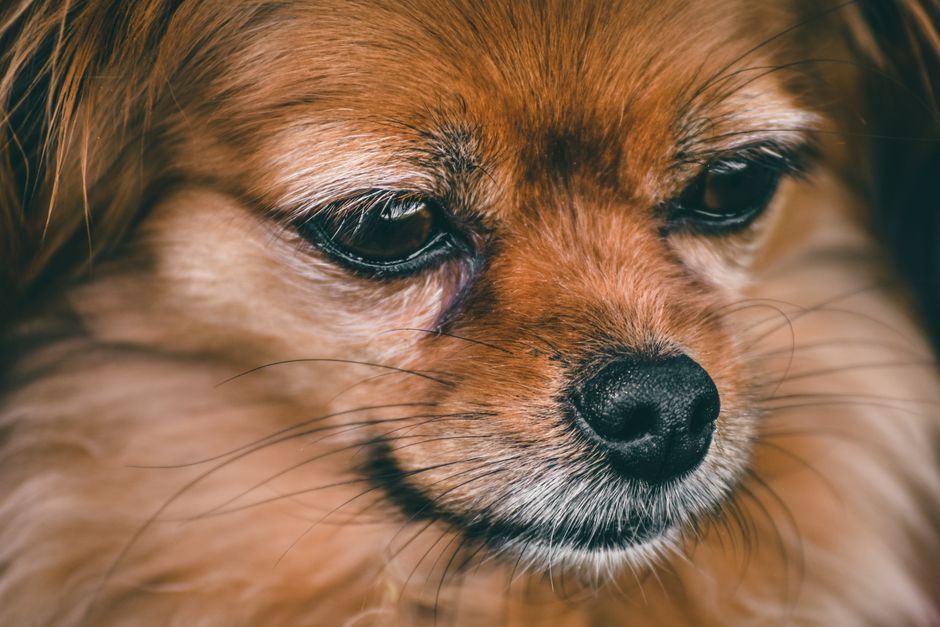
A numbered design reduces the image to flat regions of a limited palette. Fur is fine texture — thousands of overlapping strands, each too small to become its own region. The conversion absorbs all of it.
What you get instead is fur rendered as broad tonal shapes: the light side, the shadow side, the darker patch on the ear. That reads convincingly as a painting, which is the point. It does not read as individual hairs, and no numbered kit at any price will.
The dark dog problem
Black and dark brown dogs are where this most often goes wrong, and it is worth stating plainly.
A dark dog photographed against a dark background gives the converter almost no tonal difference to work with. The palette reduction may merge dog and sofa into a single region. Even against a light background, black fur in an ordinary photograph holds very little visible variation — it reads as one dark mass to the camera even though your eye sees form in it.
What fixes it: light from the side rather than the front. Side light rakes across the fur and creates a visible light side and shadow side, which is exactly the separation the conversion needs. A dark dog by a window, photographed from the side, converts far better than the same dog under a ceiling light.
The photograph, specifically
Works:
- Head and shoulders filling most of the frame
- Soft daylight from a window, ideally from the side
- A plain background clearly lighter or darker than the dog
- Eyes in focus and catching a little light — this is what makes the finished canvas look alive
- Shot at the dog's eye level rather than from standing height
Does not work:
- Whole dog in a garden. Too small in the frame; the head is where all the detail needs to be.
- Flash photographs. Flat light, no form in the fur, and green or white eye reflections.
- A dark dog on a dark surface
- Two or three dogs together on a small canvas
- Anything blurry, which cannot be recovered
Practical advice
- Go large. Faces need area, and this applies to dogs as much as people. The head should occupy a good part of the canvas.
- Crop tight before you send it. You know which part matters.
- Choose framed if it is a gift or a memorial piece. It arrives stretched and hangs on a nail; an unframed canvas leaves a finishing job, and ours are trimmed too close to stretch later.
- Take a new photograph if you can. Five minutes by a window will beat any picture already on your phone, and it is worth doing.
When it is a memorial
Most of these are. It changes the advice in one way: pick the photograph that looks most like how you remember the dog, not the technically best one. A slightly imperfect conversion of the right picture is worth more than a clean conversion of the wrong one.
Painting it yourself takes ten to twenty hours, and people describe that as time spent with the animal rather than time spent making an object. That is a reasonable thing to want, and it is most of why this product exists.
Common questions
Will the fur look realistic?
It will look like a painting of fur — broad tonal shapes rather than individual hairs. Fine texture is below the size the conversion can hold. Fox designs get the same treatment, and the brush is where the fur comes back.
Can I do a black dog?
Yes, with the right photograph. Side light from a window against a lighter background is what makes it work. A dark dog on a dark sofa under a ceiling light will not convert.
Can I have two dogs on one canvas?
On a large canvas, yes. Each head needs area, so two dogs on a small canvas is the common disappointment.
What photo should I use?
Head and shoulders, filling the frame, soft side light, eyes in focus, taken at the dog's eye level. It is worth taking a new one rather than using what you have.


