


A paint by number kit is complete as it comes, so the honest answer to what accessories you need is: almost none. Everything below is optional. Two of them make a genuine difference, a few are nice to have, and several things sold as paint by number accessories solve problems you do not have.
What is already in the box
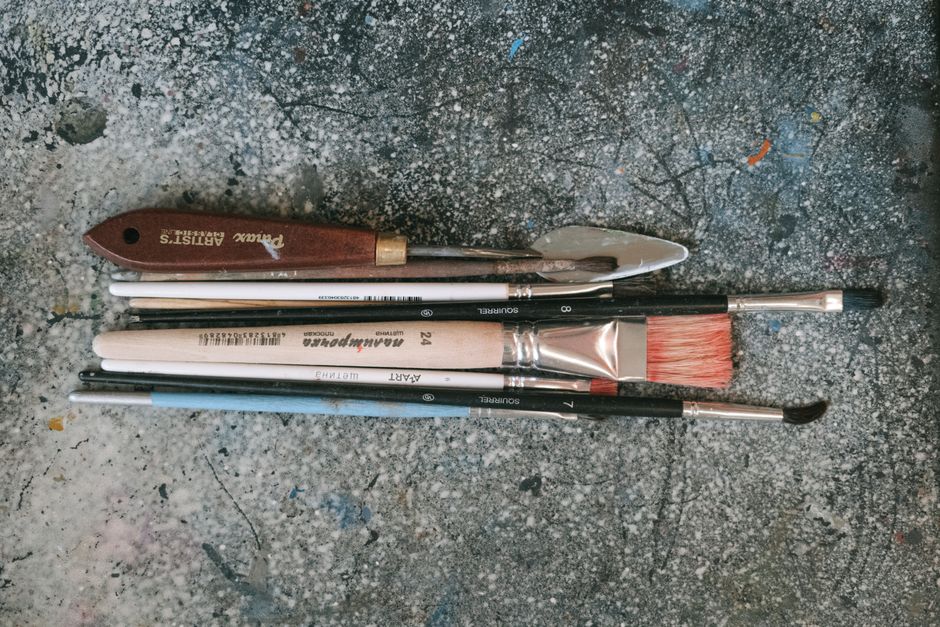
Before buying anything, know what you have. A Ledgebay kit contains the printed canvas, numbered pots of acrylic paint, brushes in a range of sizes, and an 11x17 reference print. Framed kits also include a wooden easel; unframed ones do not.
We do not make an angel design, and what to know before buying one explains why, and what to look at instead.
That is a complete painting setup. People finish entire canvases having added nothing but a jar of water.
The two that genuinely matter
A good lamp
The most useful thing you can put on the table, by a distance. Poor light is behind most misread numbers and most of the eye strain people blame on the kit.
What works: an adjustable desk lamp with a daylight-temperature bulb, positioned to the side rather than in front, so the printed lines throw a slight shadow and your painting hand does not cast one across the section you are working on. Warm household bulbs make it harder to tell two close colors apart.
Magnification
The finest sections on a detailed design are a couple of millimeters across. A cheap handheld magnifier is enough, and a clip-on or stand magnifier is better because it leaves both hands free. Reading glasses one step stronger than your usual pair work well too.
The free version: photograph the section with your phone and zoom in. Faster than it sounds and surprisingly effective for working out which of two adjoining numbers is a 6 and which is an 8.
Worth having, cheaply
- A palette. Any old white plate. You need it if you plan to mix or blend at all, and it is far easier to judge a color on white than in the pot.
- Two water jars. One for the first rinse, one for the final. It keeps the second jar clean far longer, and clean water is what stops colors going gray.
- A lint-free rag. For blotting the brush after rinsing. Water carried from the rag into a paint pot dilutes it permanently, so a dry brush between colors matters.
- Toothpicks or a cocktail stick. For stirring a thickened pot and for lifting a stray hair or speck out of wet paint.
- Varnish. Only at the end. A clear acrylic varnish evens out the patchy sheen between colors and lets you dust the surface afterward. Matte for anything hanging opposite a window.
Things sold as accessories that you probably do not need
- Extra brush sets. The brushes in the kit are sized for the sections in that design. A separate set of thirty is more brushes than the project has uses for. If the fine brush loses its point, wet it and draw it across your palm to bring the bristles together again.
- Paint thinners and mediums. One drop of plain water fixes a thick pot. Anything stronger, and certainly anything solvent-based, will wreck acrylic rather than thin it.
- Canvas stretcher bars, bought speculatively. A paint by number canvas is usually trimmed close to the printed image, and stretching needs several inches of blank margin to wrap and staple. Check your actual canvas before buying bars for it. The framing guide covers what does work.
- Sealing sprays applied early. Nothing goes on the canvas until the painting is finished and fully cured.
The one accessory people actually run out and buy
Paint. Specifically, the large background color: the sky, the field, the water.
It happens often enough that every Ledgebay design has a matching set in the extra paint collection, one per design. On a custom canvas the spares are added at checkout instead, because the paints are mixed for your specific image and cannot be reordered off a shelf afterward.
Worth knowing before you are two-thirds of the way through a sky.
Setting the table
A few minutes of setup pays off across the several weeks a canvas usually takes.
- Cover the surface with newspaper or an old towel. Acrylic wipes off a table while wet and does not once dry.
- Prop the reference print upright rather than laying it flat, so you can glance at it without leaning.
- Put the pots on the side away from your painting hand, so you are not reaching across wet paint.
- Sit at a height where your forearm rests on the table. Neck and shoulder ache after a long session is a posture problem, not a painting problem.
Common questions
Do I need an easel?
No. Most people paint flat on a table, which is steadier for fine work. Framed Ledgebay kits include a small wooden easel, which is more useful for displaying the finished canvas than for painting it.
What kind of varnish should I use?
One made for acrylics, in whichever finish you prefer. Gloss deepens the colors most; matte avoids reflections. Apply it flat, in thin coats, several days after the last brushstroke. There is more detail in the canvas care guide.
Can I use my own paints instead of the ones supplied?
You can, and craft acrylic will cover the printed numbers fine. Matching the supplied colors by eye is the hard part, which is why most people only do it for a single color they have run out of.
What about a hairdryer to speed up drying?
Not worth it. Thin acrylic is dry enough to work alongside within minutes, and forced heat can set the surface of a thick patch while it is still soft underneath.


