


Most acrylic sets are sold on the count of things in the box, and the count is the least useful number on the packaging. Twenty-four colors, thirty brushes and a canvas sounds generous and usually means small tubes of low-pigment paint and brushes that will not hold a point. Here is what a set actually needs, and how to tell one apart from the other.
The paint
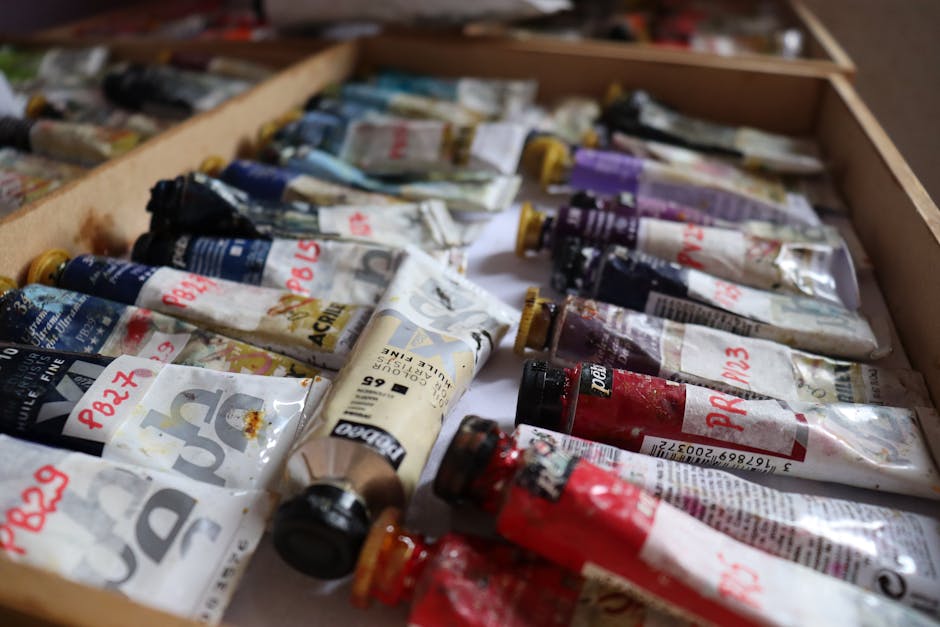
Acrylic is pigment suspended in an acrylic polymer emulsion. When the water evaporates the polymer forms a flexible plastic film that locks the pigment down permanently. That is why it does not re-wet, why it sticks to almost anything, and why it destroys a brush that is left with paint in it.
Grade matters more than color count. Artist-grade paint carries a high pigment load and little filler. Student-grade carries less pigment and more extender, which is why it looks chalky, why the color weakens when you mix it, and why a second coat is usually needed. A student set is a perfectly reasonable way to find out whether you enjoy this. Just do not judge the medium by it.
Consistency is a real choice, not marketing. Heavy body holds a brush mark and a palette-knife ridge. Soft body levels out to a smooth surface. Fluid acrylic pours and works well for glazing and fine lines. Most beginners want soft or heavy body.
Six colors beats twenty-four. A warm and cool version of each primary plus a big tube of white will mix nearly anything, and the mixing is where the skill lives. Large sets are mostly convenience, and they encourage reaching for the nearest tube instead of mixing. Which colors to buy is easier to decide once you have looked at the color wheel.
The brushes
Three good ones beat twenty poor ones. A medium flat for laying in large areas, a small round for general work, a detail round for the fine passages. Add a filbert when you want soft edges.
For acrylic, buy synthetic rather than natural hair. Acrylic is hard on natural bristle and the water-based cleaning it demands dries natural hair out, while modern synthetics snap back to shape and cost a fraction. The full case is in our guide to brushes for acrylic painting.
The palette
This is the component that gets left out of cheap sets and matters more than anything except the paint. Acrylic on an open plate is unusable in twenty minutes, so you either throw away most of what you squeeze out or you rush.
A stay-wet palette solves it: a shallow tray with a damp sponge or paper under a sheet of baking parchment. Paint sits on the parchment and draws moisture from below, and a session can be picked up the following evening. A purpose-made one costs little; a homemade one costs almost nothing.
The surface
Canvas board is the sensible default: rigid, cheap, and it takes acrylic well. Stretched canvas has more give and looks more finished on a wall. Heavy paper or card works if it is primed.
Priming is not optional. Raw canvas and paper absorb the binder out of the paint and leave the pigment dull and poorly attached. Almost all canvas sold today is pre-primed, but boards and paper often are not — gesso is what fixes it and it is the cheapest improvement available.
The mediums, and which to skip
- Gloss or matte medium. Genuinely useful. It thins paint for glazing without weakening the film the way excess water does, and it sets the final sheen.
- Retarder. Slows drying and buys you a longer window to blend in. Use sparingly and follow the ratio on the bottle. Do not substitute kitchen ingredients for it; they interfere with how the film cures.
- Flow improver. Reduces surface tension so paint spreads more evenly. Worth having if you paint fine lines.
- Gel and texture paste. For building physical thickness. Interesting, and not something a beginner needs.
- Varnish. Optional, and only over fully cured paint. Acrylic is touch-dry in minutes and takes weeks to cure properly.
How these stack on top of each other is the subject of our guide to layering acrylic paint.
How to spot a padded set
- Many near-identical colors. Six greens that differ slightly is a filler tactic, not a palette.
- No stated volume. If the tube size is not on the box, it is small.
- A large brush count with no shape names. Real brushes are described as flat, round, filbert, liner. A photo of twenty handles is not a specification.
- No palette and no mention of priming. A set that has not thought about either has not thought about painting.
Where a numbered kit fits
A paint by numbers kit is not a general-purpose acrylic set and should not be bought as one. The colors are pre-mixed in the quantities one specific image needs, and they are supplied in pots rather than tubes. You cannot use them to paint something else, and there is no mixing to do.
That is the point of it. What you get instead is a complete evening's work with no setup decisions: canvas, colors, brushes in a range of sizes, and a reference print. If it is the painting you want rather than the equipping, the catalog is here. If it is the equipping, buy the six colors and three brushes above and ignore the boxed sets entirely.


