


The thing everyone assumes you gain by shopping in person is the one thing a shop cannot actually show you.
You can pick up a boxed kit in a craft store, feel its weight and look at the picture on the front. You cannot open it. So the two things that decide whether the kit is any good — whether the canvas was folded, and whether the paint is still wet — stay hidden behind cardboard in exactly the same way they do online.
That is worth knowing before you decide where to buy, because it inverts the usual advice.
The three places to buy
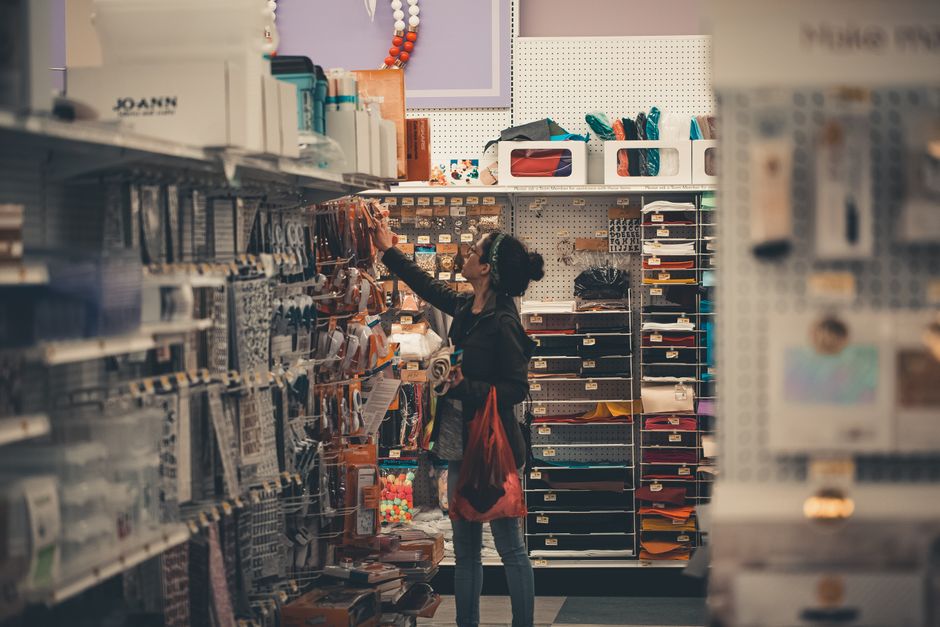
A craft store or hobby chain
Good for: having it today. Seeing the printed image at actual size, which is genuinely useful for judging how small the sections are. Talking to somebody who has sold a few hundred of them. Returning it easily if something is wrong.
Less good for: range. Shelf space is finite, so you get whatever the buyer chose, usually a handful of designs skewed toward whatever season it is. Prices tend to run a little higher, because rent and staff are real costs. And you still cannot see inside the box.
An online marketplace
Good for: range, and it is not close. Thousands of designs, most subjects covered, and reviews from people who have actually opened the box — which, as above, is the only way anyone learns about creasing or dried paint.
Less good for: knowing who you are buying from. Listings appear and vanish, the same generated designs get sold under a dozen brand names, and photography is frequently the manufacturer's rather than the seller's. If a color runs out six weeks later, there is usually nobody to ask.
Direct from a specialist
Good for: knowing what you are getting and being able to go back. A company that only does this can tell you how a specific design paints, and generally stocks replacement paint for it.
Less good for: range, again. A specialist has a catalog rather than a marketplace, so if you want a particular subject they may simply not have it.
We are the third category, so treat that as disclosed rather than neutral. What it means in practice for us: the artwork is licensed from named painters rather than generated, every design has a matching replacement paint set, and there is somebody to email. It also means we have 39 designs and not four thousand.
The four things to check, wherever you buy
These matter far more than the channel, and all four can be established without touching the box.
1. Rolled or folded?
The single most important question and the one nobody asks. A canvas folded into a flat box arrives with hard creases printed across the design and they do not come out. A canvas rolled in a tube arrives flat.
A listing that does not say usually means folded, since rolling is a selling point that anyone doing it mentions. Reviews will tell you within about three entries.
2. Are the paints sealed?
Acrylic in an unsealed pot dries out in storage. Vacuum-sealed paints arrive moist however long the kit sat in a warehouse. A thickened pot is fixable with a drop of water; a solid one ends the project.
3. How big is the reference sheet?
The most under-rated item in the box. A large printed reference lets you check a section without leaning over the canvas, which is what saves your neck and your eyes over ten hours. Ours are 11x17. Many kits supply a small card, or the box lid, or nothing.
4. Can you get more paint?
One or two colors do most of the work on any design, and running low on one is the most common way a canvas stalls. Ask before you buy whether replacement paint exists for that specific design. For most marketplace kits the answer is no, and the fallback is buying a whole second kit.
What to actually do with reviews
Reviews are the closest thing to opening the box, but only if you read them for the right things. Ignore the star rating and search the text for four words: creased, folded, dried and numbers.
Those four turn up the complaints that matter — a canvas that arrived with lines through it, paint that had gone solid, printing too faint to read. A design people love will still carry those complaints if the manufacturing is poor, and that combination is exactly what a star average hides.
Two things the old version of this page got wrong
You do not need to buy paints and brushes separately. Any complete kit includes both, matched to the design. If a listing does not include paint, it is selling you a printed canvas rather than a kit, which is a different product at a different price.
Store-bought is not automatically better made. A great many kits on craft store shelves and on marketplaces come from the same factories. Buying in person tells you about the shop, not about the box.
So which should you choose?
Honestly, it depends on one question: do you know what you want?
If you want a specific subject and are relaxed about the manufacturing, a marketplace has it and a shop probably does not. If you want it this afternoon, go to the shop. If you want to be able to come back for more paint, buy from whoever will still be there in six weeks.
And if it is a gift, weight the packing question heavily. A creased canvas is a disappointing thing to hand somebody, and it is the one fault that cannot be fixed afterward.
Common questions
Are online kits cheaper?
Usually, because there is no shop to pay for. The gap narrows once shipping is included, and disappears entirely if you end up buying a second kit for one missing color.
Can I tell how hard a design is from a photo?
Reasonably well. Look for large uninterrupted areas — sky, water, a plain background. Lots of them means a forgiving canvas. A picture busy from edge to edge means many small sections and no rest. Our guide to choosing an easy kit goes into this properly.
What if my canvas arrives creased?
Return it if you can. If not, weight it flat under books for a week rather than applying heat to printed primer. Expect the lines to remain faintly visible.
Should I buy framed or unframed?
Framed if you want to hang it without a further step. Unframed is the same design and paints for less, but is often trimmed close to the printed edge, so plan to mount it to a board rather than stretch it over a frame.
Our own range is in the shop, and replacement paints are in the extra paint collection.


