


A sunset is one of the few subjects that a numbered canvas handles better than freehand painting does. The reason is structural. A sunset sky is broad bands of color grading into one another, and the hard part when you paint one from life is judging where each band sits and how warm it should be. On a numbered canvas those decisions are already made. What is left is the part that is genuinely pleasant: filling large areas of orange, rose and deep blue and watching the sky come together.
Warm palettes are also forgiving. A slightly wrong green in a landscape reads as a mistake. A slightly wrong orange in a sunset reads as a sunset.
Why a sunset suits a numbered canvas
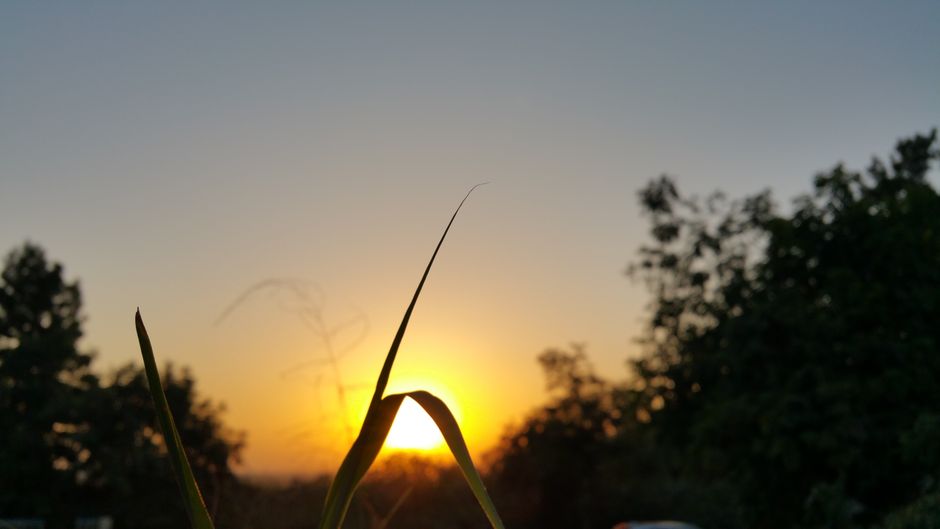
- The big areas come first and they are the sky. You get an hour of satisfying progress before you reach anything fiddly, which is the opposite of most designs.
- The color range is narrow. Most of the palette sits in the same warm family, so the numbers are easier to keep straight than on a canvas full of similar greens.
- Silhouettes do the detail work for you. Trees, roofs and boats against a bright sky are dark shapes rather than modeled forms. They are far easier to paint convincingly than the same objects lit from the front.
- It suits an evening. The sky sections are large enough that you can pick the canvas up for twenty minutes and still see progress.
The sunset designs we make
Four of the designs in the catalog have a sunset or a low evening sun doing the work. They are quite different from each other.
Beautiful Sunset in Amsterdam
Beautiful Sunset in Amsterdam is a canal scene from Image World — a row of gabled Dutch houses in red brick, burnt orange, blue and cream, lamps already lit inside, bicycles against the railings and a barrow of tulips in the corner. The sky behind the rooftops has gone pink.
It is the most colorful thing we sell and also the most work. It is architecture, which means windows, gables and railings, and a great many of them. The sky and the canal are the only large calm areas. Budget nearer 25 hours than 15 on a 16x20. Worth knowing before you start.
Sunset Swans
Sunset Swans is a cottage pond at sunset, also from Image World — a tile-roofed cottage with ivy up the chimney, a windmill turning beyond the trees, four swans on the water and rowboats tied along the near bank. The whole sky has gone orange and rose behind the roofline.
This is one of the highest-rated designs we make and a reasonable second canvas. The sky, water and roof are large and satisfying. The flower beds along both banks are where the hours go, and white swans on bright water leave nowhere to hide a wobble. Middling difficulty.
Mountain Paradise
Mountain Paradise is Kim Norlien's lakeside lodge below a waterfall, with a skein of geese crossing the sunset and the maples turned. There is a great deal happening in it, and none of it feels crowded.
Despite how much is in the scene it is a good first canvas, and several reviewers say it was theirs. The lake, the sky and the mountain face are large and calm; the lodge windows, the car and the figures round the fire are small but few. It is also the design customers single out for legible numbering — one reviewer read it without reading glasses.
The Road Home
The Road Home is not strictly a sunset, but the sky behind the barn is going gold and it belongs in this list. A dirt track runs toward a lit farmhouse, a red barn stands across the yard beside a silo and a windmill, and the whole of it comes back off the surface of the pond. A child is on a tire swing under the trees with a yellow dog running underneath.
Middling difficulty and a popular first canvas. The barn, the road and the sky are large straightforward areas; the windmill, the fenceline and the figure on the swing are the fine work.
All four come as a framed 12x16, a framed 16x20, or an unframed 16x20. The framed sizes arrive pre-stretched and ready to hang, and include a wooden tabletop easel. Every canvas ships rolled in a tube rather than folded, so there is no crease across the sky to paint around.
Painting a sunset sky well
A few things make a real difference, and none of them require any skill you do not already have.
- Work the sky in one sitting if you can. Adjacent bands blend far more easily while both are still wet. Once a band has dried, the join between it and the next one will be a visible edge.
- Soften the joins with a nearly dry brush. Wipe most of the paint off, then stroke lightly back and forth along the boundary between two wet bands. Two or three passes is plenty. More than that and you will lift both colors and end up with mud.
- Expect the pale tones to dry darker. Acrylic always does. On a sky this matters more than anywhere else, so judge the balance after everything has dried rather than while it is wet.
- Reds and yellows may want a second coat. Warm pigments are often less opaque than the darks. Let the first coat dry completely before the second, or you will drag it.
- Sky first, silhouettes last. The dark shapes go over the finished sky, not around it. Painting the sky up to a tree line is much harder than painting the tree line onto a dry sky.
If you want the longer version of this, layering acrylic paint covers working wet into wet and dry over dry in more detail.
Sunsets worth looking at first
If you want a sense of how painters have handled a sunset, three are worth a few minutes before you start.
Monet, San Giorgio Maggiore at Dusk (1908–12). Monet visited Venice only once, in 1908, and worked the Venetian scenes up at home afterwards. The church is barely more than a silhouette; almost the entire painting is water and sky. It is a useful demonstration that a sunset needs very little detail to work.
Turner, The Fighting Temeraire (1839). An old warship being towed to the breakers, with the sun going down behind her. The sunset is doing all the emotional work in the picture, and Turner lets it take up most of the canvas.
Van Gogh, The Red Vineyard (1888). Painted in Arles from a late-afternoon walk, worked up in the studio from memory rather than outdoors. It is often described as the only painting Van Gogh sold in his lifetime — more precisely, it is the only sale we can name. It went to the Belgian painter Anna Boch for 400 francs in Brussels in 1890.
None of these are in our catalog, and no paint by number kit will produce one. The designs we make are licensed original artwork from working painters, not reproductions of gallery pieces. But looking at how a painter handles a sky before you fill in your own is time well spent.
You can see the rest of the catalog in the full range, or look through the customer gallery to see how these designs come out in other people's hands, which is usually more useful than a product photo.


