


Animals are the most popular subject in paint by numbers and the one where difficulty varies most. A bird on a branch and a wolf in snow look like the same kind of picture on a product page. They are not remotely the same job.
The difference comes down to one thing: how the design handles fur or feathers. Get that distinction and you can judge any animal canvas in about ten seconds.
Why fur and feathers are the hard part
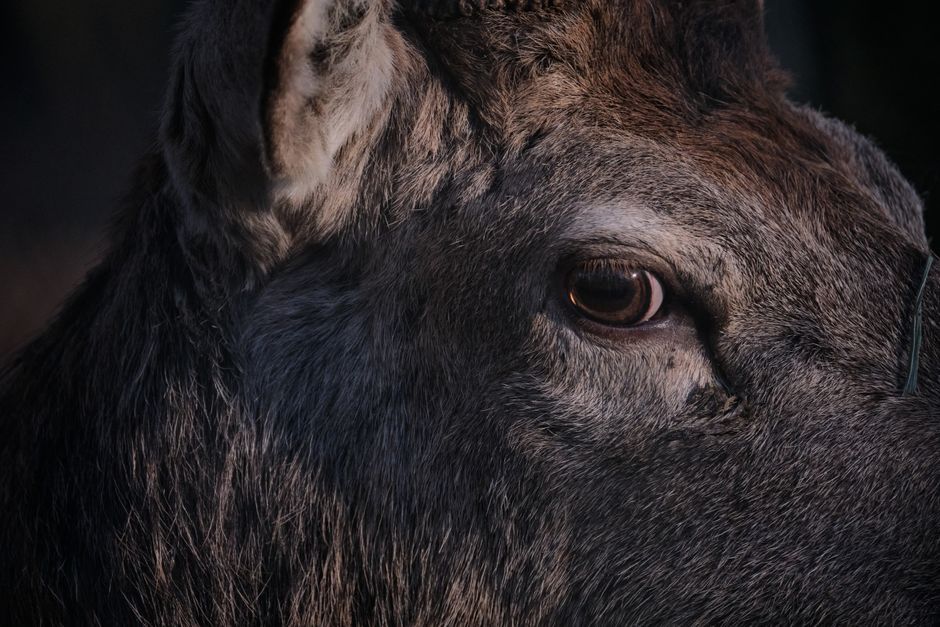
A numbered canvas breaks an image into flat regions of a single color. On a tree trunk, a rock or a stretch of water that works beautifully. On an animal's coat it runs into a problem: real fur has no edges. It is a soft gradient with texture over the top, and there is no honest way to divide it into flat shapes.
Designers solve it in one of two ways, and which one they chose tells you everything.
Broad tonal masses. The coat is simplified into a handful of large light and dark areas that describe the animal's form. These paint quickly and read well from across a room, which is where a painting is normally seen.
Many thin strokes. The coat is broken into dozens of narrow slivers that imitate individual hairs. These look impressive in a close-up photograph and are genuinely slow to paint, and if you rush them the animal ends up looking scribbled.
Zoom into the animal on the listing photo. If you see broad shapes, it will paint in an evening or two. If you see fine striping, budget several weeks.
Where a beginner should start
Birds, and for a specific reason: feathers group into plates rather than dissolving like fur. A wing has a small number of distinct feather blocks with real edges, so the flat-region approach is not fighting the subject.
Rural Route Bluebirds is two bluebirds on a mailbox among white blossom. It is the one we would hand someone who has never painted. The birds are small but simple, the mailbox is a straightforward object, and the blossom is a lot of pale petals that go down fast and forgive an imperfect edge. It is one of our better-rated designs and beginners consistently finish it.
Hummingbird is the other one to consider. Reviewers describe it as an easy first kit more often than almost anything else we make. The bird itself carries the detail, and everything around it is open and simple.
Cabin Fever Doughty — two cardinals in snowy pines beside a log cabin — is a step up but still gentle. Snow is the friendliest thing in this entire category to paint: broad, pale, and it covers ground quickly. The cardinals give you two small areas of intense red against all that white, which is what makes the picture work.
Sunset Swans gives you the same advantage in a different palette. Swans are large, white and simply shaped, and the water carries most of the color.
The ones to work up to
Bamboo Tiger is a tiger's face framed by bamboo leaves. The stripes are the appeal and the difficulty in the same breath — they are many narrow sections that have to stay clean, and a wandering edge shows immediately on a stripe. The bamboo behind is a mass of overlapping leaves, each its own small shape. It is a fine painting and it is not a first one.
Moonrise Song — three wolves in snow under the northern lights — is harder still, and for a different reason. Wolf coats are built from many thin sections, and the snow shadows sit very close together in value. Two grays that look identical in the pot have to stay separate on the canvas, which means rinsing the brush properly every single time.
We do not make a wolf design, and what to know before you start explains what to look at instead, and why the grays are the real difficulty.
Orchard Puzzle, songbirds in an apple tree in blossom, is one of our most-bought designs and one of the busier ones. Blossom means hundreds of small petal sections. Beautiful finished, long in the making.
Animals inside a landscape
There is a middle route that people often overlook: designs where the animal is part of a scene rather than the whole subject.
Northwoods Retreat has a bull moose standing in a lake below a cabin among birches. House Near the Lake has deer at the shoreline of a moonlit lake. Nature's Blessings has geese at a lakeside dock with hanging flower baskets.
In each of these the animal is small enough to be a manageable amount of detail, and the rest of the canvas is landscape — which is to say broad, forgiving and quick. If you want an animal painting without committing to a month of fur, this is the sensible compromise. Most of them are in the animals collection.
How to paint fur so it reads right
Follow the direction the coat lies in. Let your brush strokes run the way the fur grows rather than across it. Nobody will consciously notice, and everybody will notice if you get it wrong.
Keep your darks separate. On an animal the whole illusion depends on small differences between one dark and another. Rinse properly between colors and dry the brush on a cloth — water carried in the ferrule thins the next color without you seeing it happen, and two darks that have contaminated each other become one dark and the form collapses.
Do the darks before the lights. Pale colors in these kits are thin and will cover a dark that has strayed slightly. The reverse almost never works.
Leave the eye until last, and do not rush it. The eye is what makes an animal painting alive or dead, and it is usually two or three tiny sections including a white catchlight. Fine brush, good light, and do it when you are fresh rather than at the end of a long session.
Expect two coats on the pale coat colors. Creams, pale grays and whites will not hide the printed number in one pass. That is normal.
Setting up
A few practical things, including one piece of advice we want to correct because it circulates widely.
Do not iron the canvas. Heat can damage the primer and the printing, and an iron on a printed canvas is a good way to ruin one. If a canvas has arrived with a curl, lay it flat under a few heavy books overnight. Ours ship rolled in a tube rather than folded precisely so this is a curl and not a crease. Our note on rolled versus folded canvas explains why that matters.
Damp brush, not wet. Rinse between colors, then press the brush on a cloth or paper towel. A brush loaded with water thins the paint on the canvas and you lose coverage, which is the most common cause of a section that will not hide its number.
Good light, from the side. A lamp at an angle rather than overhead. On any design with small sections this makes more difference than any tool you could buy.
A magnifier is not cheating. The fine sections on a detailed animal design are small, and plenty of people use one. If you would rather not, photographing the area with your phone and zooming in works just as well and costs nothing.
Only one paint pot open at a time. This is the single biggest cause of a kit running out of usable paint before it runs out of canvas. If a color does stiffen, a drop of water stirred in usually brings it back, and there is a matched extra paint set for every design if one runs short.
If you want your own animal
Most people asking about animal paint by numbers have one particular animal in mind, and it is usually theirs. We have no dog or cat design and are not going to invent one. A custom kit made from your own photograph is the route to that, and it is one of the most common things people send us.
Photograph the animal at its own eye level rather than from above, in soft daylight rather than direct sun, and close enough that the head fills a good part of the frame. A dark dog photographed in shade gives a numbered canvas almost nothing to work with, and no amount of care at our end recovers detail that was not in the photo.


