


Impressionism is easier to imitate than most styles, because what defines it is method rather than skill. Short visible strokes of unblended color, light as the real subject, and a picture finished quickly enough to catch a passing effect. All four of the techniques below can be practiced on any canvas, including a numbered one.
What Impressionism actually was
A group of French painters who, having been repeatedly rejected by the official Salon, held their own exhibition in Paris in 1874. Monet, Renoir, Degas, Pissarro, Sisley, Morisot and Cezanne were among them. A hostile critic borrowed the title of Monet's Impression, Sunrise to call them Impressionists, meaning it as an insult, and the name stuck.
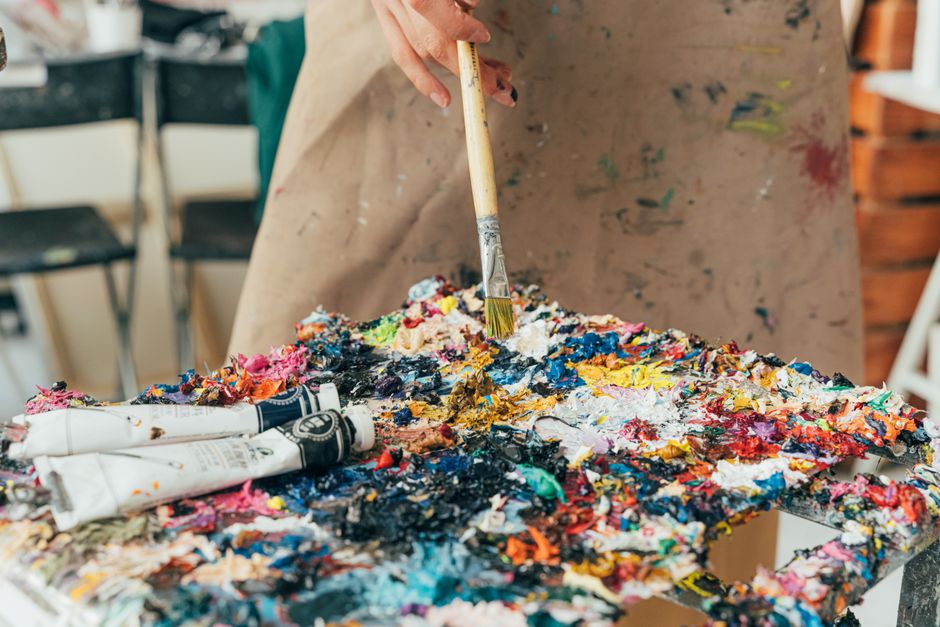
What they had in common was a rejection of the smooth invisible finish the Salon expected. They left the brushwork showing, worked outdoors from the subject rather than from studies in a studio, and treated light and weather as the point of the picture rather than the setting for it.
A correction worth making
Van Gogh is not an Impressionist and The Starry Night is not an Impressionist painting. He is a Post-Impressionist, along with Gauguin, Seurat and the later Cezanne. The Post-Impressionists came after, kept the bright unblended color, and put back the structure and emotional weight the Impressionists had deliberately set aside. The distinction matters here because their techniques are different. If what you want is the swirling, heavily loaded surface of The Starry Night, you are after Post-Impressionism, not this.
Why it happened when it did
Painting outdoors was impractical before the 1840s. Artists ground their own pigments and stored paint in pigs' bladders, which leaked, dried out and could not be resealed. In 1841 an American painter living in London, John Goffe Rand, patented a collapsible tin tube with a screw cap that could be opened and closed repeatedly.
That, plus portable easels and a wave of new synthetic pigments from the chemical industry, is what made a painter able to walk into a field with a full palette and finish a picture in an afternoon. Renoir is supposed to have said that without the tube of paint there would have been no Impressionism, and as a piece of technological history it is close to true.
One claim that circulates about their materials is worth flatly correcting: Impressionists did not use thin, transparent, binder-heavy paint. They used it thick and opaque, straight from the tube, loaded onto the brush. The soft effect comes from the strokes sitting side by side, not from the paint being watery.
Four techniques you can actually copy
1. Broken color
Instead of mixing a single green for grass, lay separate strokes of yellow-green, blue-green and a touch of orange next to each other and let the eye combine them. The result reads as one color from across a room and shimmers up close. This is the core of the whole style, and it is why an Impressionist field looks alive where a flatly mixed one looks like paper.
2. Let the brushwork show
Short, distinct, directional strokes. Follow the form: strokes running along the direction water moves, upward for grass, following the curve of a cloud. Do not smooth them out afterward. The visible mark is not a mistake being tolerated, it is the subject being described.
3. Shadows in color, not black
This is the technique that most changes a painting and the one most people never try. The Impressionists largely removed black from their palettes. A shadow on a sunlit yellow wall is not gray, it is violet, because shadow takes on the complementary of the light. Mixing a shadow from the complementary color instead of adding black keeps it luminous. Black shadows kill a painting faster than anything else, and once you have seen this you cannot unsee it.
4. Work wet into wet, and stop early
They worked alla prima, finishing in one sitting while the paint was still wet, so strokes fused slightly at the edges. The discipline is knowing when to stop. An Impressionist painting that has been fussed over stops being one.
Doing it in acrylic
Acrylic can do all of this, with one real obstacle: it dries in minutes where oil stays workable for hours, and wet-into-wet needs wet paint.
- Work in small areas. Finish a patch of sky completely before starting the next rather than blocking in the whole canvas.
- Use a retarder or slow-drying medium. Bought for the purpose, not improvised from household ingredients, which can leave the paint film permanently tacky.
- Keep the paint thick. Watering acrylic down to make it flow gives you a stain, not a stroke. If you want it to move more easily, use a flow medium rather than more water.
- Load the brush properly. Broken color needs enough paint to sit on the surface. A starved brush drags and leaves a scratchy mark instead of a distinct one.
- Expect it to dry a little darker. Acrylic dries slightly darker and duller than it appears wet. Judge a passage once it has set.
Working outdoors
Painting from life outdoors is the practice the whole movement was built on, and it teaches something a photograph cannot: how fast light moves. Two hours in and the shadows have swung right around, which is precisely why Impressionist paintings are finished quickly and why Monet worked on several canvases of the same subject at different times of day.
Acrylic is well suited to it, since it needs no solvents and dries before you carry it home. Take fewer colors than you think you need, work small, and accept that the light will beat you.
Using a paint by numbers kit to practice
A numbered canvas is a reasonable place to learn this, because the composition and the palette are already resolved and you can concentrate on handling. Three ways to push a kit toward an Impressionist result:
- Vary the brushwork within a section. Nothing requires a numbered area to be filled flatly. Apply the color in short directional strokes and leave them visible.
- Break the color at the boundaries. Where two numbered sections meet, let a few strokes of each carry into the other rather than stopping at the line. This is the single most effective change.
- Soften the edges you do not need sharp. Keep the focal point crisp and blend the rest while the paint is wet.
Landscapes with sky, water and foliage take to this best. Our glazing technique guide covers thin transparent layers, and layering acrylic paint covers how the coats build.
On paint by numbers itself
Two things get repeated about it that are worth setting straight. It was conceived in 1949 at the Palmer Paint Company in Detroit by the company’s owner, Max Klein, and the commercial artist Dan Robbins, and it was aimed at adults from the beginning. It remains an adult pursuit. The idea that it is primarily a children's activity does not match who buys it.
And every genuine kit includes the pre-printed canvas. That is what a kit is. Any listing suggesting you supply your own canvas is not selling you a paint by numbers set.
Where to start
Ledgebay kits are acrylic on pre-primed cotton canvas, rolled in a tube rather than folded, with vacuum-sealed paints, brushes in a range of sizes and an 11 x 17 reference print. The landscapes and water scenes give you the most room to try broken color and colored shadows. You can browse them in the full catalog, and extra paint sets exist for every design if a color runs low.
For more on the painters themselves, we have pieces on Monet's water lilies and on Cezanne. If you would rather paint your own scene than a chosen artwork, custom paint by numbers from a photo turns a photograph into a numbered canvas, and a landscape you took yourself is a good subject for this. Finished canvases from other people are in the customer gallery.


