


Art therapy is a clinical profession delivered by trained practitioners. Doing a craft kit at the kitchen table is not art therapy, and we are not going to tell you otherwise.
This page previously did exactly that — it recommended paint by numbers kits as autism therapy and made claims we could not support. It has been rewritten. What follows is what art therapy actually involves, what the evidence does and does not currently show, and where ordinary art-making at home genuinely fits.
What art therapy is
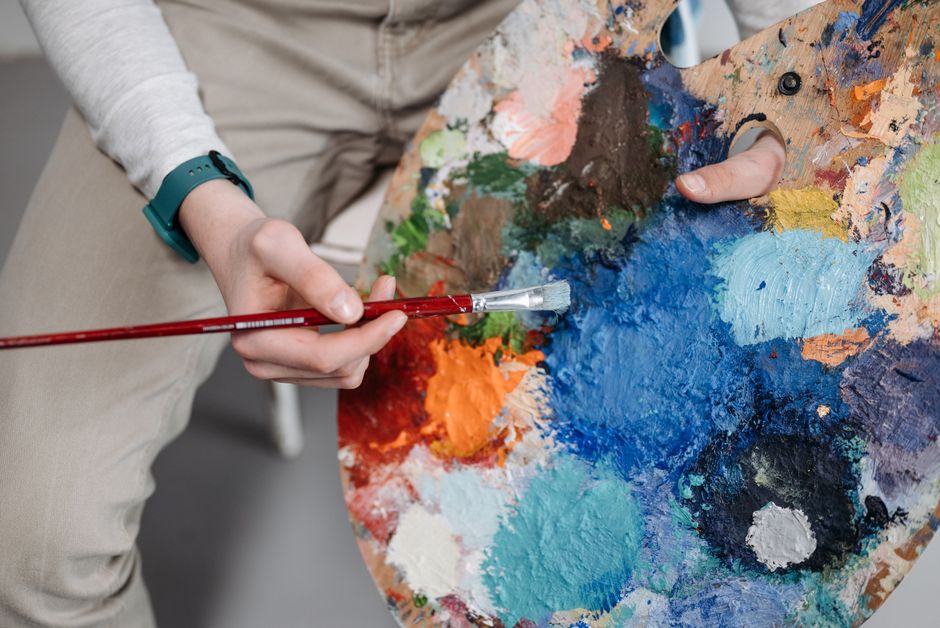
Art therapy is a form of psychotherapy in which making art is the medium of the therapeutic work. The therapist is trained in both art and clinical psychology, and the art is a means of communication and processing rather than an end product to be judged.
In the United States it is a master's-level profession. Practitioners are credentialed by the Art Therapy Credentials Board, which issues the ATR designation for registered art therapists and ATR-BC for those who have additionally passed board certification. The professional body is the American Art Therapy Association, founded in 1969.
One correction worth making, because this page used to get it wrong: not every art therapist is a licensed mental health professional. Licensure is a state matter and varies considerably — some states license art therapists directly, others do not, and many art therapists hold a separate counseling or social work license alongside their art therapy credential. If you are looking for a practitioner, the credential to ask about is ATR or ATR-BC, plus whatever licensure your state requires.
What the evidence actually shows
Here is where honesty matters more than enthusiasm.
Art therapy is used with autistic children and adults, and practitioners report it can support communication, emotional expression and sensory tolerance. But the research base is genuinely thin. The studies that exist are mostly small, use varied methods and varied outcome measures, and rarely compare against a control. That does not mean it does not work. It means the confident percentage figures you will find on craft blogs are not coming from anywhere solid.
The most commonly cited work in this area is a 2017 study led by Dr. Theresa Van Lith, then an assistant professor of art therapy at Florida State University and now at La Trobe University. It is worth understanding what it was: a survey of art therapists about how they work with autistic children, which identified common practice patterns. It was not a trial measuring outcomes, and it should not be quoted as though it proved effectiveness.
The practices it surfaced are sensible and worth knowing:
- Beginning each session with the same consistent routine
- Giving instructions clearly, calmly and without hurry
- Using curiosity to introduce a new material or skill
- Avoiding being overly directive about what gets made
- Being deliberate about when to move from one activity to the next
The sensory question, which is the practical one
This is the part that gets least attention and matters most day to day. Art materials are intensely sensory objects, and that cuts both ways.
For some people, paint is an appealing way in — the texture, the repetition, the visible cause and effect. For others, wet paint on the fingers, the smell of acrylic, or the sound of a brush on canvas is genuinely aversive, and no amount of encouragement makes that a good experience.
If you are introducing art materials to an autistic person of any age, the useful approach is to treat the material itself as the variable. Dry media — pencils, crayons, markers — ask far less sensorily than wet paint. Brushes put distance between skin and paint. A defined edge to work within can be reassuring for some and constraining for others. There is no general answer, only the specific person in front of you.
Language, briefly
An earlier version of this page used "high-functioning" and "low-functioning". Those terms have fallen out of favor with both clinicians and autistic people, because they flatten a person's varying strengths and support needs into a single label that predicts very little. Describing specific support needs is more useful and more accurate.
On identity-first versus person-first language — "autistic person" versus "person with autism" — surveys of autistic adults show a substantial preference for identity-first, while many clinical settings still default to person-first. Individual preference varies. Ask, and follow the lead of the person you are talking to.
The Van Gogh claim
This page used to state as fact that Van Gogh had Asperger's Syndrome, sourced to a personal website. We have removed it, and it is worth saying why rather than deleting it silently.
Retrospective diagnosis of historical figures is not accepted clinical practice. Nobody examined Van Gogh, the records are fragmentary, and the various conditions proposed for him over the years — epilepsy, bipolar disorder, lead poisoning, absinthe toxicity and several more — largely reflect the preoccupations of whichever era proposed them. Asperger's is also no longer a distinct diagnosis; it was folded into autism spectrum disorder in the DSM-5 in 2013.
Presenting a speculative diagnosis of a real person as an encouraging fact does nobody any favors, least of all autistic artists, who do not require a famous posthumous member to justify their interest in painting.
Where a paint by numbers kit honestly fits
Not as therapy. As an activity, if it suits the person.
What a numbered canvas offers is a structured, predictable task with a clear rule and a visible endpoint, and no requirement to invent anything. For some people that structure is exactly the appeal, and it is the same reason a great many adults find it calming. For others it is too constrained to be interesting, and free painting is better.
Two practical notes if you are considering one. Ours are designed for adults — the sections are small and the numbers are fine, which makes them a poor fit for a young child regardless of anything else. And the sensory profile of the kit matters more than the picture on the box: wet acrylic, a brush, a canvas texture, a long task. Those are the things to think about first.
If it works, it is a good shared hour at a table. That is a real thing and it does not need to be called therapy to be worth doing.
Common questions
How do I find a qualified art therapist?
Look for the ATR or ATR-BC credential from the Art Therapy Credentials Board, and check what licensure your state requires. The American Art Therapy Association maintains resources for finding practitioners.
Can art therapy treat autism?
Autism is not an illness to be cured, and art therapy is not presented by practitioners as treating it. Where it is used, the goals are usually around communication, emotional expression and coping — the same broad goals as other therapeutic support.
Is doing art at home worthwhile even if it is not therapy?
Yes, on its own terms. Shared, unhurried, low-stakes activity with someone is valuable. It simply is not a clinical intervention, and treating it as one sets up expectations that a box of paints cannot meet.
What should I do if the materials cause distress?
Stop, and change the material rather than the person. Dry media, a tool instead of fingers, a smaller sheet, a shorter session. If the goal is a good experience, the material is the thing to adjust.


