


At twelve, most children can work a standard adult paint by numbers kit. The fine motor control is there, and so is the ability to sit with something for more than one evening. The age printed on a box is close to meaningless in this category. What decides whether a kit works is how small the numbered sections are and how many of them there are.
A kit sold as a children's kit usually means large simple shapes and six or eight colors. For a twelve-year-old that is often too easy, and a bored painter abandons a canvas faster than a hard one does. The better move is generally an adult kit with a subject they picked themselves.
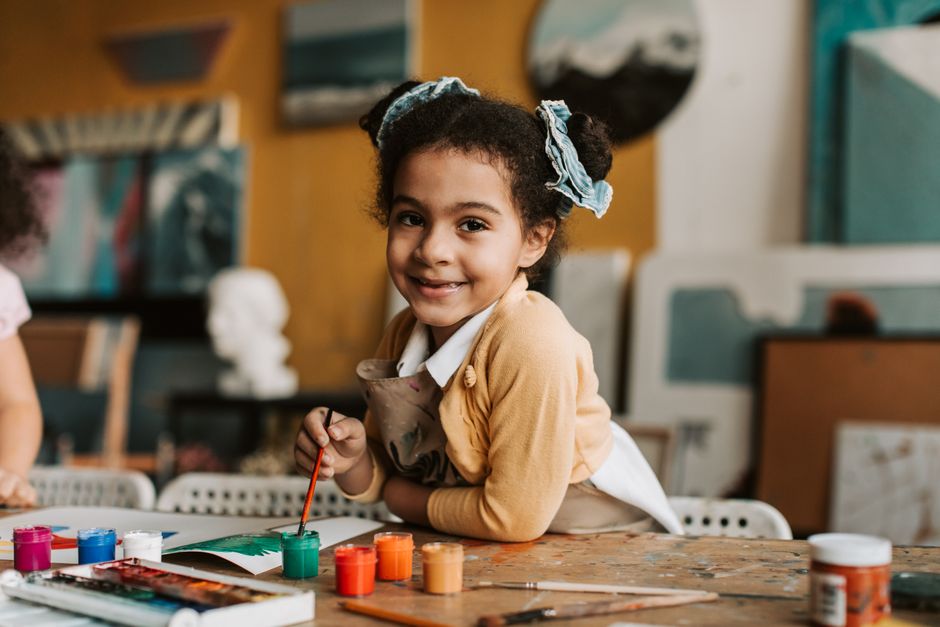
What actually changes around this age
Two practical things. First, they can hold a fine brush steadily enough to work inside a small shape, which younger children genuinely cannot. Second, they can accept that a project takes several sessions. A 16 x 20 canvas is ten to twenty hours of work spread over a few weeks, and understanding that up front is most of what makes it go well.
The interesting part is the same thing adults report. A numbered canvas removes the decisions. Nobody has to decide what to draw or which colors go together, so the anxious part of making art is stripped out and what is left is absorbing. For a child who says they are bad at art, that removal is the whole point.
How to judge a kit before you buy it
- Look at the section size in the product photo. Zoom in on a detailed corner. If the sections there look like grains of rice, expect frustration and a magnifier. If they are the size of a fingernail, it will go smoothly.
- Count the colors. Roughly twenty to twenty-four is a comfortable range at this age. Forty-plus colors means very fine gradation and a lot of brush washing.
- Check how the canvas ships. A canvas folded flat into a slim box arrives creased, and creases are the single most common complaint in this category. Rolled in a tube avoids the problem entirely.
- Let them choose the picture. This matters more than any specification. A child who chose the horse will finish the horse.
Being straight about what we sell
Ledgebay does not make a children's range. Our kits are adult kits built around licensed original artwork, mostly landscapes, wildlife, cabins and florals. Several of them suit a twelve-year-old very well, and several would frustrate one, so it is worth naming which is which rather than saying they are all fine.
Reasonable for a first kit at this age: Hummingbird, Away From It All, Rural Route Bluebirds, Summer's Song and Apple Harvest. These have larger color areas and clear separation between shapes, and our own reviewers consistently describe them as approachable.
Genuinely demanding, and better saved for later: Orchard Puzzle, Seaside Paradise, Mountain Village and Golden Hour. These are the ones adult painters describe as not for beginners. Handing one to a twelve-year-old as a first kit is setting up a half-finished canvas in a closet.
Sizes are 12 x 16 framed, 16 x 20 framed and 16 x 20 unframed. The framed versions come stretched on a wooden frame with an easel, which for a child is worth the difference, because it means the canvas sits upright on a table rather than sliding around. The unframed 16 x 20 ships rolled and needs mounting afterward.
If a specific picture matters more than the artwork, custom paint by numbers from a photo turns a photograph into a numbered canvas. A child painting their own dog is a considerably stronger proposition than a child painting a generic puppy, and it is made in the USA rather than drop-shipped.
Setting them up so it goes well
- Good light, and a lamp specifically. The printed numbers are deliberately pale so the paint covers them, which means they are hard to read in ordinary room lighting. A desk lamp solves most complaints about this before they happen.
- One pot open at a time. Acrylic skins over in the air. Working one color across the whole canvas before moving to the next also means far less brush washing, which is the part children give up on.
- Let a section dry before painting next to it. Wet acrylic next to wet acrylic smears, and an hour of drying saves an evening of repair.
- Expect a second coat on the light colors. Pale yellows and whites often do not cover the printed number in one pass. Two thin coats work; one thick coat cracks.
- Keep the reference print where they can see it. Ours is 11 x 17, which is large enough to read across a table.
If the canvas arrives creased
Advice to iron a paint by numbers canvas circulates widely and it needs a caveat, because an iron on the printed side will lift the print and can melt the primer. If you have a creased canvas from somewhere, work from the back: a warm iron, no steam, a cotton cloth between the iron and the canvas, and keep it moving. Test a corner first.
Our canvases ship rolled in a tube rather than folded, so the problem does not usually arise. It is the thing our own customers mention most often, generally by comparison with a kit somebody else bought them.
A few things not to do
Do not correct their color choices. If they want the barn purple, the barn is purple, and the number chart is a suggestion at that point. The finished object matters more than its accuracy.
Do not push for it to be finished in one sitting. Two hours is a good session. Beyond that the brush hand gets tired and the edges get sloppy, and a canvas people are proud of beats a canvas people rushed.
Do not throw out the leftover paint. A heavily used background color runs out before the others, which is common enough that matched extra paint sets exist for every design.
Related reading
- Paint by numbers for beginners, which covers the basics for either of you
- The basic color wheel, if they start asking why the colors are numbered the way they are
- How to frame a paint by number canvas, for hanging it afterward
- The full catalog, and the customer gallery for what finished kits actually look like


