


Almost nobody starts painting by staring at a blank canvas and producing a picture. Nearly everyone starts with a method that supplies the drawing, so they can get on with the paint.
If you would rather supply the drawing yourself, landscape drawing and sketching covers the five things that make the difference.
There is nothing dishonorable about that, and there never has been. What is worth knowing is that these methods teach different things, and one of them teaches almost nothing at all.
The grid method
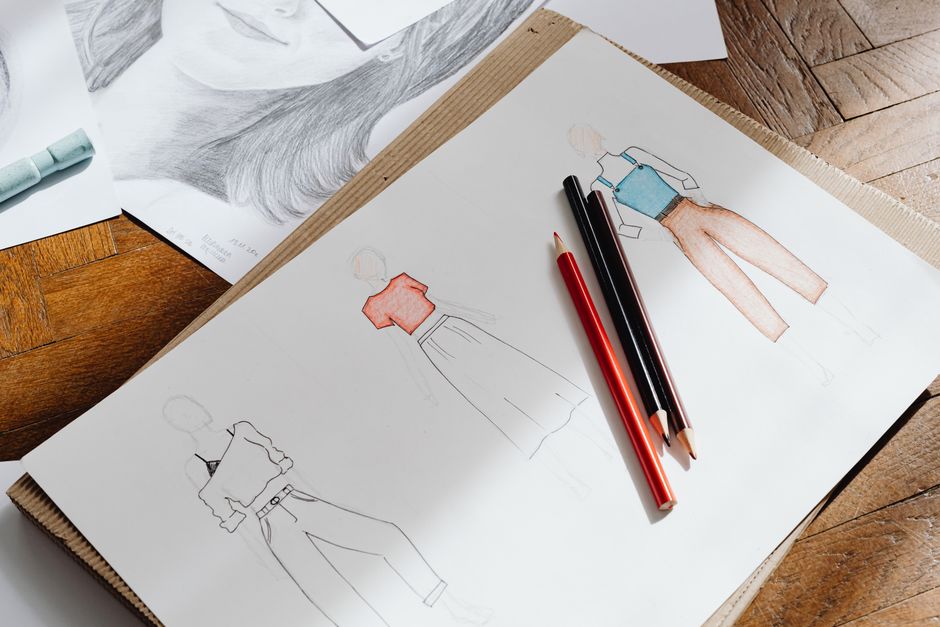
The oldest of the four by several centuries. Draw a grid of squares over your reference photograph, draw the same grid lightly on the canvas, and copy the contents of the picture one square at a time.
How to do it: keep the two grids in the same proportion. If your photo is 6 by 4 inches with one-inch squares, a 12 by 8 inch canvas takes two-inch squares. Number the rows and letter the columns so you never lose your place. Draw the canvas grid faintly in pencil or in a light color you will paint over.
What it teaches: a great deal, and this is the point. Working one square at a time forces you to look at shapes and angles rather than at objects, which is precisely the shift that separates people who can draw from people who cannot. You stop drawing a nose and start drawing the shape in square C4.
What it costs: time, and some faint grid lines to cover.
Tracing and projecting
Transfer paper under a printed image, or a projector throwing the reference onto the canvas so you can draw the outlines directly.
What it teaches: nothing about drawing, and quite a lot about painting. That is a fair trade if painting is the part you want to practice. Portrait and mural painters use projectors routinely and always have.
What it costs: the observational skill you would have picked up from the grid. If your goal is eventually to draw without help, tracing will get you a finished picture faster and leave you no closer to it.
Paint by numbers
The drawing and the color decisions are both supplied. You fill numbered regions with matched paints.
What it teaches: less about drawing than the grid, more about paint than most people expect. You learn how acrylic behaves, how a color changes as it dries, that two thin coats beat one thick one, how to hold a brush for an hour without your hand aching, and how a picture is built from separate flat areas rather than from outlines.
The last of those is the underrated one. A numbered canvas is essentially a picture broken into values and shapes, which is exactly how a painter is taught to see. Filling one in for twenty hours is not a bad way to absorb it.
What it costs: the color mixing, which is a real skill you are not practicing. If you want to move on afterwards, a small set of nine colors and a blank canvas is the next step, covered in our guide to acrylic paint sets.
Diamond painting
Resin facets placed onto an adhesive printed sheet with a pen-like applicator. Included here because it is constantly grouped with the above, and it should not be.
What it teaches: honestly, nothing transferable to painting. There is no paint, no brush, no color decision and no surface behavior. It is a placement task, and an absorbing one, but it is a different hobby that happens to produce a picture.
That is not a criticism. If what you want is something repetitive and calming for an evening, it does that job well. It just will not get you closer to a paintbrush.
So which is the honest starting point?
It depends entirely on what you are after, and it is worth being clear with yourself.
- You want to learn to draw: the grid method, without question. It is slow, it is unglamorous and it works.
- You want to learn to paint, and drawing is the obstacle: trace or project. Get the outline down by whatever means and spend your hours on the paint.
- You want a finished picture and a quiet evening: a numbered kit. It is the only one of the four that requires no decisions at all, which is exactly why people find it restful.
- You want something to do with your hands while listening to something: any of them, and diamond painting is as good as the rest.
A word about the word cheating
It comes up constantly and it is worth dispatching. Painters have used mechanical aids for as long as there have been paintings: grids, tracing, camera obscura, projected images, pouncing a drawing through pinholes. Vermeer is widely believed to have used an optical device. The grid method is documented in Renaissance workshops.
What was never in question is that the picture is still made by hand, one decision at a time, and that the hard part was never getting the outline down. The hard part is everything after.
If you want to start today
The lowest-friction version is a numbered canvas, because there is nothing to set up and nothing to decide. Our guide for beginners covers the first sitting and the designs are in the full collection.
If you would rather begin with the grid, the reference photograph matters more than anything else. Our note on choosing pictures for canvas painting covers what makes a photo workable, and it applies to the grid method just as much as to a custom kit.


