


Painting is a reasonable thing to add to an evening if you are trying to feel better. It is not a treatment, and this article is not going to pretend otherwise. What it is: a quiet, absorbing activity that leaves an object behind, which is more than most ways of spending two hours.
Here are five ways to start, in order of how little they ask of you.
First, What the Evidence Actually Says
Worth being precise, because this subject attracts a great deal of overclaiming and some of it used to be on this page.
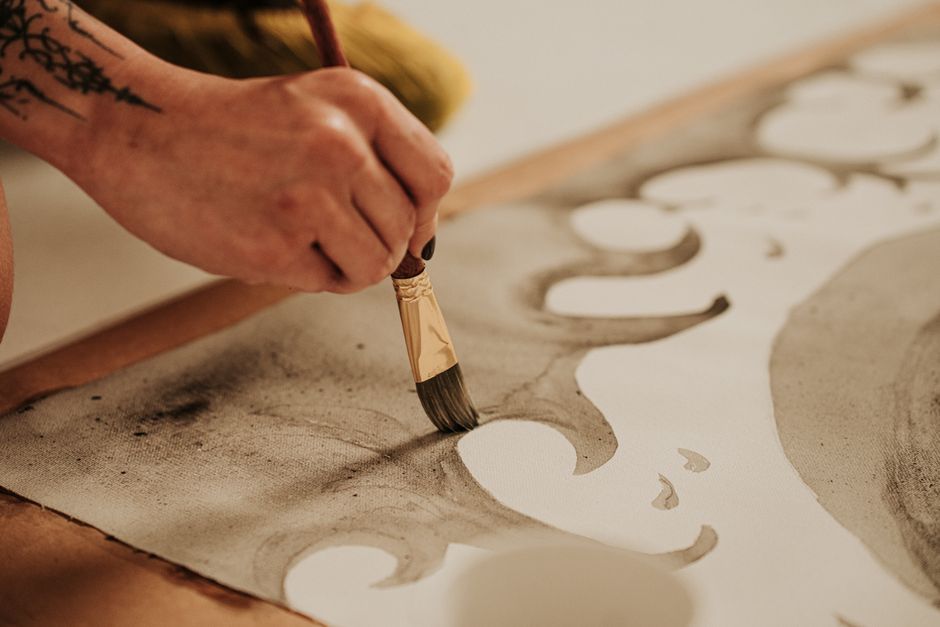
There is a reasonable research base on art therapy — structured creative work with a trained therapist — showing reduced anxiety and improved mood. Two starting points: Art Therapy: A Complementary Treatment for Mental Disorders and Role of Art Therapy in the Promotion of Mental Health. That line between a hobby and a clinical treatment is worth getting straight before you read any further.
Three limits on that:
- It studies facilitated therapy, not painting alone at your kitchen table. The two are related, not the same.
- Art therapy is used in cancer care to help with distress and quality of life during treatment. It is not a treatment for cancer, and any page suggesting otherwise is wrong.
- Nobody has studied paint by numbers specifically, so treat "clinically proven" claims about any kit — including anything you read about ours — with suspicion.
If you are struggling, tell someone. A friend, a GP, a counsellor. Painting is a good evening. It is not a substitute for help, and it is not meant to be one.
What our own reviewers describe is narrower and more believable: an hour of focused, repetitive work, and several say it is what they do instead of scrolling on a phone all evening. That is a modest claim and probably the true one.
1. Start With a Paint by Numbers Kit
The lowest possible barrier. A numbered kit is a canvas printed with faint outlines and a number in each section, and a pot of paint to match each number. Nothing to draw, nothing to mix, nothing to decide.
That last part is the point. Freehand painting carries a lot of decisions — what to paint, how to mix it, whether it looks right — and decisions are exactly what a tired or anxious mind does badly. Removing them is why people reach a settled, absorbed state faster with a kit than with a blank canvas.
Start with a design that has large sections and a moderate color count. The number of colors is printed on the box and is the best guide to how demanding a kit will be. Our catalog is here, and the beginner's guide covers the technique.
2. Paint a Landscape
Most people have attempted one, usually at school. It is a forgiving subject: nobody can check your tree against the original, and small errors read as style rather than mistakes.
Work from a photograph to begin with. When you are more confident, take the materials outside — a beach at the end of the day, a park, anywhere you would be happy to sit for an hour anyway. Painting outdoors adds two things that help on their own: daylight and being somewhere else.
3. Move From Paper to Canvas
A small step with a disproportionate effect. Paper buckles under wet paint and feels provisional. Canvas has texture, takes the brush differently, and produces something you can hang rather than put in a drawer.
You do not need to spend much — canvas boards are inexpensive and a small one finishes in an evening. If paper is working for you, stay with it. If you find you are not taking the results seriously, the surface may be the reason.
4. Try Abstract
The only style here with no way to be wrong. There is no likeness to fail at, so the whole question of whether it is any good simply does not arise while you are working.
Play with color, shape and texture and leave meaning out of it. It does not have to represent anything or say anything. How to paint abstract covers the technique, and a rainbow abstract is about the simplest version there is.
5. Paint a Portrait, or an Animal
The most demanding of the five, and the right one if what you want is total absorption. A portrait takes everything you have; there is no attention left over to worry with.
Faces are hard, and being bad at it early is not a reason to stop. If you would rather not start there, animals are more forgiving — a dog, a bird, a squirrel — and a familiar animal carries some of the same feeling as a face.
This is the one to choose if you prefer chess to tic-tac-toe. It is the wrong one to choose on an evening when you have nothing left in the tank.
Making It Stick
Three practical things, which matter more than which of the five you pick:
- Leave it out. The single biggest predictor of whether a canvas gets finished is whether it has to be unpacked first. A table in the corner beats a cupboard.
- Twenty minutes counts. Waiting for a free evening means waiting a long time.
- Stop at a natural break, at a color change rather than mid-shape. It makes picking it up again easier, and the work looks better after a night away from it.
Where to Start Tonight
If you want the shortest path from reading this to painting something, a kit is it — the catalog is here, and Custom Paint by Numbers makes a canvas from a photograph of your own, which is what most people choose when the subject matters to them. Finished work by other people is in the customer gallery.
And the part worth repeating: if things are difficult, talk to someone. Painting helps an evening. People help more.


