


Paint by numbers can be a good afternoon for a child. It is not going to improve their grades, and anyone telling you otherwise is selling something.
This page used to make that claim, in some detail. It has been rewritten, and the section near the bottom explains why. What follows is what a numbered kit actually offers a child, what age it starts to work, and where it genuinely does not fit.
First, ours are made for adults
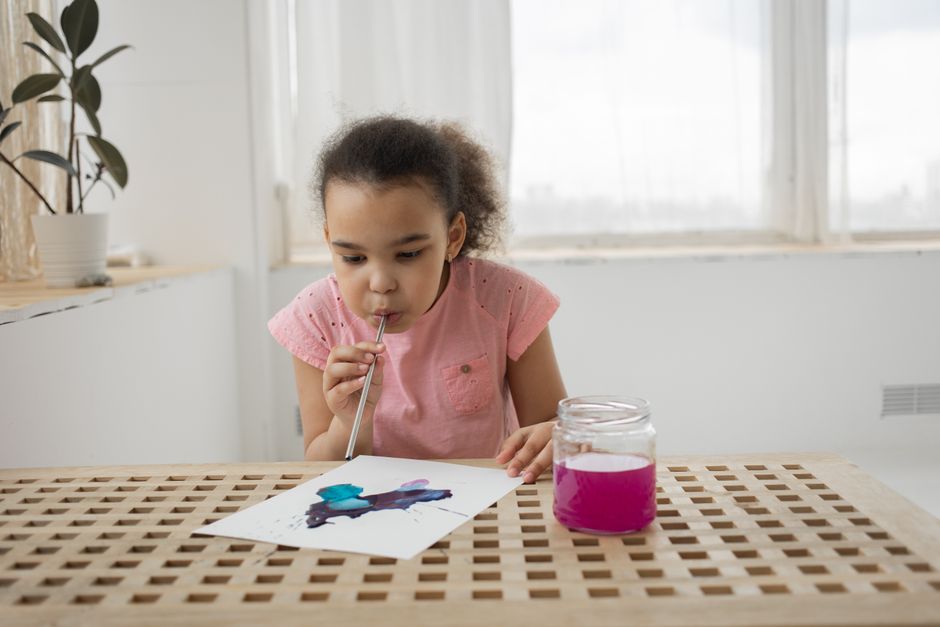
Worth saying plainly rather than burying. We do not sell a children's range. Our designs are licensed paintings by wildlife and landscape artists, printed at adult detail — small sections, fine numbers, and a canvas that most adults paint under a lamp with reading glasses on.
Handing one of those to an eight-year-old will not go well, and that is a fact about the kit rather than the child. If you are shopping for a young child specifically, you want a kit designed for one, with large sections and a short completion time. What to look for in a children's painting kit goes through the rest of the checklist.
What age does it actually work from?
There is no clean answer, but the two things that decide it are worth naming, because they let you judge a specific child rather than a number.
Fine motor control. Filling a shape without going over its edge is genuinely difficult until a child has reasonably developed pencil control. Below that, the painting becomes an exercise in failing at something, which is the opposite of what you wanted.
Tolerance for a long task. A numbered canvas is not finished in a sitting. Even a simple one is several hours. A child who needs to see a result today will lose interest at the halfway point, when the canvas looks its worst — patchy, half-covered, and nothing like the picture on the box.
Broadly: a kit made for children, with large sections, suits somewhere from about eight upward, and an adult kit is frustrating well into the teens. Plenty of eleven-year-olds will happily do an adult canvas and plenty of fifteen-year-olds will not. You know which yours is.
What it genuinely gives a child
Modest, real things, described without inflation.
- Practice at staying with something. Not an increased attention span in any measurable sense — an hour of quiet, sustained, unhurried attention, which children get few opportunities for.
- A finished object. Most of what children make gets recycled. This gets framed and goes on a wall, and that matters to them more than adults expect.
- Success without talent. A child who has decided they "can't draw" can finish a numbered canvas and have it look genuinely good. For a child who has written themselves off artistically, that is worth a lot.
- Something to do alongside an adult. Two canvases at the same table is one of the better ways to spend an evening with a child who has stopped wanting to be talked at.
The honest tension nobody mentions
Numbered painting is not a creative activity, and it is worth being clear-eyed about that before buying one as a way to "foster creativity".
The entire design of a paint by numbers kit is the removal of creative decisions. What to paint, how to compose it, which colors to use, where the light falls — all of it is decided before the box arrives. That is precisely why adults find it relaxing: the deciding is the tiring part, and it has been done for you.
For a child, that cuts both ways. If the goal is open-ended creative development, a blank sheet and a box of paints does far more, and it is cheaper. If the goal is a calm, structured hour with a good-looking result at the end, a numbered kit does that better than a blank sheet ever will.
They are different activities. Buy the one you actually want.
Practical notes if you go ahead
- Choose big sections over a nice picture. The most common way this fails is a design that looked lovely and turned out to be four hundred tiny shapes.
- Set the expectation that it takes several sittings. Say it before you start, not at the point they get bored.
- Expect to help. Treat it as a shared project rather than something handed over. The realistic split is a child doing the large areas and an adult doing the fiddly ones.
- Cover the table, and check the paint. Craft acrylic washes off skin with soap and water but is permanent on fabric once dry. Get it off clothes while wet.
- Let mistakes dry. Wrong color in a section is fixed by leaving it, letting it dry hard, and painting over it. Trying to fix it wet makes it worse, and a child will try to fix it wet.
About those studies
An earlier version of this page claimed that a Gallup survey showed children introduced to creative thinking had an 85% chance of using problem-solving skills, against 50% for a control group, and 74% for critical thinking against 38%. It also cited a "12% impact on academic performance" from confidence.
The Gallup survey is real. It surveyed 1,036 K-12 teachers and 2,673 parents in 2019. But it does not say what was claimed, in three ways:
- The percentages are teachers reporting what they observe in their own classrooms, not measurements of children's abilities.
- The high figures apply to teachers who scored highly on creativity and on using technology in transformative ways. The technology half was quietly dropped. The 50% figure is teachers doing neither — not a control group of children.
- The study is about classroom teaching methods. It has nothing to say about craft kits at a kitchen table.
The confidence figure was sourced to a tutoring company's marketing blog rather than to any study.
We have left this section in rather than quietly deleting the claims, because the numbers are still circulating on other pages and it seemed more useful to say where they came from.
Common questions
Can a five-year-old do a paint by numbers kit?
Realistically, no. The sections are too small and the task is too long. Free painting with big brushes is a far better use of that age.
Are the paints safe?
Craft acrylics are fine for ordinary use with supervision. Wash hands afterward, keep pots and brush water away from small children, and read the label rather than trusting a general "non-toxic" claim on a listing.
My child gave up halfway. Now what?
Extremely common, and usually a size problem rather than a character one. The midpoint is when a canvas looks worst. Offer to fill in a large area together to get it past that point, and if it is still not happening, let it go.
Can we paint together if I use an adult kit?
That works well, and it is what most of our customers with grandchildren actually do — the adult works a detailed canvas, the child works something simpler alongside. Same table, same hour, different kits.
If you are choosing something for yourself, our guide to picking an easy kit covers what makes a design forgiving, and the range is in the shop.


